Snow Hiking In Los Angeles: Mt. Islip

Two weeks ago it snowed as low as 3,000 feet in Los Angeles. Last week temperatures got into the 90’s for a couple days (what happened to spring?). I hiked up to Mt. Lowe with Scott last Tuesday and saw no remains of snow on the north slopes. I realized that without another storm, I might only have one more chance to hike in snow this year. So, I drove up to Islip Saddle and hiked the Pacific Crest Trail to Mt. Islip on Sunday. There was no snow at the trailhead and at first I thought I was too late.
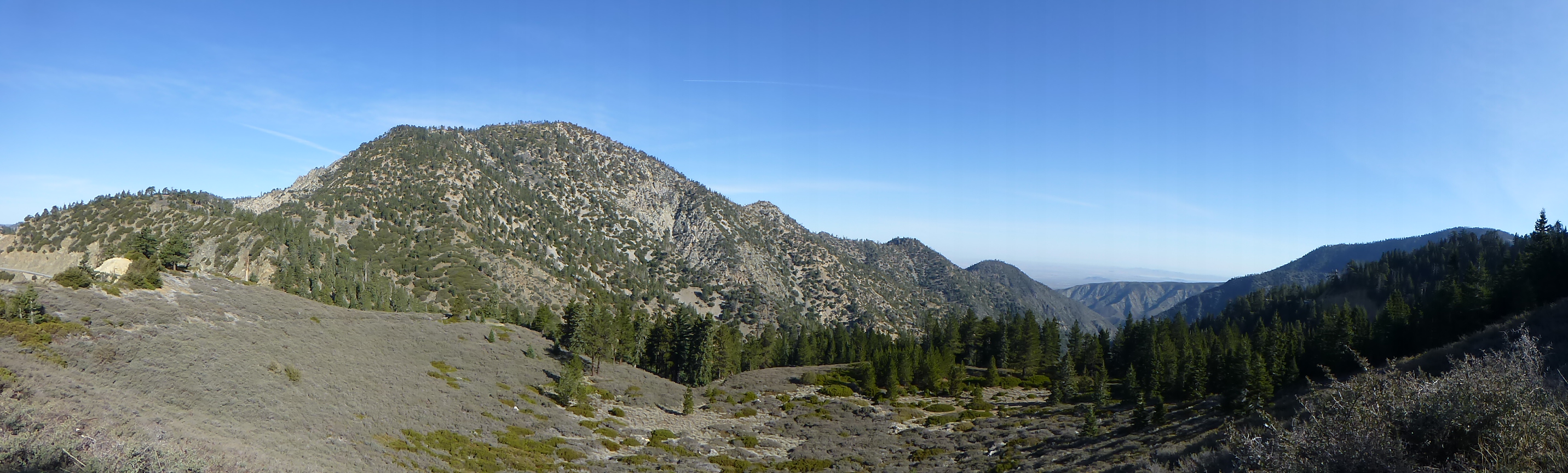
Pacific Crest Trail near Islip Saddle. (click to enlarge).

Pacific Crest Trail near Islip Saddle Trailhead. (click to enlarge).

By a quarter mile into the hike snow appeared as I traveled on the north slopes. It was of the icy variety so I put on my microspikes.
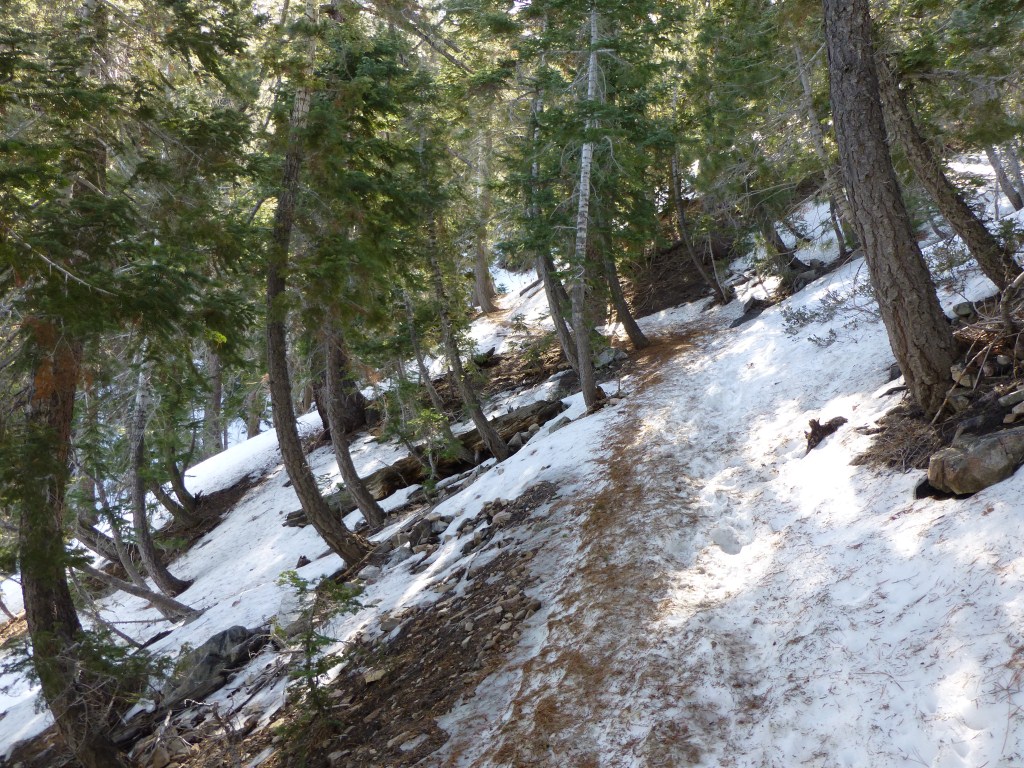
Icy snow on the Pacific Crest Trail between Islip Saddle and Little Jimmy Campground.

Icy snow on the Pacific Crest Trail between Islip Saddle and Little Jimmy Campground.

Throughout the day the presence of snow was uneven. At times almost completely melted away.

Pacific Crest Trail between Islip Saddle and Little Jimmy.

Pacific Crest Trail between Islip Saddle and Little Jimmy.

At other times snow was abundant. However, it almost always had an icy feel to it. When I reached Little Jimmy Campground, I enjoyed seeing that a Boy Scout Troop had camped overnight. I’m really looking forward to backpacking this year starting with my upcoming Grand Canyon trip the first week in April.

Pacific Crest Trail between Islip Saddle and Little Jimmy. (click to enlarge).

Pacific Crest Trail between Islip Saddle and Little Jimmy. (click to enlarge).

By the time I made it around the north face of Mt. Islip the snow was essentially gone with only small patches remaining. So, I took off my microspikes until my return.
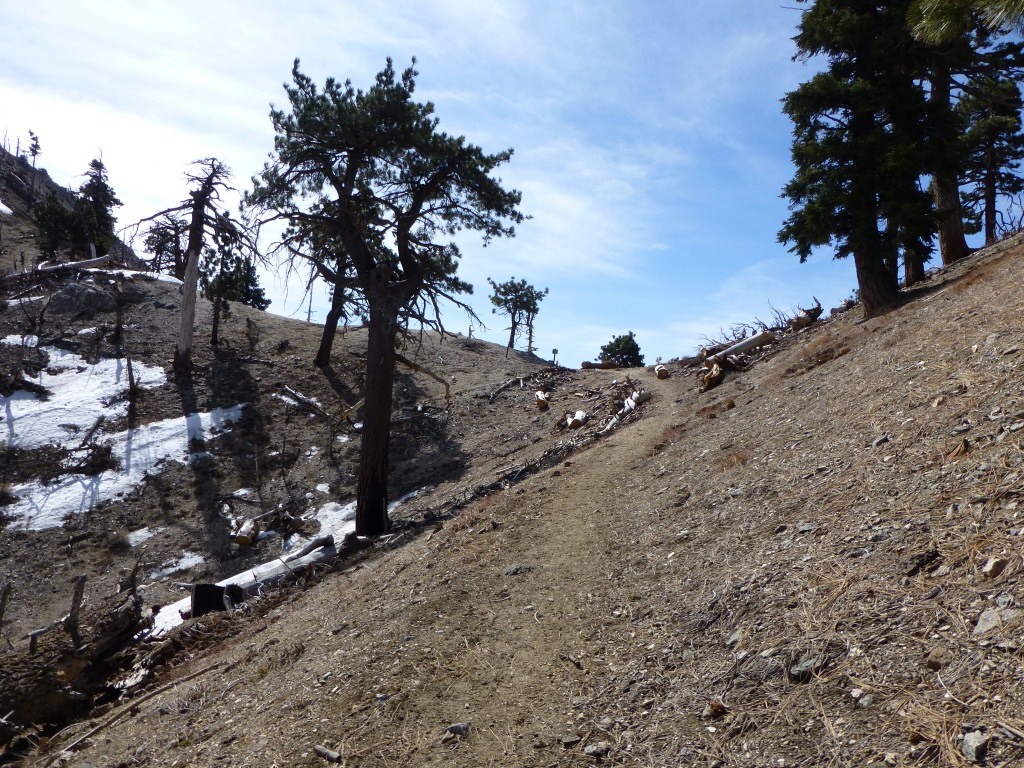
Pacific Crest Trail at Windy Gap.

Pacific Crest Trail at Windy Gap.

The presence of at least some snow along parts of the trail without a north facing orientation enhanced the view as I made my way to Mt. Islip.

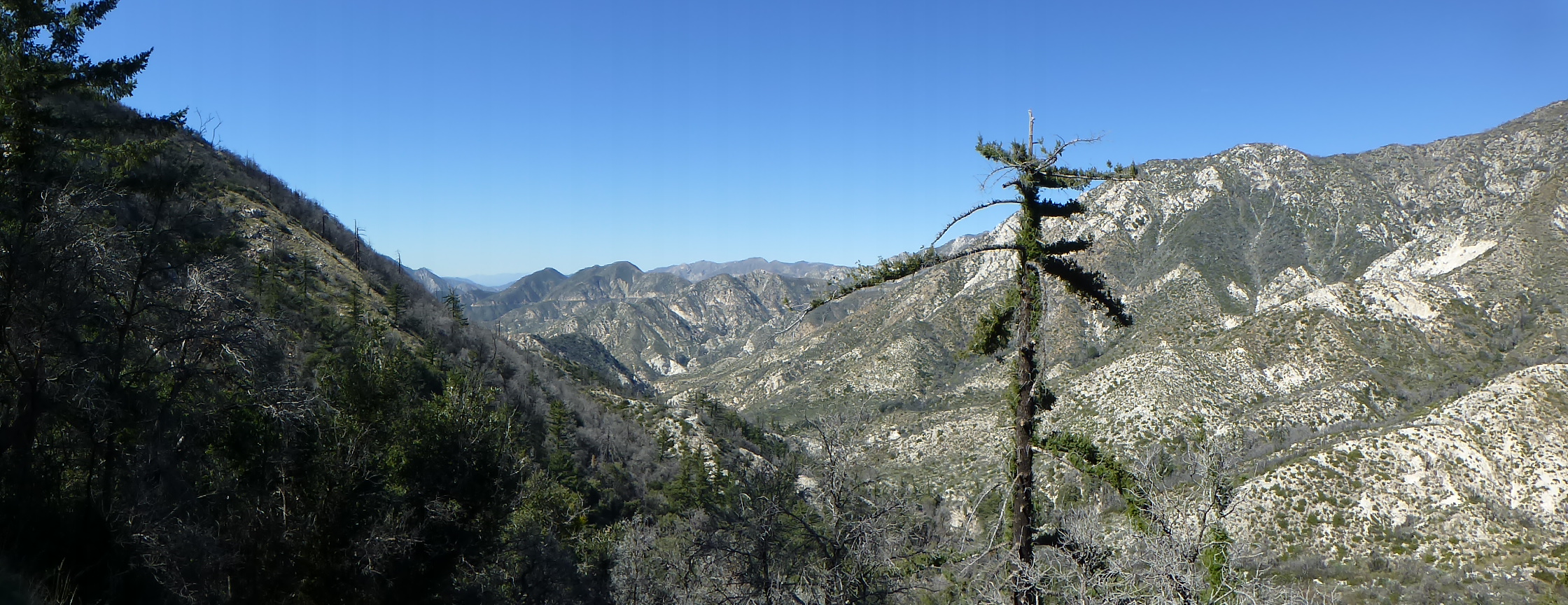
View from the Islip Ridge Trail.

View from the Islip Ridge Trail. (click to enlarge).

While there wasn’t snow on the trail for the entire hike, there was enough to enjoy and feel like it was more of a snow hike than not. I took my time on this one and savored what could be the last remnants of this unusually dry winter. If we do get another storm soon, at over 6,600 feet in elevation at the trailhead, this trail is bound to get more snow.


Gallery Update #11: Snags

My Gallery Updates are about sharing photos I’ve added to the gallery section of this site. The galleries are my way of creating a visual approach to searching for hikes by having collections of photos that link to information about hiking to where each photo was taken.
This week I added a new Snags Gallery. One of my favorite blogs (Backyard Biology) recently posted a piece (Dead tree wildlife condo) describing the role that snags (dead or dying trees that are still standing) play in nature. Previously I didn’t know there was an ecological term for the many standing dead trees I photograph. Here’s a few in different contexts.

September 2011

September 2011

Above photo taken from the Devil’s Backbone Trail.

May 2012

May 2012

Above photo taken from the Islip Ridge Trail.

December 2012

December 2012

Above photo taken from the Mt. Hillyer Trail.

February 2012

February 2012

Above photo taken from the Silver Moccasin Trail near Little Pines Loop.

May 2012

May 2012

Above photo taken from the Pacific Crest Trail between Islip Saddle and Little Jimmy Campground.

Sunset From Mt. Markham

My friend Lorenzo and I were treated to a marvelous sunset last Sunday on our hike from Eaton Saddle to Mt. Lowe, Inspiration Point, Muir Peak and Mt. Markham. With a sky of interesting cloud formations for the sun to reflect upon from below and our vantage point above the mountains where it would eventually set from our view, photographic opportunities were plentiful. Looking through the photos, it appears I was in the mood to take numerous zoom shots (some a little abstract). A representative sample is in the gallery below (click to enlarge).

The original plan was to just hike to Mt. Muir. However, my wife was getting over a cold but still wanted to hike. So, we took an extra car so she could turn back if she felt like it–which she did close to Mt. Lowe. With only Lorenzo joining us on our weekly family-friends hike, it was easy to alter plan and add hiking to Mt. Lowe as a good stopping place for Debbie to rest a while and turn back.

Over the rest of the day, Lorenzo and I took our time and talked to a number of hikers along the way. I even convinced two of them to give Muir Peak a try (in a recent post I mentioned how Muir Peak is under appreciated).

By the time we got back to the saddle between Mt. Lowe and Mt. Markham it was late enough to be clear that the sunset was going to be special. We knew it would be wonderful to watch the sun make its way below the clouds and then set below the mountain tops which we would look down upon. We also knew that if we went for it, we would need headlamps to find our way back to our cars.

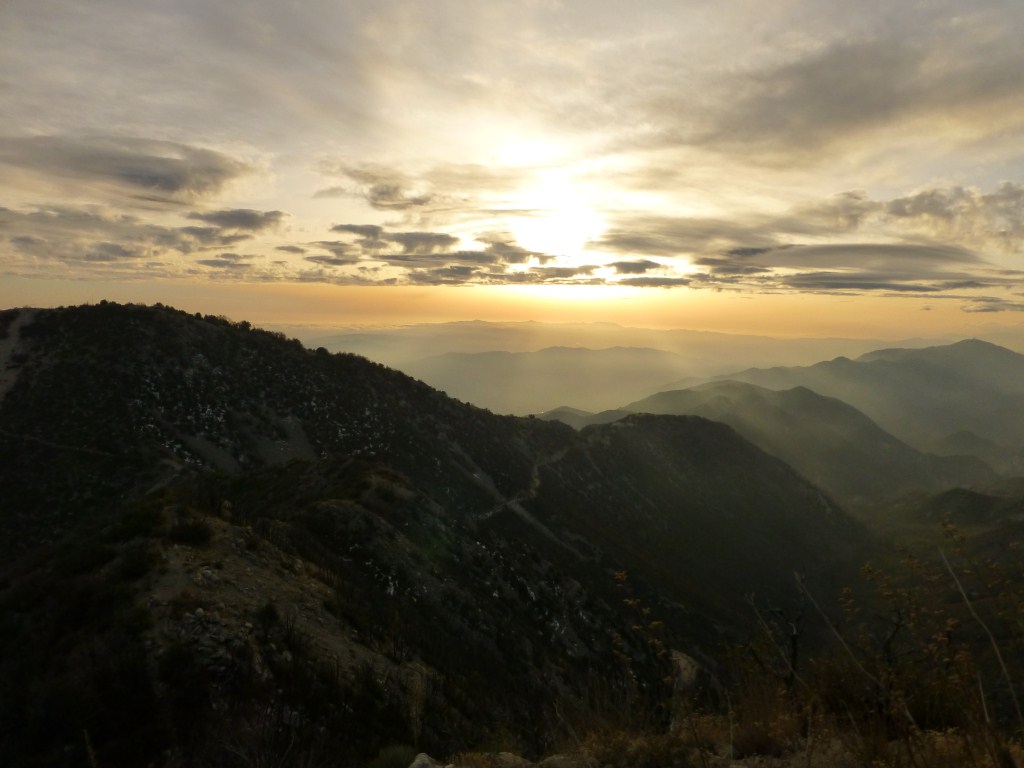
View down Bear Canyon toward Mt. Lukens with Mt. Lowe in on the left.

View down Bear Canyon toward Mt. Lukens  near the saddle between Mt. Lowe and Mt. Markham just after deciding to summit Mt. Markham. Note the light from the sun breaking through the clouds from above.

The Mt. Markham Trail is a “use trail” that follows the ridge up to the peak with a few spots that are steep and rocky that many hikers might find uncomfortable to traverse being in that grey area that is truly neither hiking nor rock climbing.

View of the sun breaking through the clouds part way up the Mt. Markham Trail.

View of the sun breaking through the clouds part way up the Mt. Markham Trail.

The orientation of the trail is such that hiking up to the peak required us to turn our backs to the sunset. So, we would look back often but also really pay attention to changes in light to alert us to a more meaningful change in the path of the sun through the clouds.

The sun making it below the clouds lighting up the trail.

The sun making it below the clouds lighting up the trail.

The peak of Mt. Markham is essentially a long ridge that slopes downward slightly from the south where it is first reached to the north where it yields a great view of San Gabriel Peak and Mueller Tunnel. We made it to the south end while the sun had just started making its journey between the clouds and mountain tops (from our vantage point).

View from the south end of Mt. Markham.

View from the south end of Mt. Markham with Mt. Lowe below on the left and Mt. Lukens beyond on the right.

By the time we made it to the north end of the peak, the sun was getting low enough that the longer angle of light started to produce some great colors.

View from the north end of Mt. Markham.

View from the north end of Mt. Markham.

There were two realities that made us head back to the south end of the peak. First was the fact the the north end blocks some of the view, and second we needed to get far enough along the trail so that we wouldn’t need our headlamps until after we had traversed the steeper sections. As we made it down the trail, the clouds started reflecting the colors of the changing light. The sky soon was filled with yellow, orange, and red. It was at this time that I took most of my zoom shots.

View from the Mt. Markham trail just below the south end of the peak.

View from the Mt. Markham trail just below the south end of the peak.

Fortunately we made it back to the saddle before needing to put on headlamps. This post was possible only because Lorenzo decided to loan me his camera (I forgot mine at home). While we had a system in place to remember who took which pictures for most of the day, it was great of him to allow me to use it almost the whole time we we trekking on Mt. Markham so that I could make this post. Fortunately, we both use the same model of camera. 

Trail Conditions Along Upper Bear Canyon

The phrase “the map is not the territory” came to mind on my hike through upper bear canyon on Friday. The trail needs a lot of work for most hikers to want to make the effort. However, for those who are up for it, there are many rewards.

A good portion of the trail is along a stream.

A good portion of the trail is along a stream. (click to enlarge)

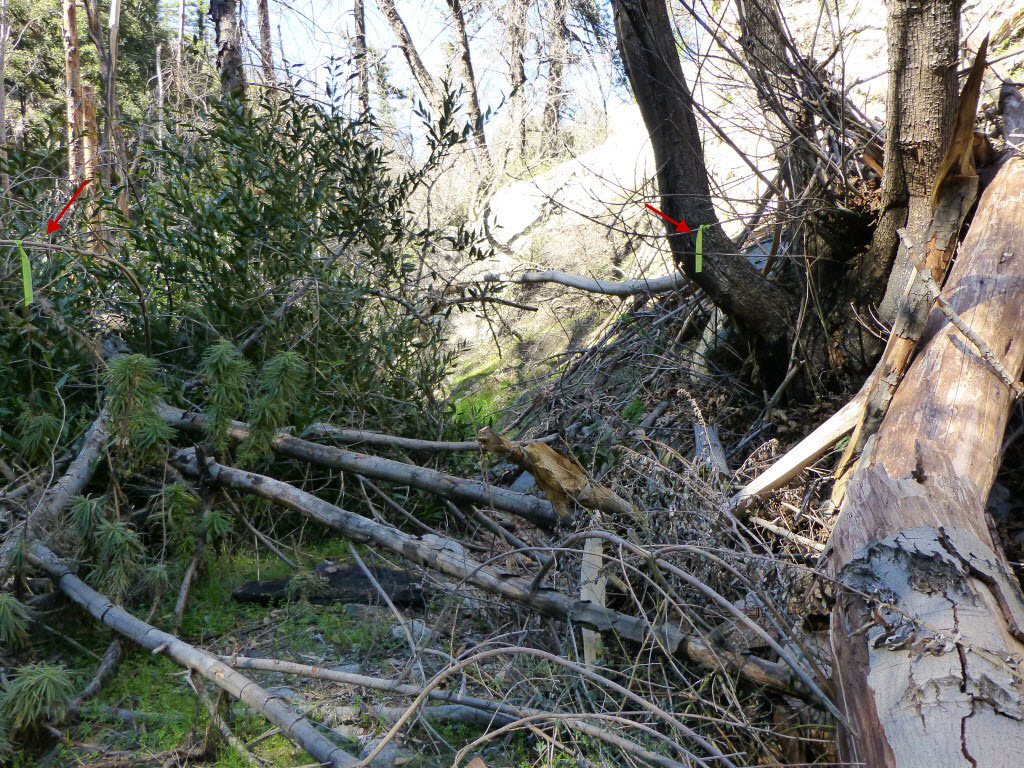
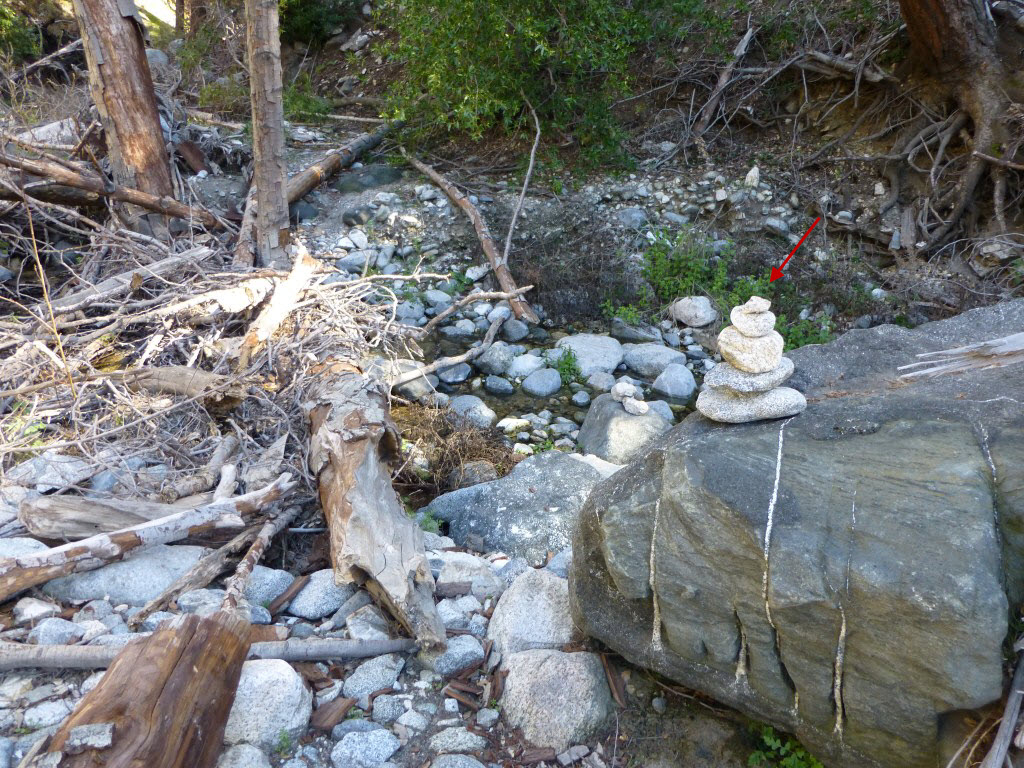
There are a number of things to contend with like downed trees and areas that are overgrown. The good news is that others have made their way through and marked the trail with ribbons or cairns and cut the poodle dog bush enough so that it is fairly easy to avoid making contact. There were numerous times when I got to a spot and wasn’t clear how to move forward until I spotted one of the ribbons or cairns. So, a large part of this 1.8 mile portion of trail is slow going. I’d allow double the amount of time to traverse it especially if your timing may have you chasing light.

Part of the trail through downed trees. Note the ribbons marking the trail and a way around the poodle dog bush.

Part of the trail through downed trees. Note the ribbons marking the trail and a way around the poodle dog bush.

One of the cairns along the trail.

One of the cairns along the trail.

Given the trail conditions, I’ve added numerous photos to the Upper Bear Canyon Photo Page. Fortunately there are also numerous stretches where the trail is easy to follow and enjoy even down by the stream where most of the challenges reside.

Easy stretch of trail near the stream.

Easy stretch of trail near the stream.

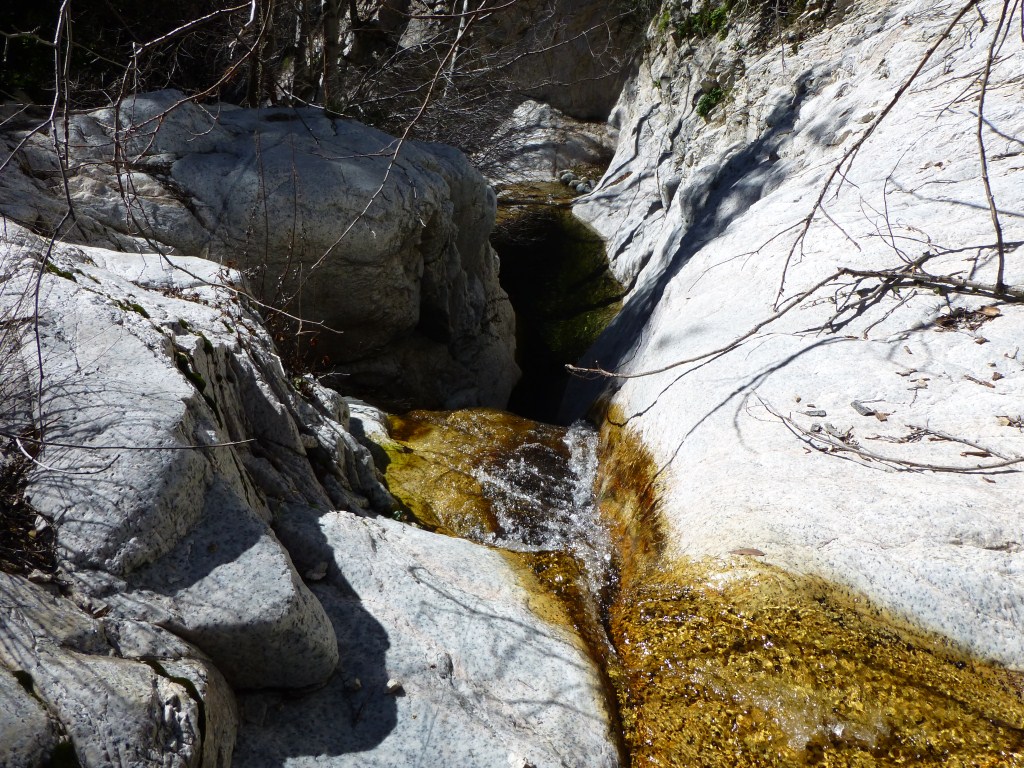
One of the spots where the course of the water is mostly over boulders.

One of the spots where the course of the water is mostly over boulders.

One of the easy stretches of trail heading down toward the stream from Tom Sloan Saddle.

One of the easy stretches of trail heading down toward the stream from Tom Sloan Saddle. (click to enlarge)

View down Bear Canyon near Tom Sloan Saddle. (click to enlarge).

View down Bear Canyon near Tom Sloan Saddle. (click to enlarge).

View up Bear Canyon looking toward Mt. Markham's long flat peak with San Gabriel Peak and Mt. Disappointment to the left. (click to enlarge).

View up Bear Canyon looking toward Mt. Markham’s long flat peak with San Gabriel Peak and Mt. Disappointment to the left. (click to enlarge).

Nature Question #10: What Species Of Plant Is This?

My Nature Questions are about my asking for help from the blogosphere (and other internet users) to learn about species living in Angeles Forest and to share that learning with others.

The answer to the last question turned out to be an American Robin. As more information is shared, it will appear on the American Robin Forest Life Page where there are already links to more information.

Thanks to Sue from the blog Backyard Biology for identifying this bird.

This week nobody sent me any links to blog articles. I did see several photos using the WordPress Reader. I also noticed one interesting article About Robins from the blog iamabrahamlincoln that describes the order young Robins leave their nests.

If you notice this post and have written (or decide to write) a post on American Robins, send me a link and I will add a link to its forest page and create a reference page like the one for iamabrahamlincoln that links to your blog.

This Week’s Question:  What species of plant is this? The photos in the gallery below were taken from the Lower Sam Merrill Trail. Click to see a larger image.