Snow Hiking in Los Angeles: San Gabriel Peak

This is the third post in my series about snow hikes in Los Angeles.  The first one emphasized an opportunity to hike in snow at the lower elevations of  Echo Mountain and Inspiration Point  without needing any special equipment. The trade-off is that the snow is not usually present (but will be there several times during the year) making it important to track the weather report and look for snow levels getting lower than about 3,500′.  The second post emphasized the guaranteed option of reaching snow at Mt. Baldy whose peak reaches 10,064 feet and will remain in snow until sometime in the late spring.  The trade-off being that special equipment is needed.

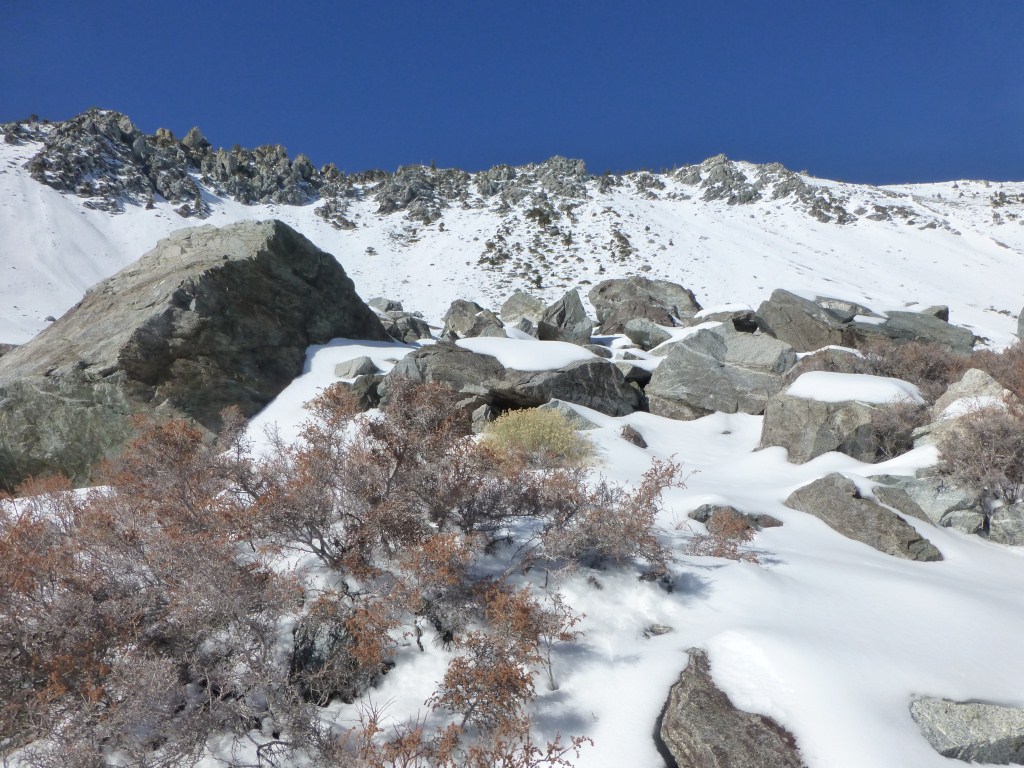
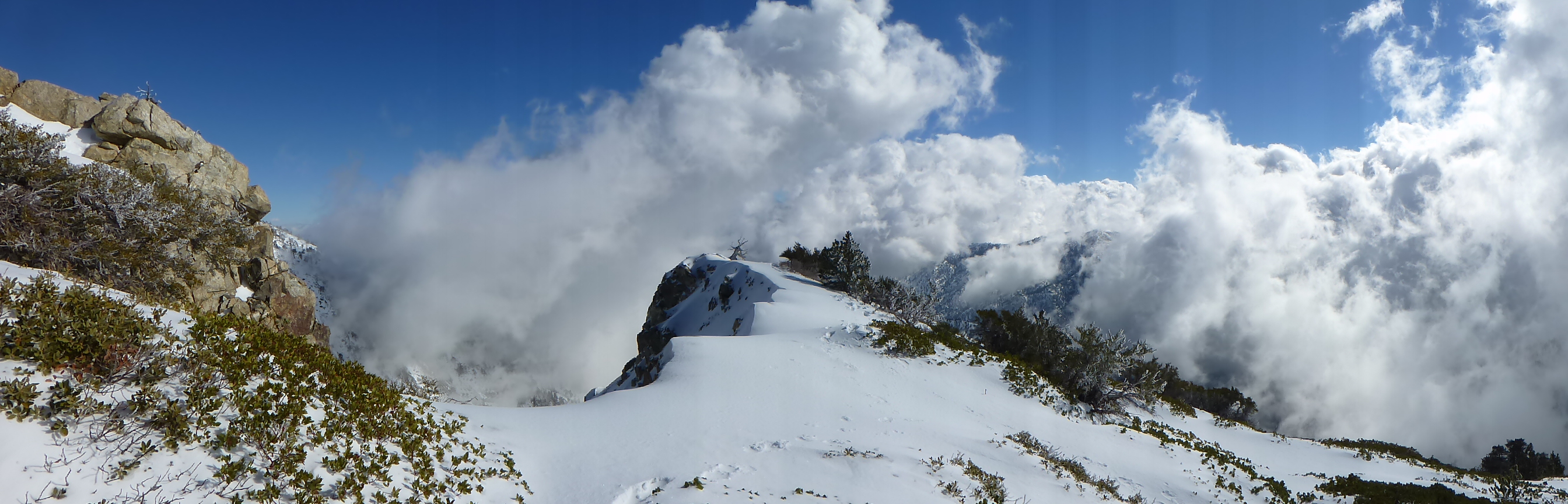
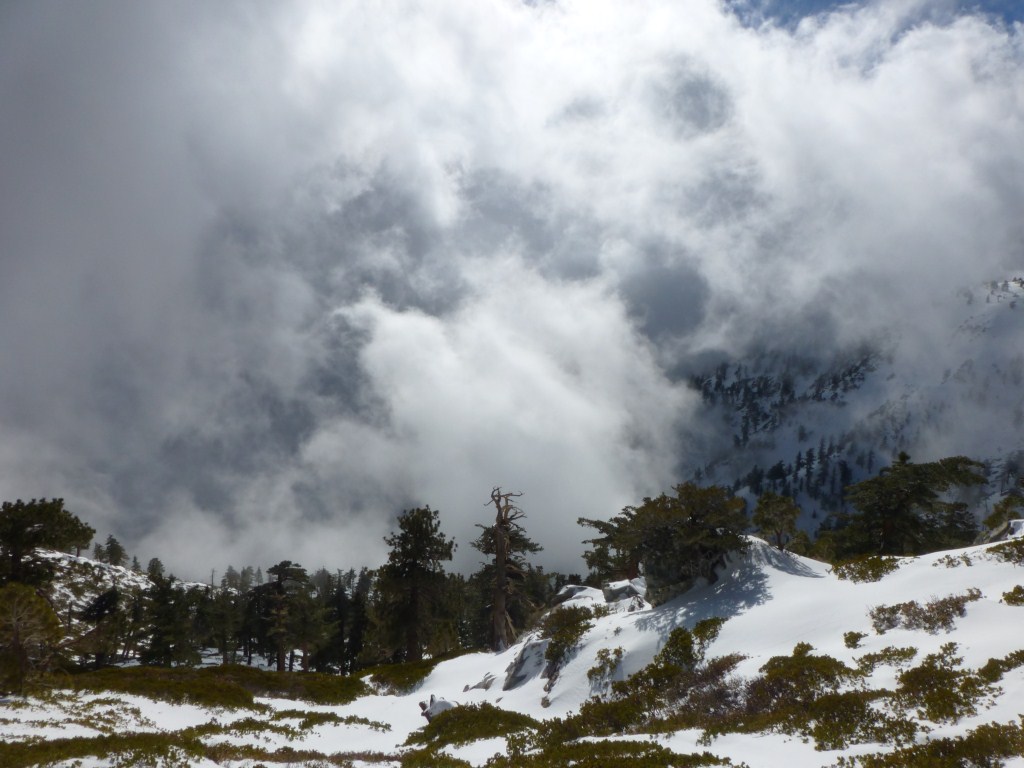
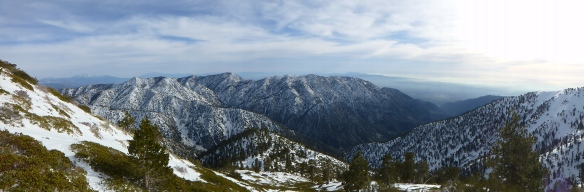
View near the summit of San Gabriel Peak.

View near the summit of San Gabriel Peak.

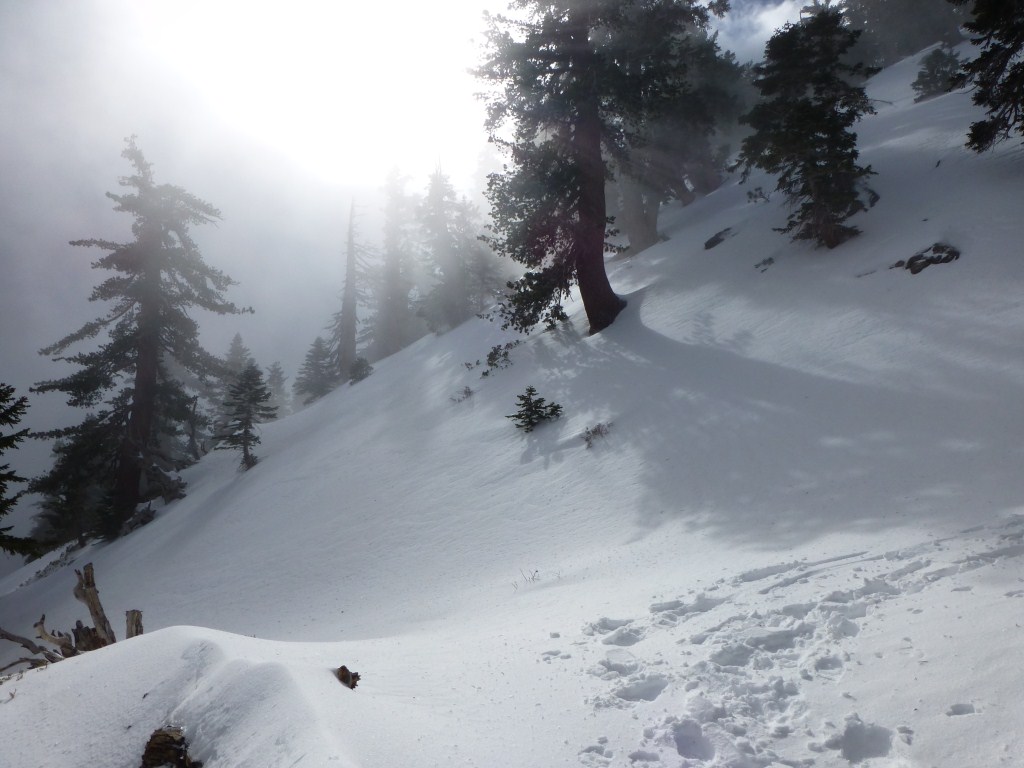
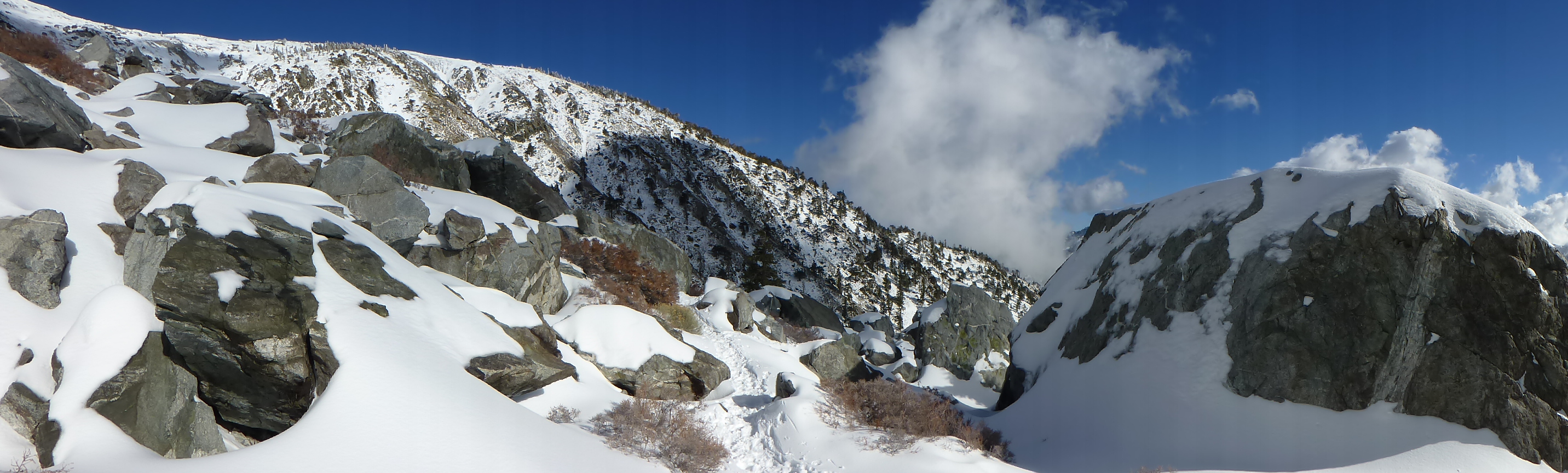
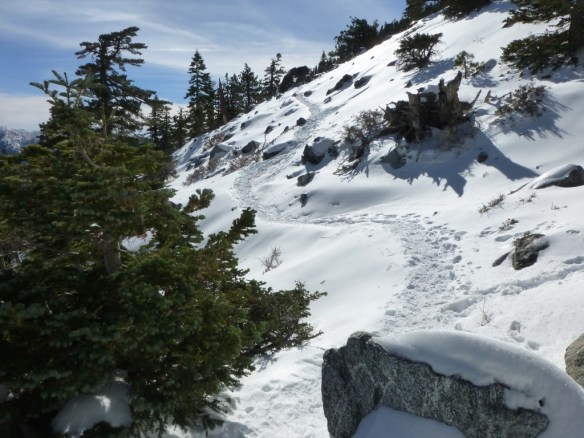
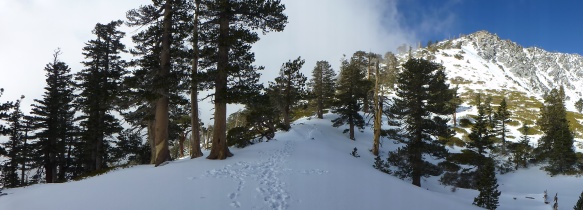
Hiking to San Gabriel Peak from the north side of the mountain is a great experience that is between the two previous options in terms of snow presence and required equipment.  Being on the north side and at a higher elevation than Inspiration Point, snow lasts longer.  So, it can remain for a couple weeks making timing less important.  It can be hiked without special gear.  However, there are very small portions that get a little icy.  So, if you have microspikes or crampons they can be helpful.  I used this trail to try out my snowshoes for the first time.  The snow was deep enough for my snowshoes to work but not deep enough for them to be required as illustrated by the snowshoe prints in the photo above.  Next time I go, I’ll just bring my microspikes.  If Mt. Wilson Road is closed there will be no car access to the San Gabriel Peak Trailhead.  Park at Red Box (which is what I had to do on one of my snow hikes) and hike the short distance up Mt. Wilson road to the trailhead.

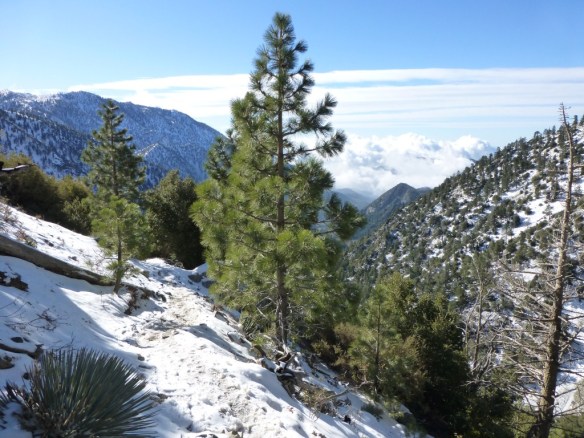
The San Gabriel Peak Trail near the trailhead where the snow was not as deep and a little icy compared with further up the trail.

The San Gabriel Peak Trail near the trailhead where the snow was not as deep and a little icy compared with further up the trail.

View looking out toward Mt. Baldy from the San Gabriel Peak Trail.

View looking out toward Mt. Baldy from the San Gabriel Peak Trail.

Zoomed in view of Mt. Baldy from the San Gabriel Peak Trail.

Zoomed in view of Mt. Baldy from the San Gabriel Peak Trail.

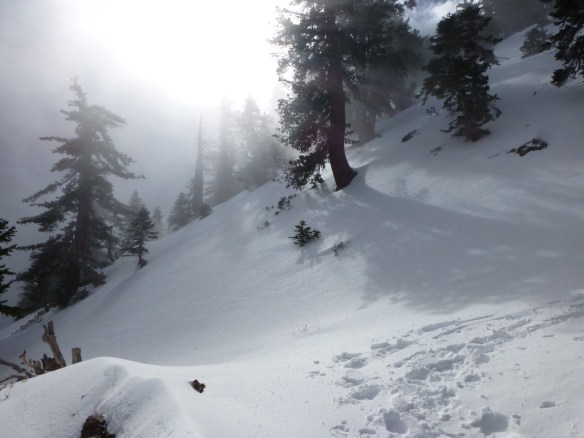
View toward Mt. Disappointment from the San Gabriel Peak Trail.  Snow can get slippery in this area that is more exposed to sunlight.

View toward Mt. Disappointment from the San Gabriel Peak Trail. Snow can get slippery in this area that is more exposed to sunlight.

View toward  the south face Josephine Peak and Strawberry Peak.  Note the lack of snow although this part of the San Gabriel Peak Trail is significantly lower.

View toward the south face of Josephine Peak and Strawberry Peak. Note the lack of snow on the south face of those mountains although this part of the San Gabriel Peak Trail is significantly lower.

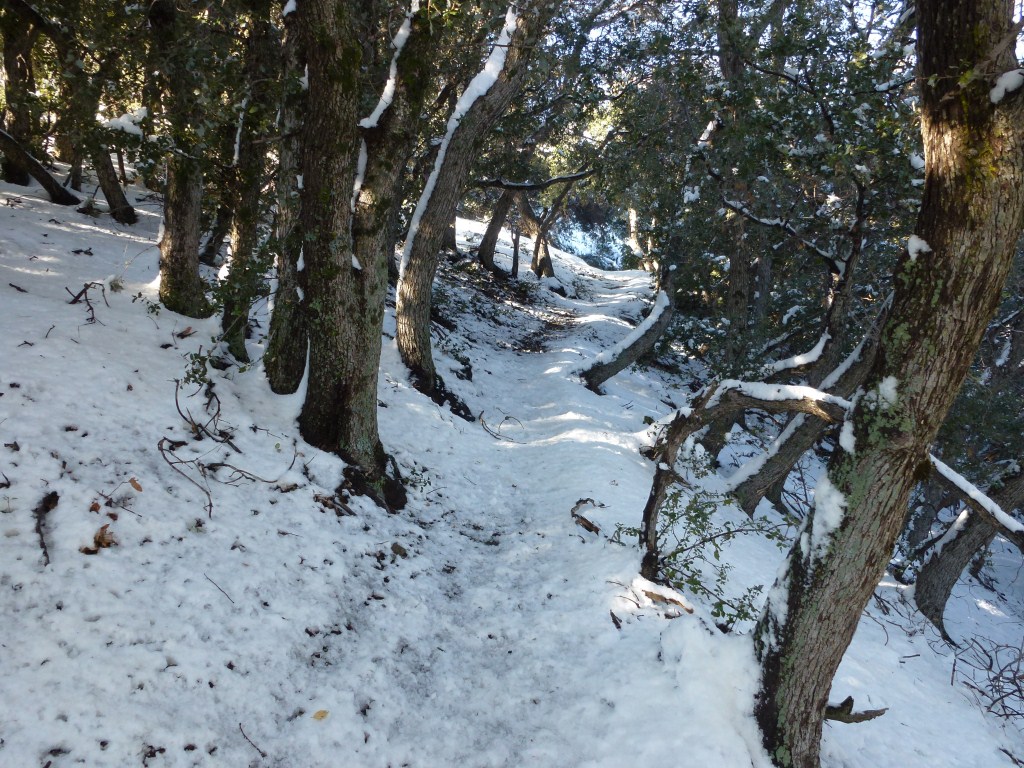
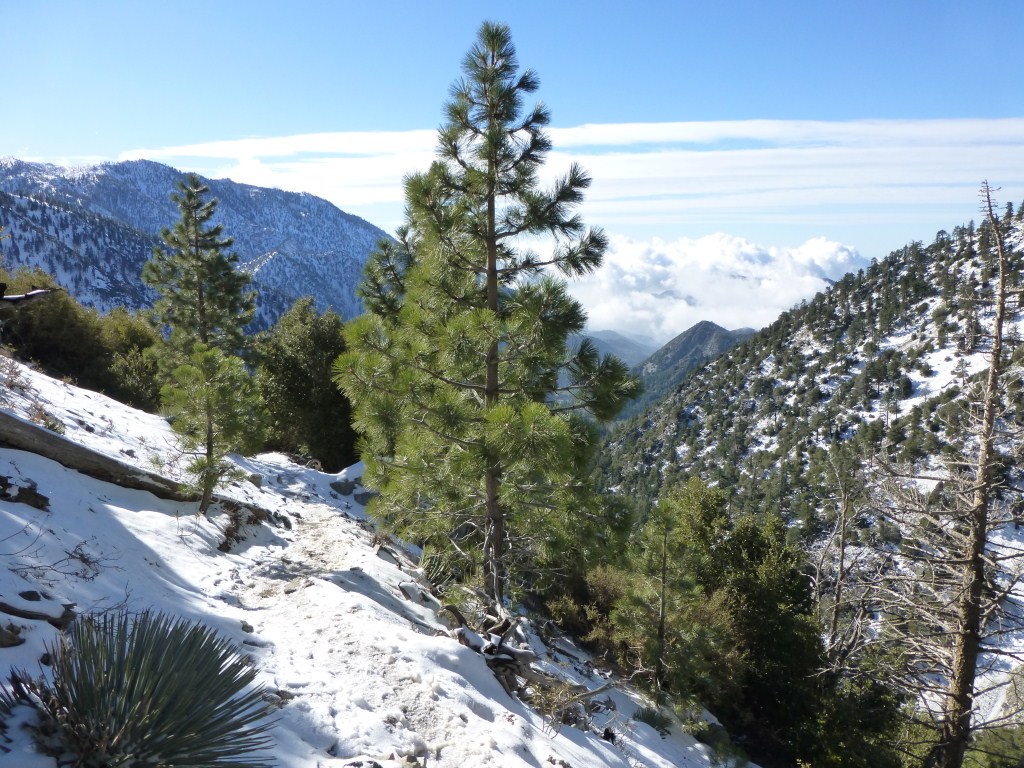
One of the many tree lined sections of the trail.

One of the many tree lined sections of the trail.

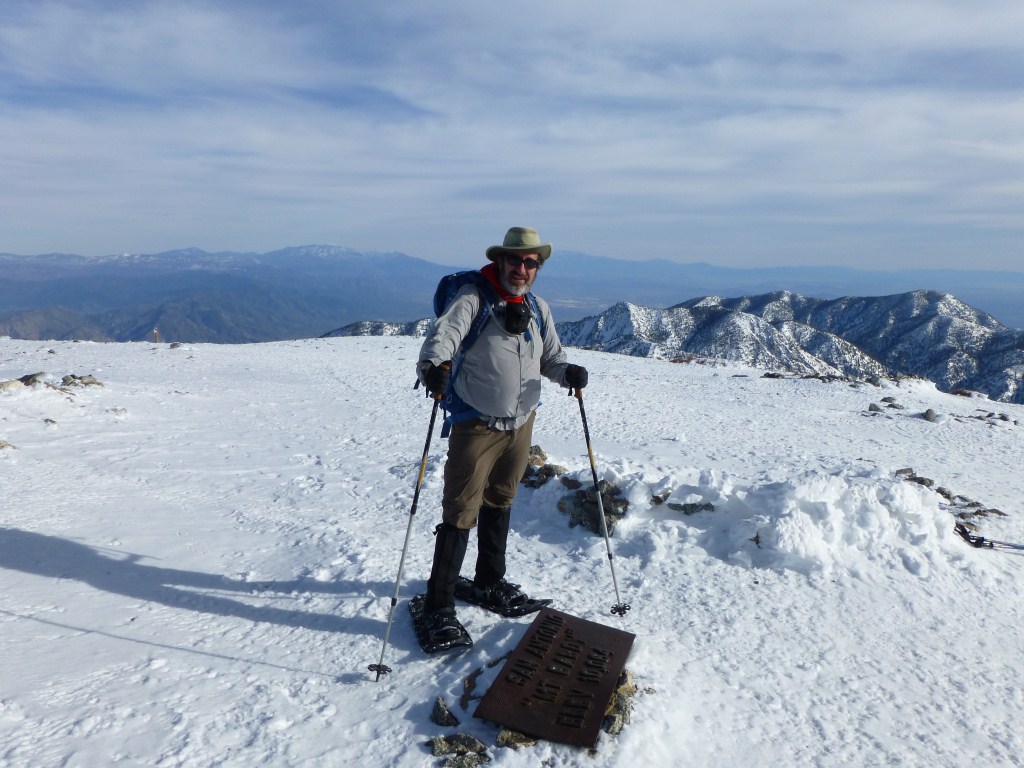
View of San Gabriel Peak.

View of San Gabriel Peak.

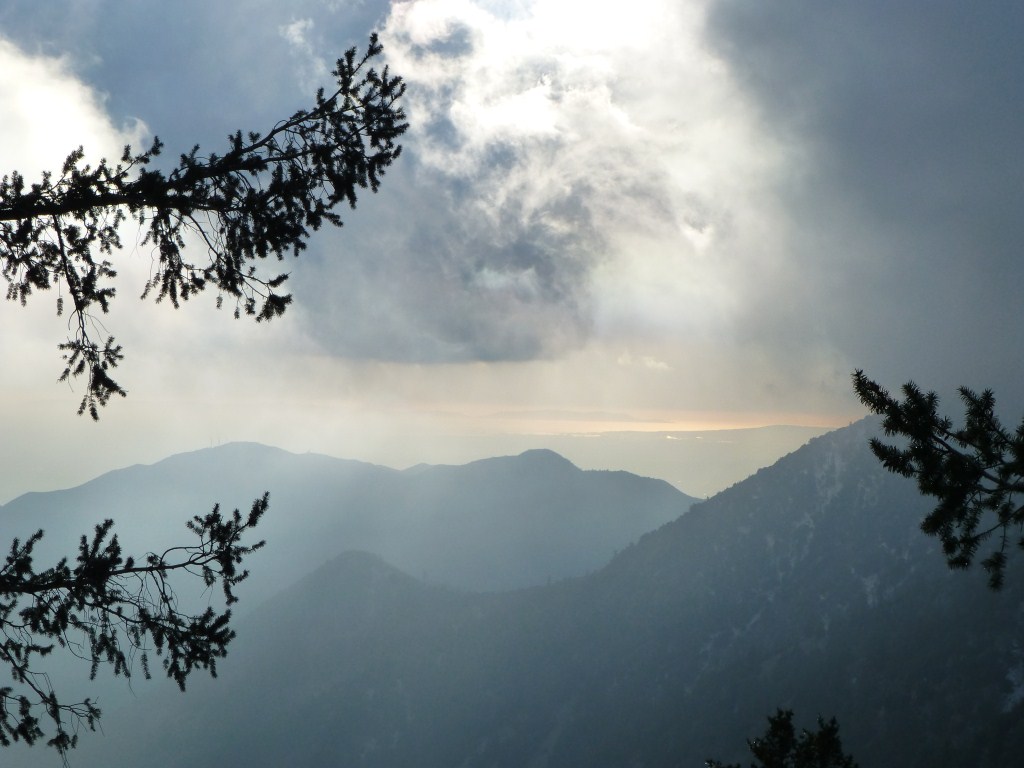
View south from San Gabriel Peak.

View south toward Mt. Lowe from San Gabriel Peak.

View north into the San Gabriel Mountain from the peak.

View north into the San Gabriel Mountain from the peak.

Weekly Nature Question #8: What Species of Snake is This?

My Weekly Nature Question is about my asking for help from the blogosphere (and other internet users) to learn about species living in Angeles Forest and to share that learning with others.  I’m really hoping that this turns out to be a viable and meaningful way to share knowledge.

The answer to last week’s plant question turned out to be Miner’s Lettuce and it is edible.  As more information is shared, it will appear on the Miner’s Lettuce Forest Life Page where there are already links to more information.

It turned out to be a good thing that I missed a week of this series largely due to my trip to Sequoia.  I didn’t know what the species was until last night when I saw that Dianne Erskine-Hellrigel identified the species through my Hiking Angeles Forest Facebook Page.  Thanks Dianne!  It turns out my photos are from the dried out period of the plant cycle.  So, that probably made it more difficult to identify.  I plan on going back to the trail in a month or two when the plant is green and take photos and add them to the forest life page.

This week nobody sent me any links to blog articles and I was unable to find any articles using the search feature in the WordPress Reader.

If you notice this post and have written (or decide to write) a post on Miner’s Lettuce, send me a link and I will add a link to its forest page and create a reference page like the one for 1Year. 365 Species to your blog.

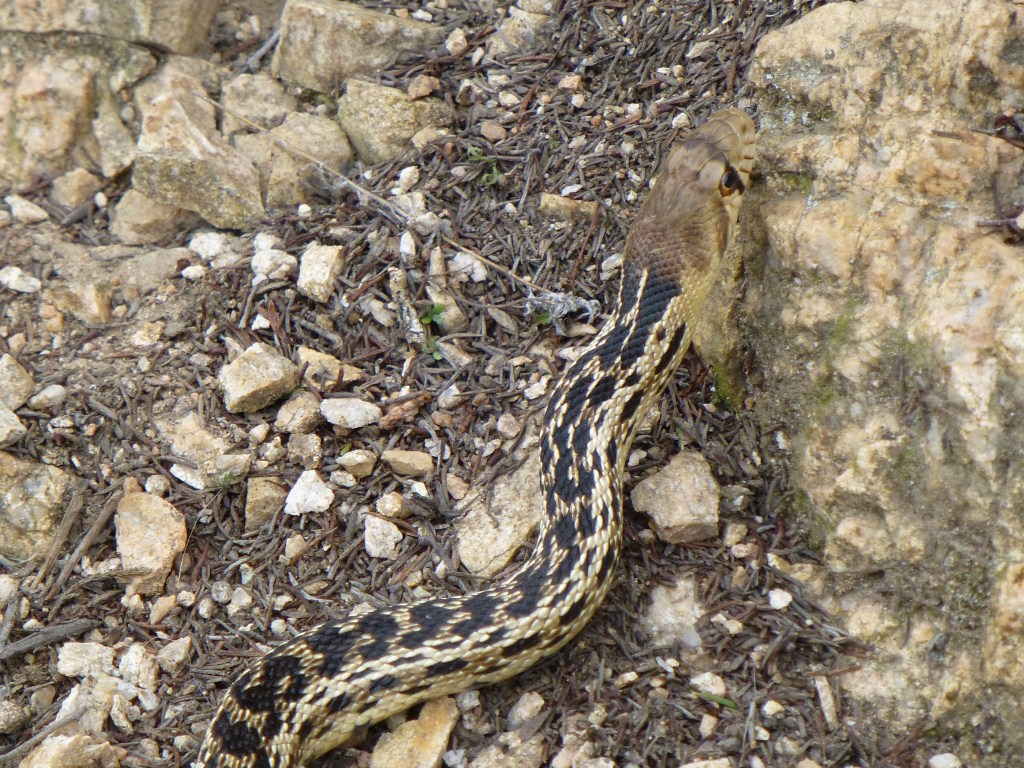
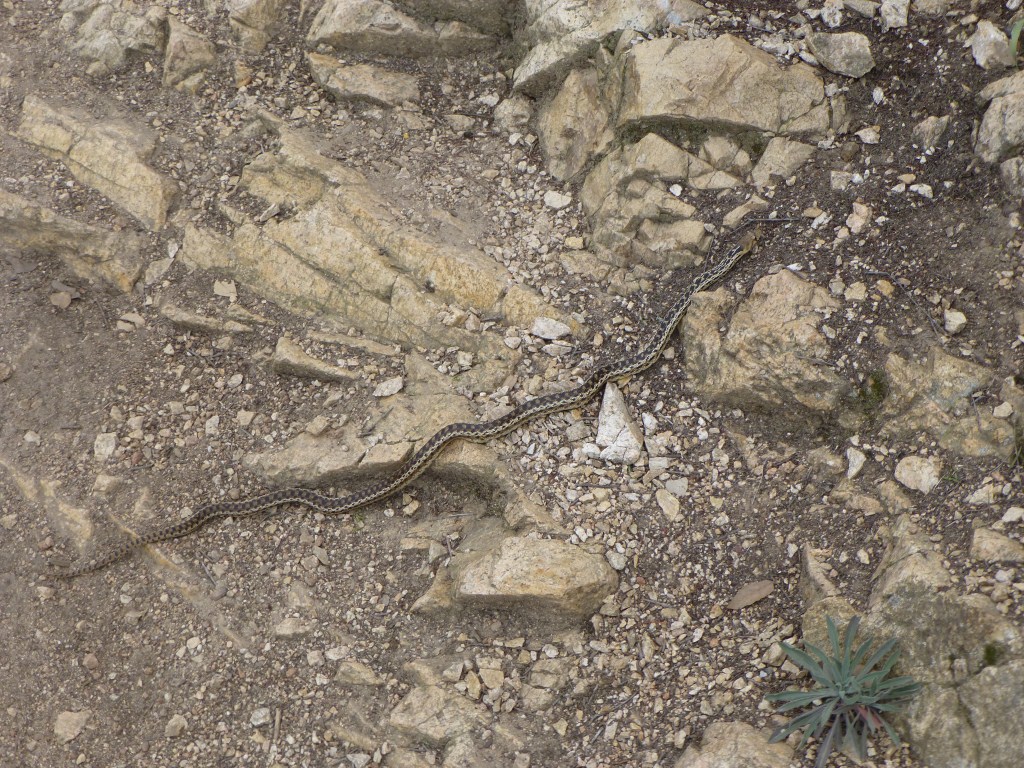
This Week’s Question:  What species of snake is this?  I’m pretty sure it’s a gopher or garter snake but don’t know which species.

January 2013

January 2013

Above photo taken from the Lower Sam Merrill Trail

January 2013

January 2013

Above photo taken from the Lower Sam Merrill Trail

January 2013

January 2013

Above photo taken from the Lower Sam Merrill Trail

January 2013

January 2013

Above photo taken from the Lower Sam Merrill Trail

Weekly Gallery Update #8: Header Images

My Weekly Gallery Updates are about sharing photos I’ve added to the gallery section of this site.  The galleries are my way of creating a visual approach to searching for hikes by having collections of photos that link to information about hiking to where each photo was taken.

Side note for bloggers: One of the reasons I chose the Twenty Eleven Theme was because it has lots of different features and functionality.  I expected that over time I might grow into it.  A feature that recently caught my attention is the option to have random headers load with each page click (WordPress bloggers can find this feature in themes that support it from the dashboard by clicking on the Appearance and then Header tabs).

Since a key component of my blog is to provide visitors with a visual means to find hikes, it makes sense to use the header area to assist in that goal.  I think that having a randomly appearing header image with each page click helps emphasize discovery.  This gallery will work a little different than the others as the images will be organized in alphabetical order by trail name instead of by most recently added.  This will allow someone who wants to know more about a trail in the header image to quickly find it by clicking on the link below the gallery image.  Also, because I need to crop the images to make them header sized, I’m including the whole image in the gallery as well.  I will update this gallery more often than the others to periodically inform people of this functionality.  Presently, there are ten header images, five are shown below.  The rest of them can be seen in the Header Images Gallery.

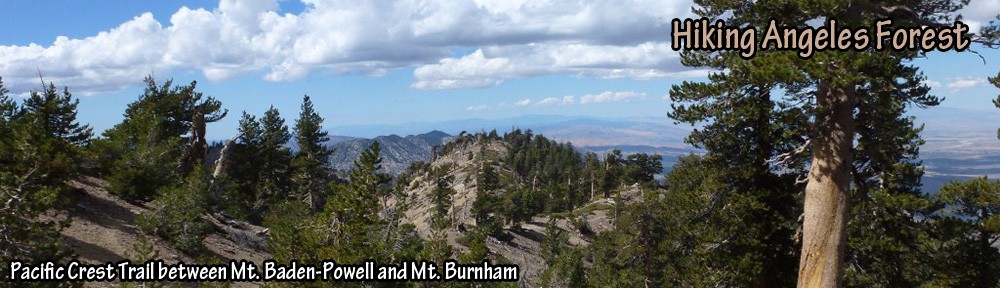
Pacific Crest Trail, October 2011

Pacific Crest Trail, October 2011

cropped-pacific-crest-trail_hdr.jpg

More photos of the Pacific Crest Trail from Mt. Baden-Powell to JCT Dawson Saddle

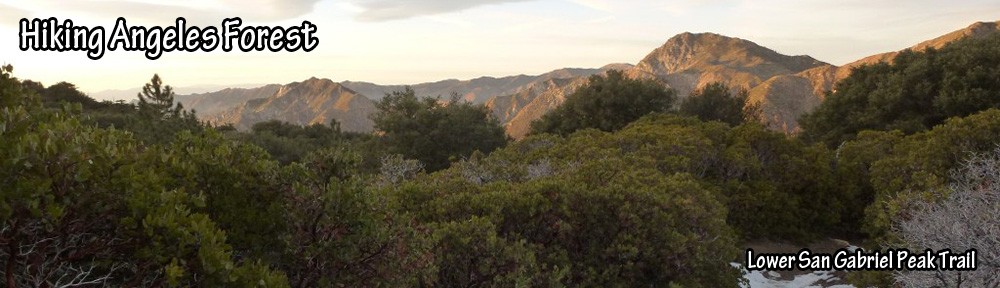
Lower San Gabriel Peak Trail, December 2011

Lower San Gabriel Peak Trail, December 2011

cropped-lower-san-gabriel-peak_hdr1.jpg

More photos of the Lower San Gabriel Peak Trail. 

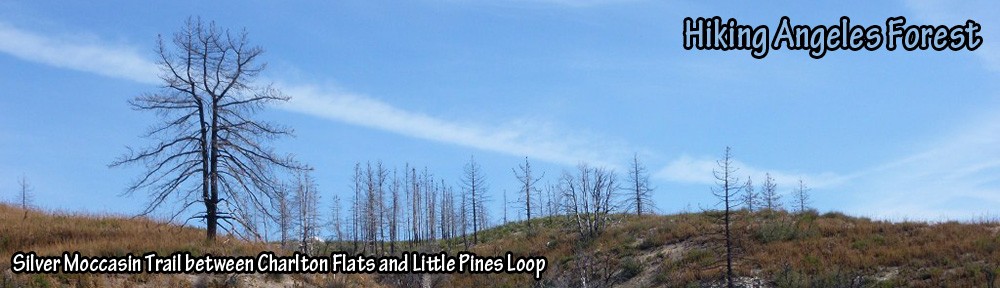
Silver Moccasin Trail, February 2012

Silver Moccasin Trail, February 2012

cropped-silver-moccasin_hdr.jpg

More photos of the Silver Moccasin Trail between Charlton Flats and Little Pines Loop

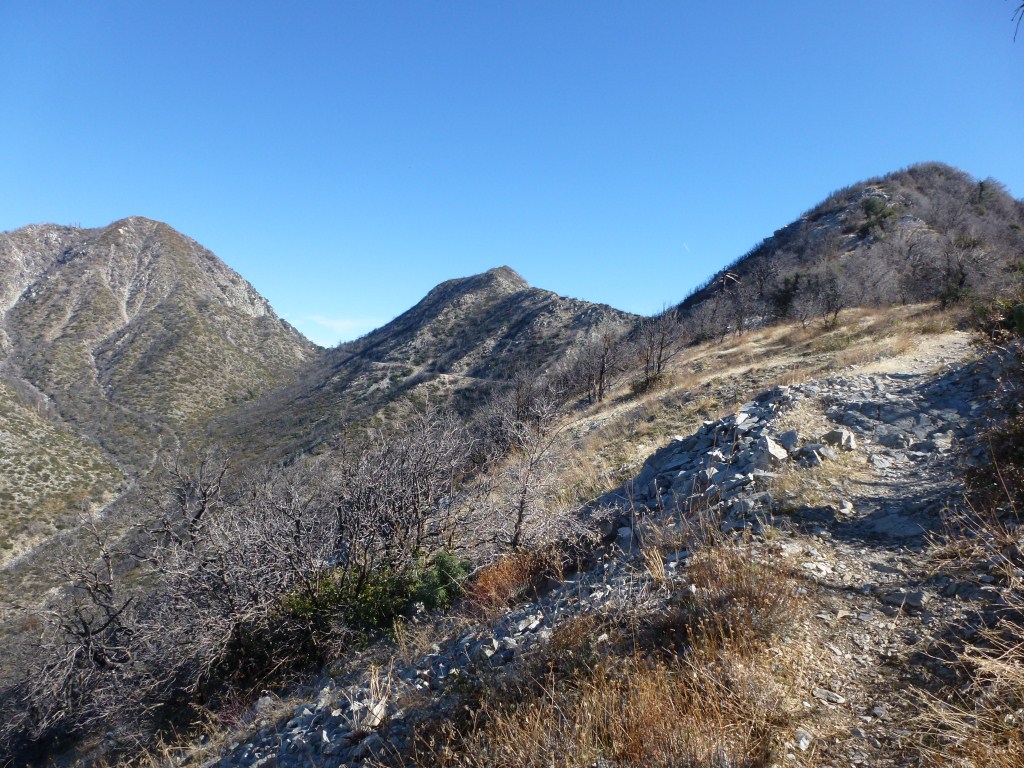
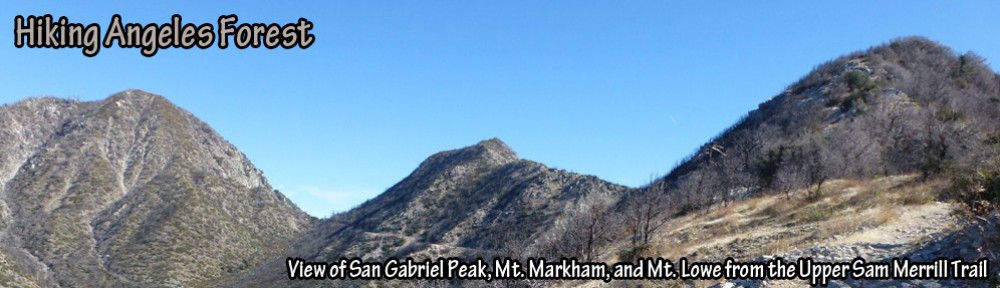
Upper Sam Merrill Trail, January 2012

Upper Sam Merrill Trail, January 2012

cropped-upper-sam-merrill_hdr.jpg

More photos of the Upper Sam Merrill Trail

Valley Forge Trail, November 2012

Valley Forge Trail, November 2012

cropped-valley-forge_hdr.jpg

More photos of the Valley Forge Trail

Snow Hiking in Los Angeles: The Baldy Bowl Trail

This is the second post in a series on snow hiking in Los Angeles.  My first post in this series emphasized an opportunity to hike at relatively low elevations closer to the edge of the city where a recent storm is required for snow to be present and no chains or special equipment are needed.

This one goes to the opposite extreme where snow is guaranteed until sometime in spring.  At 10,064 feet, Mt. Baldy is the highest point in Los Angeles County.  The trailhead from Manker Flats is above 6,100 feet and can often be in snow as well.  There is a ski area and restaurant up at Baldy Notch (elevation over 7,800 feet) and it’s worth taking a look at the weather conditions posted on their website (which typically includes an update on road conditions) before making the trip.  Unlike treks at lower elevations, it is important to carry chains.  It is also important to have microspikes, crampons and/or snowshoes as deep snow and icy conditions are common.  Due to over 3,900 feet of gain on this hike, conditions can change dramatically from a thin layer of mostly slippery ice to snow knee deep or more.  Therefore, I now carry both microspikes and snowshoes.
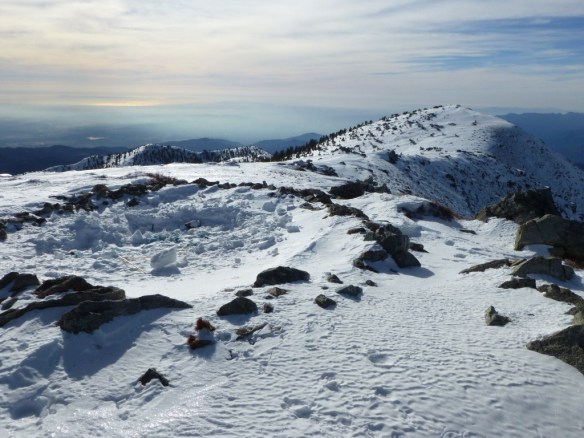
View of West Mt. Baldy from Mt. Baldy with Catalina Island in the distance.

View of West Mt. Baldy from Mt. Baldy with Catalina Island in the distance.

Interestingly, both times I’ve hiked the Baldy Bowl Trail (aka The Ski Hut Trail) in the snow it was with someone I met on Mt. Baldy last summer while I was training to hike to Mt. Whitney.  If I didn’t write this blog, I wouldn’t have stayed in contact with either of them.

The first hike was with Charles.  At that time, I only had snowshoes and the terrain from the trailhead to the ski hut was mostly soil with patches of ice and some stretches of shallow snow and I was better off carrying my snowshoes up to the ski hut on my back pack.   So, this portion of the trek was slow going and a little slippery for me.  Charles had crampons and experienced no problems.
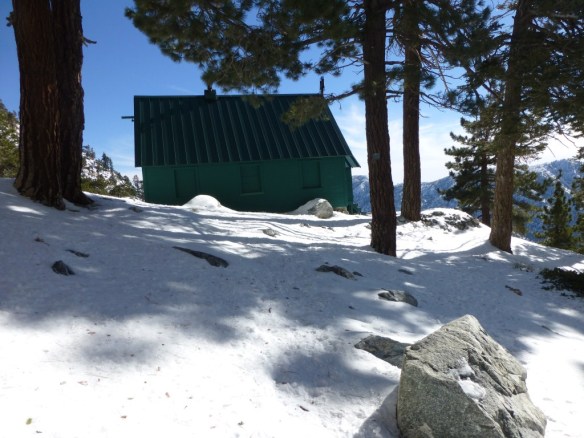
Mt. San Antonio Ski Hut

Mt. San Antonio Ski Hut

At the ski hut, it didn’t look good from a time perspective for me to make the summit.  There were others there who all had crampons.  One of them had an ice axe and was about to head straight up the bowl.  Another had hiked the bowl in snow numerous times.  It was getting late and we all had concerns about the safety of my hiking the trail without crampons as it would get more icy and slippery after the mountain began to block the sun shining on the trail.  Charles could easily make the summit because his crampons would make it easy to negotiate the trail after dusk.  So, Charles and I agreed that he would go on ahead while I put on my snowshoes.  I would turn back after around 2:00 pm and talk to him later.  After everyone else left and I had my snowshoes on, I met a couple skiers who trekked up to the ski hut (which is nowhere near the maintained ski slopes) and were eventually planning to ski down a ridge that had been very good to them in the past.  At this point I realized that there were at least as many people hiking this trail in the snow as there are without it and that there is a large range of equipment used and activities pursued.
A good thing about so many people hiking this trail in snow is the trail is made clear by those who arrive early.

A good thing about so many people hiking this trail in snow is the trail is made clear by those who arrive early.

It was a pleasure to get my snowshoes on and start snowshoeing in deeper snow as I made my way up the trail.  It turned out to be quicker for me to hike through the rocky base of the bowl in snow than it is in normal conditions as enough snow filled in the space between rocks and made a more uniform surface.
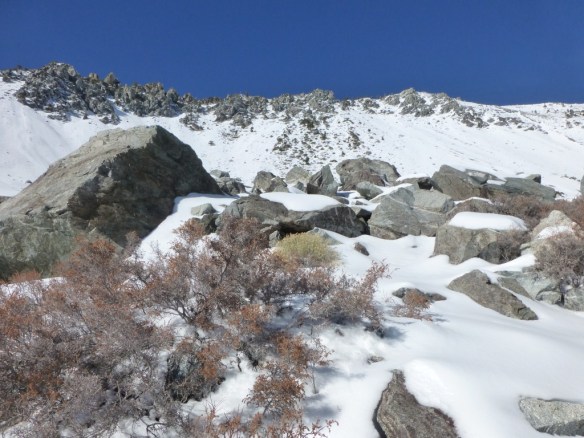
Looking up at the ridge from the base of Baldy Bowl.

Looking up at the ridge from the base of Baldy Bowl.

After passing through the comparatively flat base of the bowl the trail gets steep and the snow became much deeper.  As a result, the advantages of snowshoes on this part of the trail became apparent.  My feet didn’t go as far into the deep snow and the Televators on my snowshoes which support raising my heal while keeping the snowshoe flush with the terrain made it significantly easier to handle the steeper slopes.
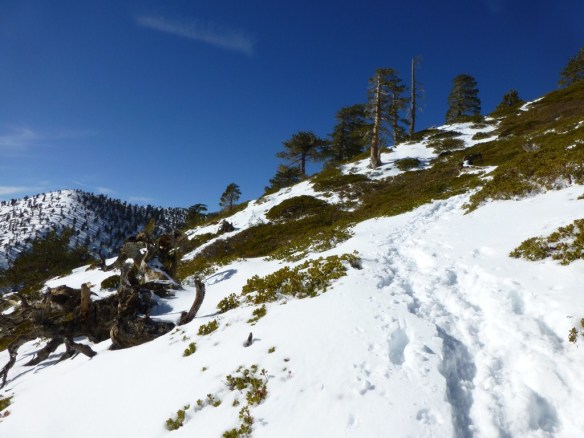
One of the steeper portions of the Baldy Bowl Trail.

One of the steeper portions of the Baldy Bowl Trail.

With my new found speed, it didn’t take long to pass Charles.  It soon became clear that I would have a shot at making the summit after all.  I caught up with another hiker named Jim and joined him for the last part of the way to the summit.
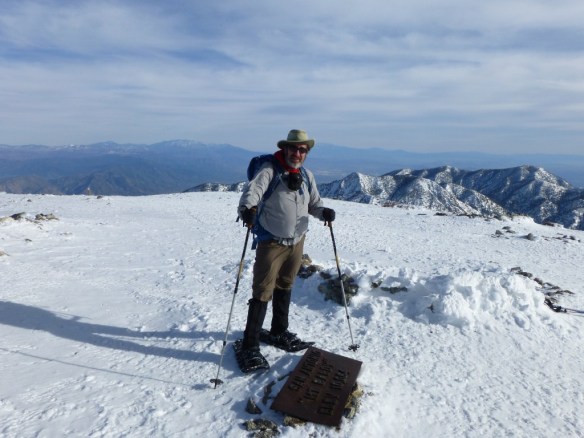
Kyle Kuns at Mt. Baldy (photo by Jim).

Kyle Kuns at Mt. Baldy (photo by Jim).

There were excellent views all the way down the mountain.  I was once again slowed below the ski hut allowing Charles to catch up with me after he also made the summit.
View looking down the Baldy Bowl Trail and across toward Thunder Mountain, Telegraph Peak, Timber Mountain, Cucamonga Peak, and Ontario Peak. (click to enlarge).

View looking down the Baldy Bowl Trail and across toward Thunder Mountain, Telegraph Peak, Timber Mountain, Cucamonga Peak, and Ontario Peak. (click to enlarge).

The next hike with Scott was significantly different and he also blogged about it.  Learning from my last trek, I bought a pair of Kahtoola microspikes  which worked fantastically on the lower part of the trail where there was more soil and slippery ice than snow.  These are lightweight enough (and would have been very helpful on my trek to Mt. Whitney) that I’ll be bringing them on this year’s summer trip to the High Sierras.  A key component of this hike was the weather.  The hike began under clear skies with clouds off far in the distance below us.
Clouds off in the distance as seen from the Baldy Bowl Trail below the Ski Hut.

Clouds off in the distance as seen from the Baldy Bowl Trail below the ski hut.

We saw the clouds rolling in as we made our way up the mountain.  After we crossed the base of the bowl and started making our way up the steeper part of the mountain, the clouds started reaching our level.  The view south began to be completely blocked by incoming clouds.
Clouds rolling in along the steeper part of the Baldy Bowl Trail.

Clouds rolling in along the steeper part of the Baldy Bowl Trail.

When the trail met the ridge the view was split between clouds coming up quickly from the south and clear skies to the north.
Clouds to the south, clear skies to the north along the Ridge of the Baldy Bowl Trail.

Clouds to the south, clear skies to the north along the Ridge of the Baldy Bowl Trail. (Click to enlarge)

As we moved higher, the clouds continued moving in quickly and began to darken causing me to start to think about the possibility of getting caught in a snowstorm.
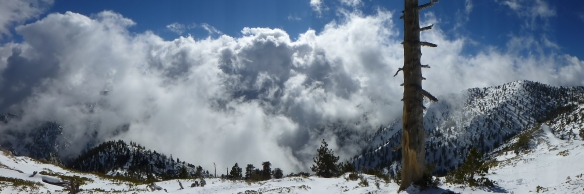
View south from the ridge along the Baldy Bowl Trail.

View south from the ridge along the Baldy Bowl Trail. (click to enlarge)

As impressive as the speed that the clouds were overtaking us was their depth.  At least a few hours from the trailhead, it became unclear whether or not we could summit and make it back down the mountain before snow started.  In addition, Scott was breaking in new hiking boots and it was his first time snowshoeing causing him to be more tired than on his previous summit.  So, we both decided that we wanted to head back.
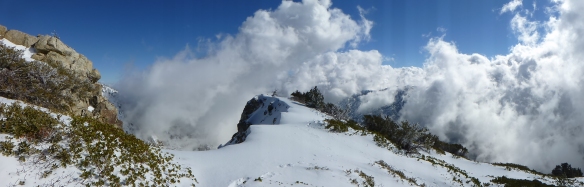
Tall clouds starting to overtake the higher elevations.

Tall clouds starting to overtake the higher elevations. (Click to enlarge).

The way down was filled with amazing views of fast swirling clouds.  The sky was so turbulent that the scene would usually change before I could snap a photo.
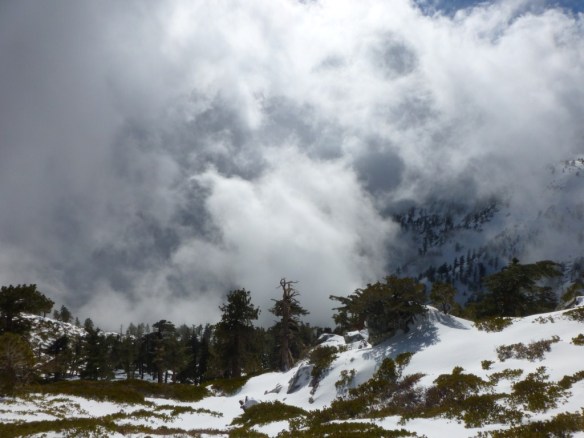
Swirling and turbulent clouds made an amazing trek down to the trailhead.

Swirling and turbulent clouds made an amazing trek down to the trailhead.

At times it felt mostly sunny with only a hint of the cloud formations.
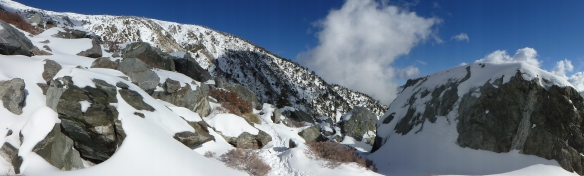
View along the base of the bowl just above the Ski Hut.

View along the base of the bowl just above the Ski Hut. (click to enlarge)

At others we were in the mist of the clouds.
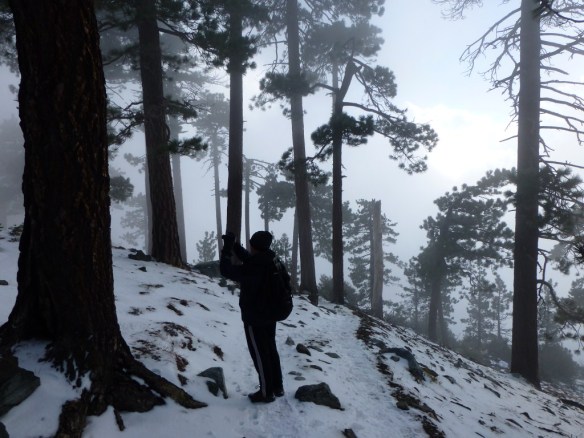
Scott Turner photographing the mist just below the Ski Hut.

Scott Turner photographing the mist just below the Ski Hut.

Once we got below the clouds we were treated to a pretty clear view out to the ocean.
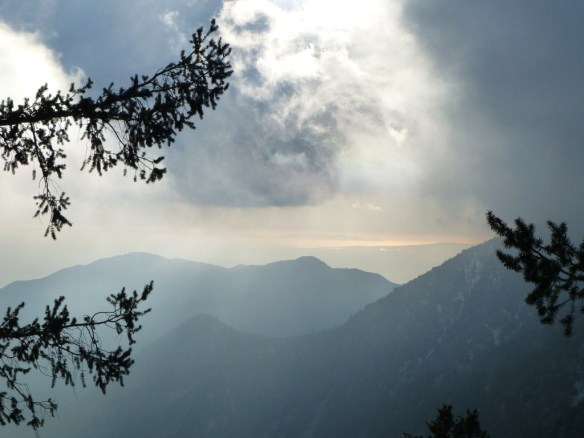
View out toward Catalina Island down near the bottom of the Baldy Bowl Trail.

View out toward Catalina Island down near the bottom of the Baldy Bowl Trail.

I had two very different days where I thought about different challenges.  Hiking in the snow can require special equipment like snow shoes to be safe.  The trail looks different in the snow and will be significantly harder to follow in a storm where lack of visibility can become a serious issue and the trail can disappear with snowfall.  Driving home could become a problem without chains.  All this and more should be considered in determining when to turn back.  The mountain will be there another day.  As recently as last Sunday someone died on this mountain.  This is a hard climb without snow.  If you go, be careful and be willing to turn back too early rather than too late.  That said, this place is amazing and I’ve taken numerous photos of the Baldy Bowl Trail these past two years on over ten assents.  If you’re ready for it, it’s a must do.
Nature’s Version of New York City

Last weekend I journeyed outside of Angeles Forest to Sequoia with Scott Turner.  Scott is the author of the blog 1000 Miles and has already written excellently about our hike on the Marble Falls Trail from our campsite at Potwisha, our snowshoeing trek through Giant Forest, and on Giant Sequoia trees.

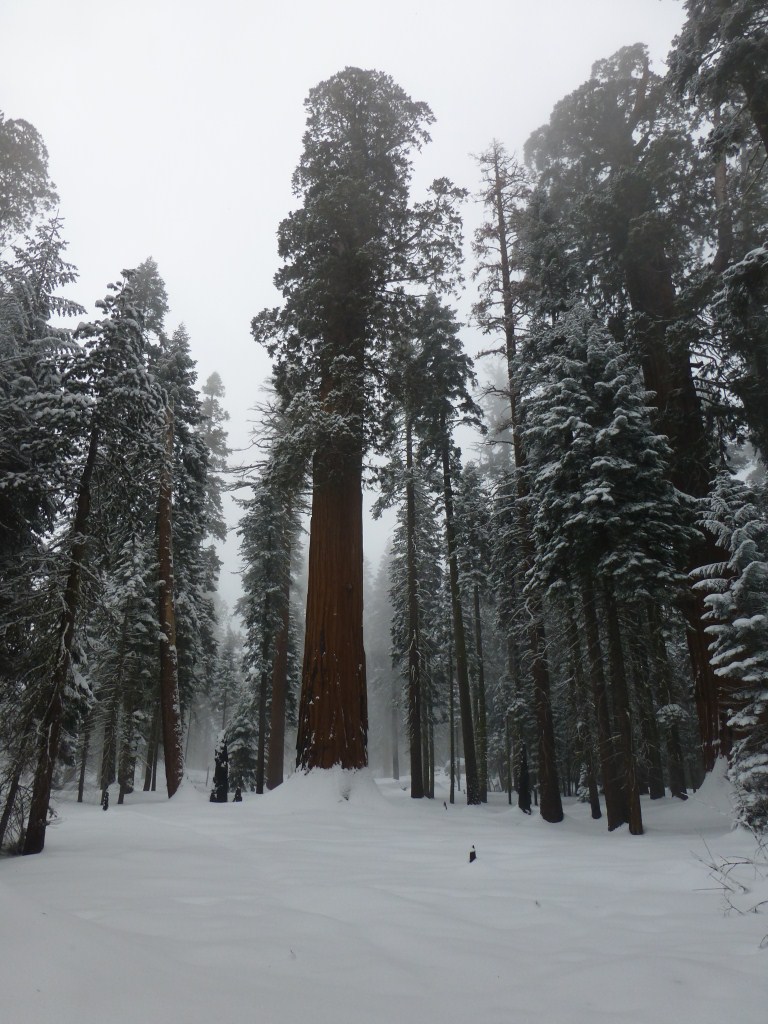
As I was snowshoeing through Giant Forest I became aware that my reactions to the trees and forest were similar in some ways to my reactions to the buildings and urbanism of New York City.  Like the skyscrapers of New York, I was in awe of the size of the trees and found them just as difficult to photograph for the same reasons.  I couldn’t get far enough away from a tree to angle the camera in a way that didn’t yield large distortions because other trees got in the way.  Even when the forest opened up a bit allowing a reasonable photo of an individual tree, other trees around it were close enough to falsely appear to dramatically angle inward.  The distortions remain even after cropping out about half of an image that was already in portrait mode to begin with as shown in the cropped photo below.

Scott Turner next to a Giant Sequoia along the Crescent Trail.

Scott Turner next to a Giant Sequoia along the Crescent Trail (click on image to see it shrunk down to fit your screen).

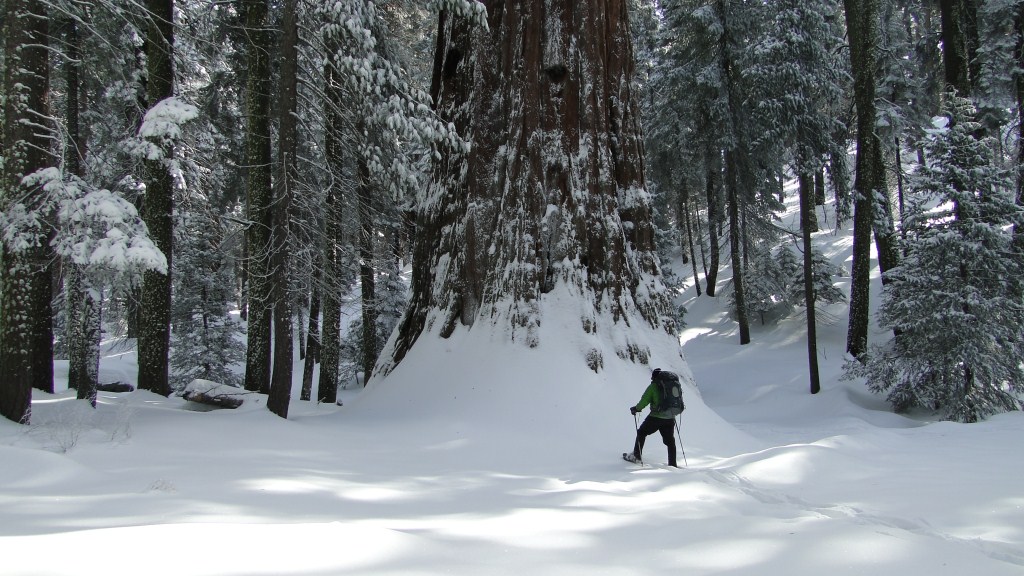
It was during my early attempts to photograph individual trees that I realized that the spatial composition of Giant Forest is proportionally similar to New York City.  So, I started looking for other similarities.  Skyscrapers typically have a ground floor that is articulated differently than the floors above.  The ground floor usually emphasizes the entryway and often has display windows, views into a lobby, or other features to give the building a more human scaled street presence.  Similarly, the transition from the trunk to the root system in the Giant Sequoias is so large as to be proportionately the same scale as the entryway of a skyscraper.  In the snow where the tapering out of the trunk at the base creates a surface for the snow to rest upon, the tree has an even more clearly articulated human scaled trail level presence.

Kyle Kuns at the base of a Giant Sequoia taking in the scale of the tree's connection to the ground.  Photo by Scott Turner.

Kyle Kuns at the base of a Giant Sequoia taking in the scale of the tree’s connection to the ground. Photo by Scott Turner.

I’m told that New Yorkers can easily spot tourists by noticing them stopping frequently to look up, often in a jaw dropped daze as they marvel at the skyline, at times dangerously oblivious to what is taking place at the street level around them.  Residents, on the other hand, are accustomed to the massive non-human scale of the skyscrapers.  On my three visits to New York City, I also looked upward frequently as I was often awestruck by the skyscrapers height and interested to see the tops of the towers and how they met the sky.  In the Giant Forest, I found myself stopping just as frequently along the trail, jaw dropped, and looking up to marvel at the impressive height of the trees for the same reasons.

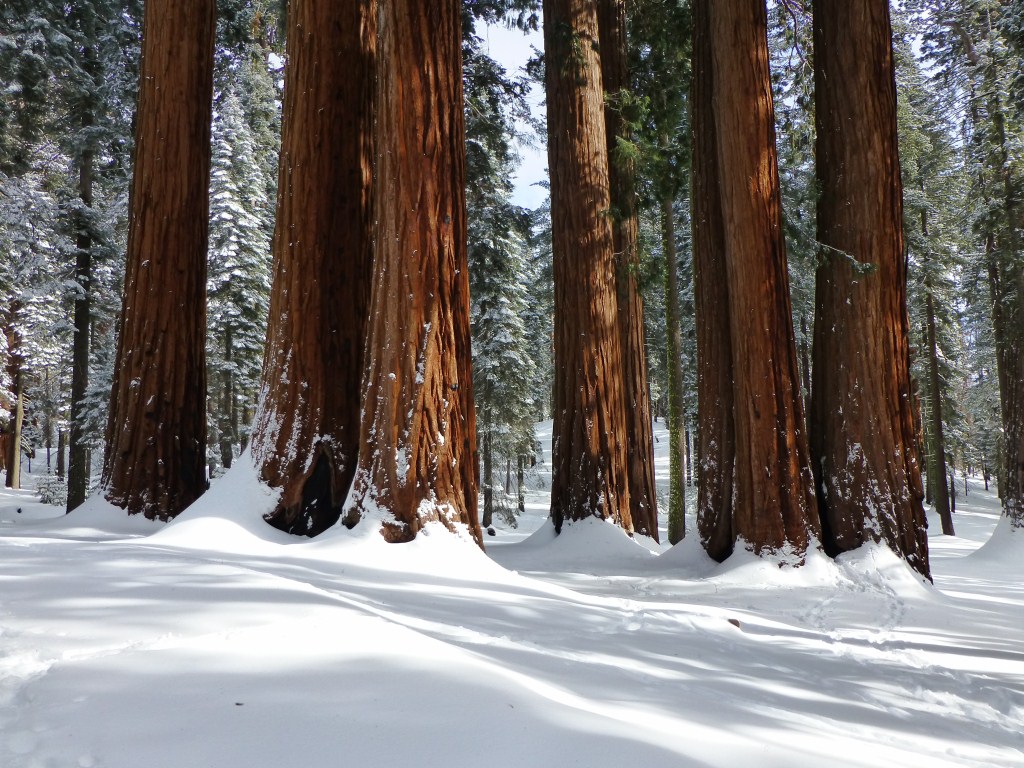
Looking up from inside as small cluster of Giant Sequoias

Looking up from inside as small cluster of Giant Sequoias.

For brief periods of time the awe inspiring verticality of the environment becomes somewhat peripheral to the immediate ground level focus required to move through the environment.  I say peripheral because there is always an awareness of the skyline even when one is looking straight ahead.  In both places there is a rich and varied texture to the ground level experience.  The skyscrapers in New York City come in various shapes, heights, materials, architectural styles, and functions.  There is a long history of their construction where things like technology and materials evolved allowing for more extraordinary projects to be realized.  The trees in Giant Forest also come in different heights, trunk thicknesses, shapes of their branches, and species.  Some trees have lived thousands of years, some are just taking root.  Both places are full of fascinating juxtapositions.

Trail level texture of Giant Forest.

Trail level texture of Giant Forest (click to enlarge).

In both places there are wonderful surprises.  A good example from New York City is the base of the Citicorp Building.  My favorite one from this trip to Giant Forest was seeing a young Giant Sequoia (taller than me) growing out of a fallen one.

Young Giant Sequoia growing out of a fallen one.

Young Giant Sequoia growing out of a fallen one.

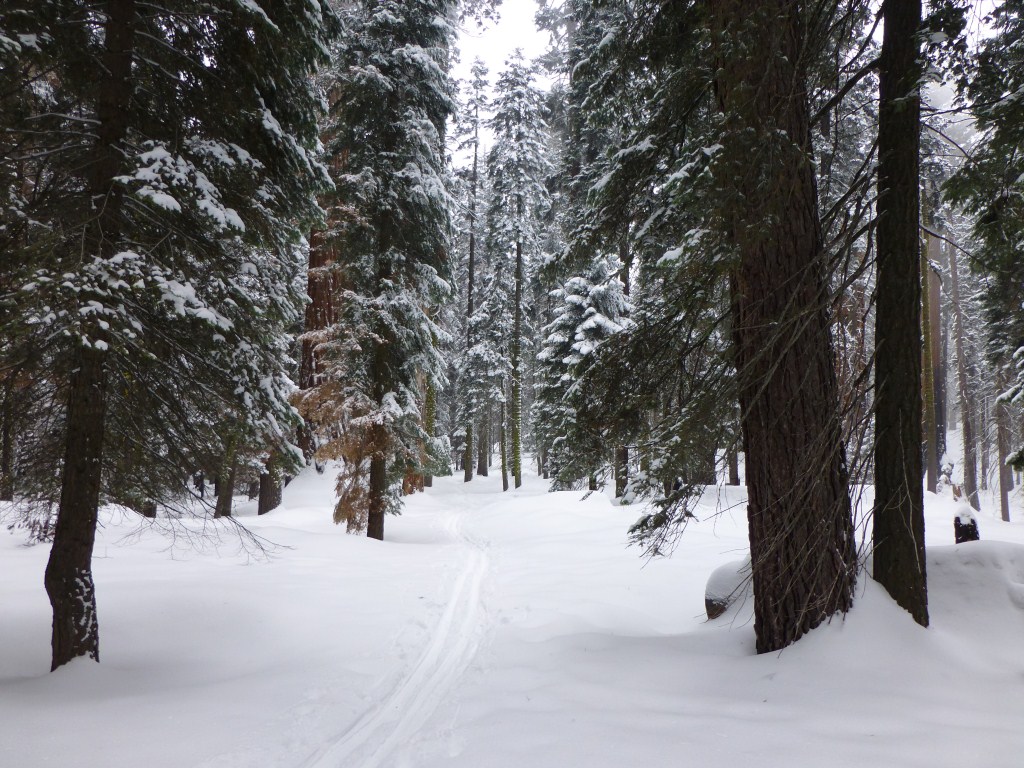
Both places are densely packed with tall structures covering large areas.  They are places of verticality.  Moving through them yields few opportunities for a long view that isn’t simply a view down a street or trail.  There are stretches (usually not very long)  where the buildings or trees that surround while spectacular in another context are average for these places.

Densely packed verticality along the Alta Trail.

Densely packed verticality along the Alta Trail.

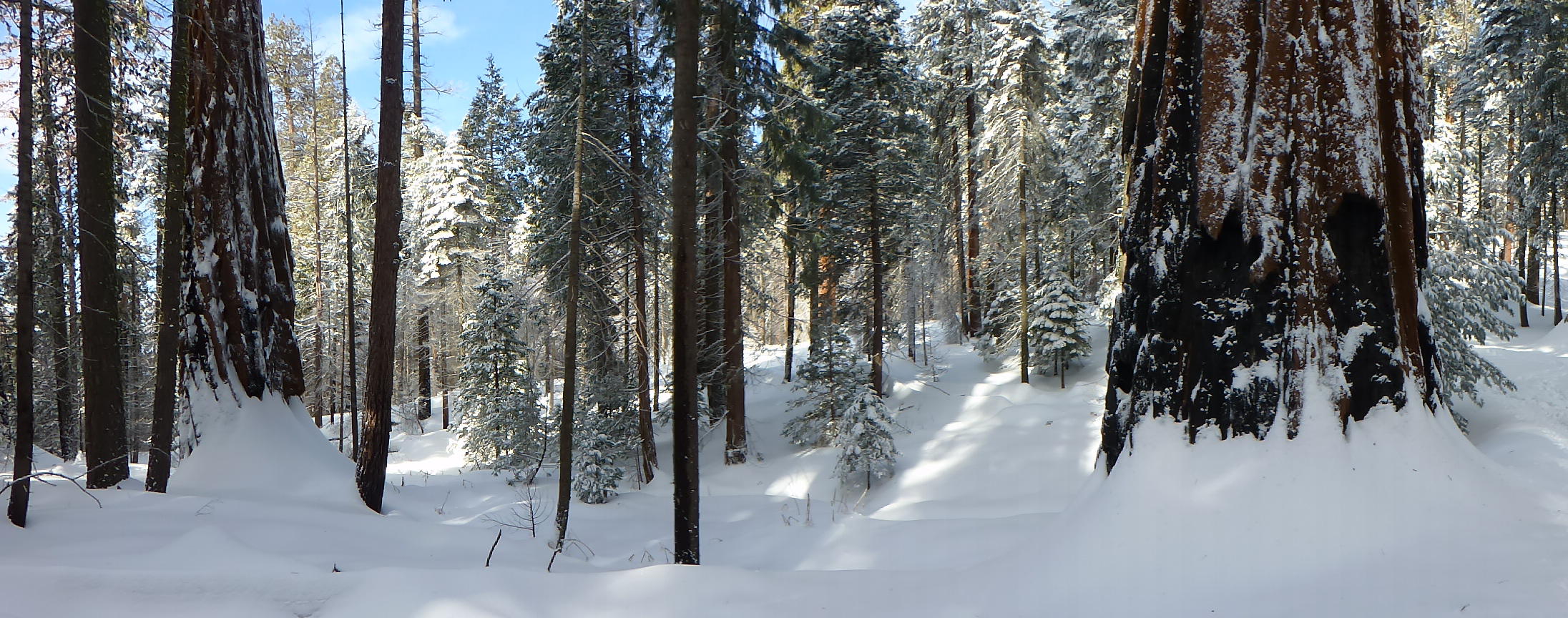
Those stretches are important and make any horizontal opening up of the ground level special.  In New York City there are small parks (by NY standards) like Bryant Park and plazas like that of the Seagram Building.  In the Giant Forest there are clearings that provide the horizontal space to bask in more sunlight (when it’s not cloudy or snowing) and  be far enough away from the trees to better take in their splendor (and take less distorted photos).

Small clearing along the Crescent Trail.

Small clearing along the Crescent Trail.

With all their verticality, both places also possess magnificently grand horizontal space where the skyline can be seen with little distortion.  These are places of radically different texture than what surrounds them and of a large enough scale to provide a captivating contrast.  Functionally, other things are going on in these places.  Central Park is the obvious example from New York City.  Meadows (which are technically a different ecosystem than the forest they are surrounded by) are what Giant Forest has for grand horizontal space.

Crescent Meadow (click to enlarge).

Crescent Meadow (click to enlarge).

In New York City, there are large projects involving multiple buildings that create a local place unto their own.  The cluster of buildings is recognizable from afar and there is a real sense of being within their domain as a unique place within the city.  Rockefeller Center is a good example.  In Giant forest there are several impressive groups of trees that grew up together forming a clearly defined local inside and outside.

View looking at the outside of the Parker Group.

View looking at the outside of the Parker Group.

View looking up from inside the Founders Group.

View looking up from inside of the Founders Group.

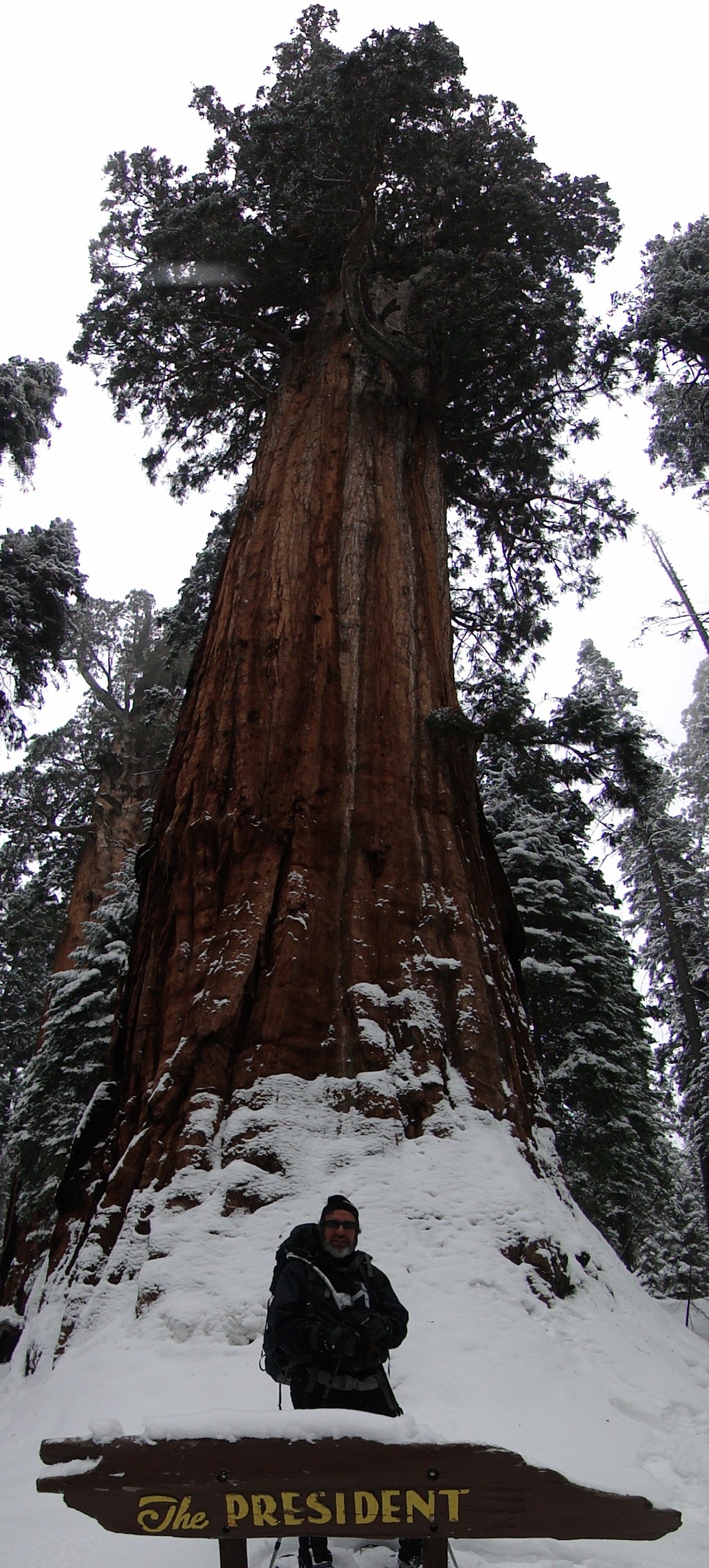
New York City has numerous individual skyscrapers (like the Empire State Building) that are world famous for their size and design and are destinations unto their own.  Similarly, Giant Forest has several trees that are world famous for their phenomenal size and beauty.  The Giant Sequoia known as The President is an excellent example.  National Geographic recently published an article and a video about The President.  It is worth watching the short video because it shows an elaborately created photo without any distortion that gives the best sense of scale of these amazing trees that I’ve seen.  According to National Geographic, this tree is 27 feet in diameter, 247 feet tall, holds nearly 2 billion leaves, is 3,200 years old, and still growing.  So, having learned about The President before going to Giant Forest, I made it a point to visit it and was definitely impressed by its magnificence.

Kyle Kuns in front of The President.  Vertical Panorama photo by Scott Turner

Kyle Kuns in front of The President. Vertical Panorama photo by Scott Turner

It got pretty cold (my car thermometer read 6 degrees when we left the visitor’s center) on this snowshoeing trek.  We even found ourselves trekking through a light snow fall.  Stopping for long made my hands get painfully cold.  The place is so photogenic, I stopped often anyway and took many photos of the Giant Forest, I even got a couple with bears.  I’m looking forward to returning.