Dawson Saddle to Mt. Baden-Powell

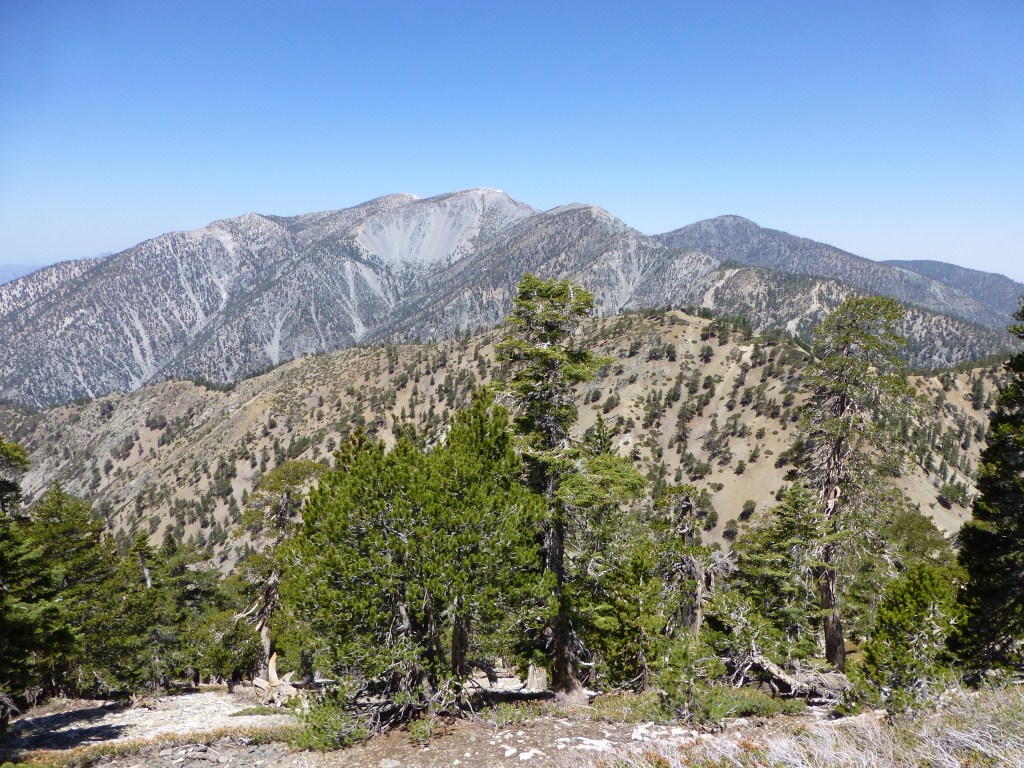
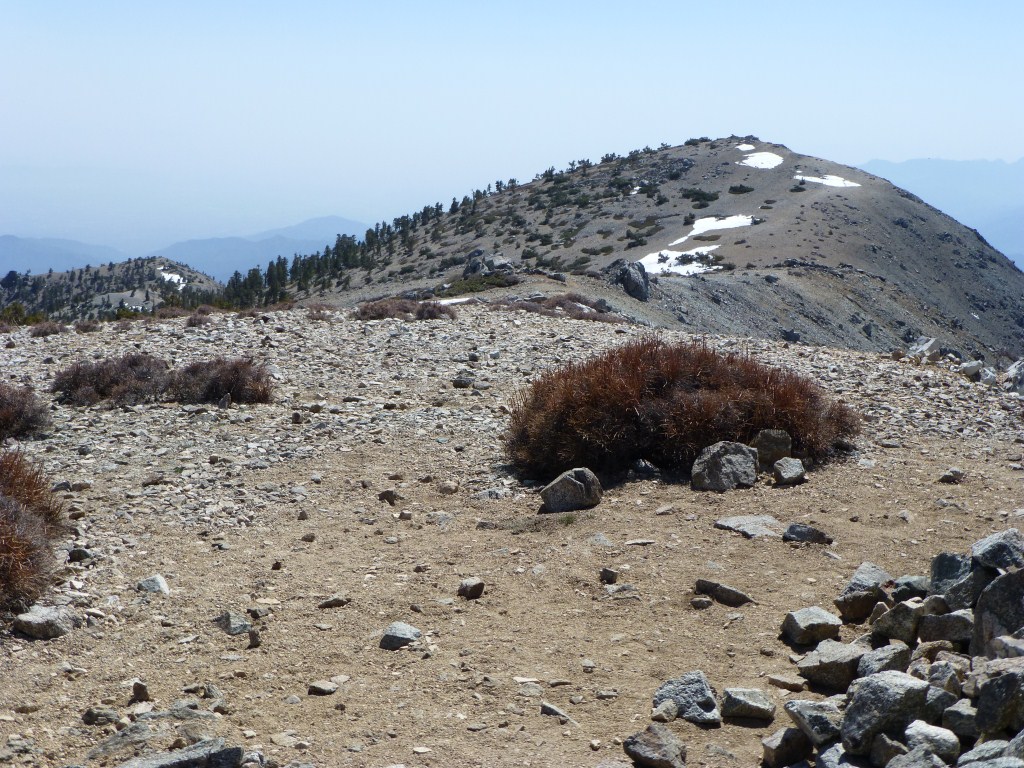
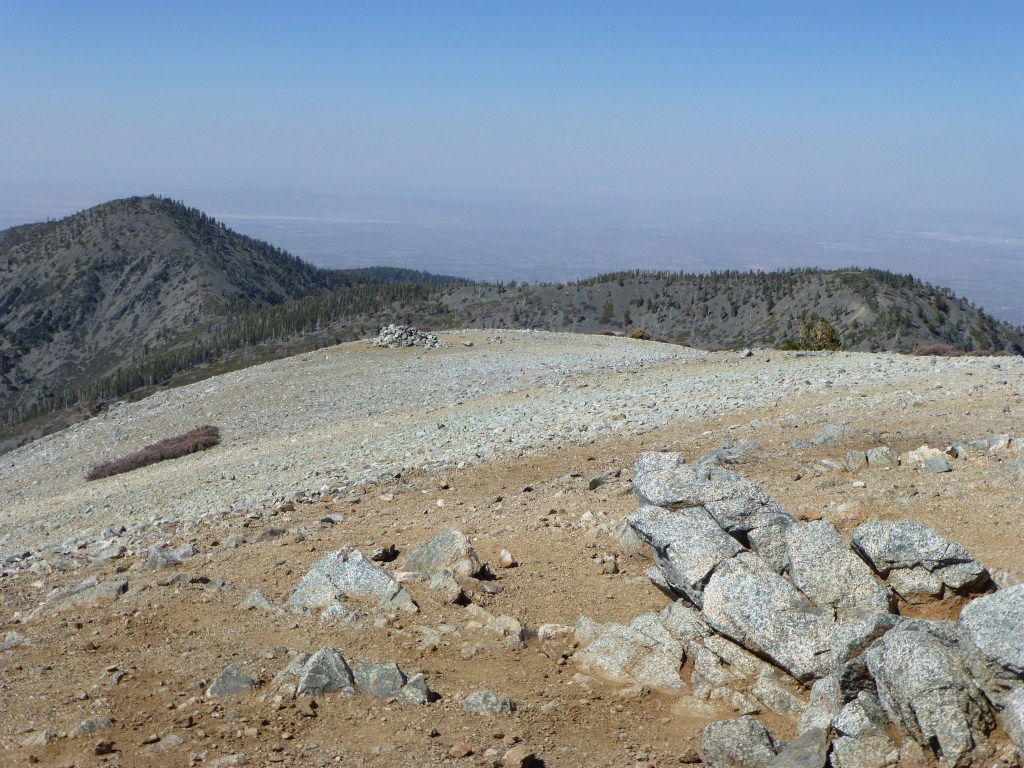
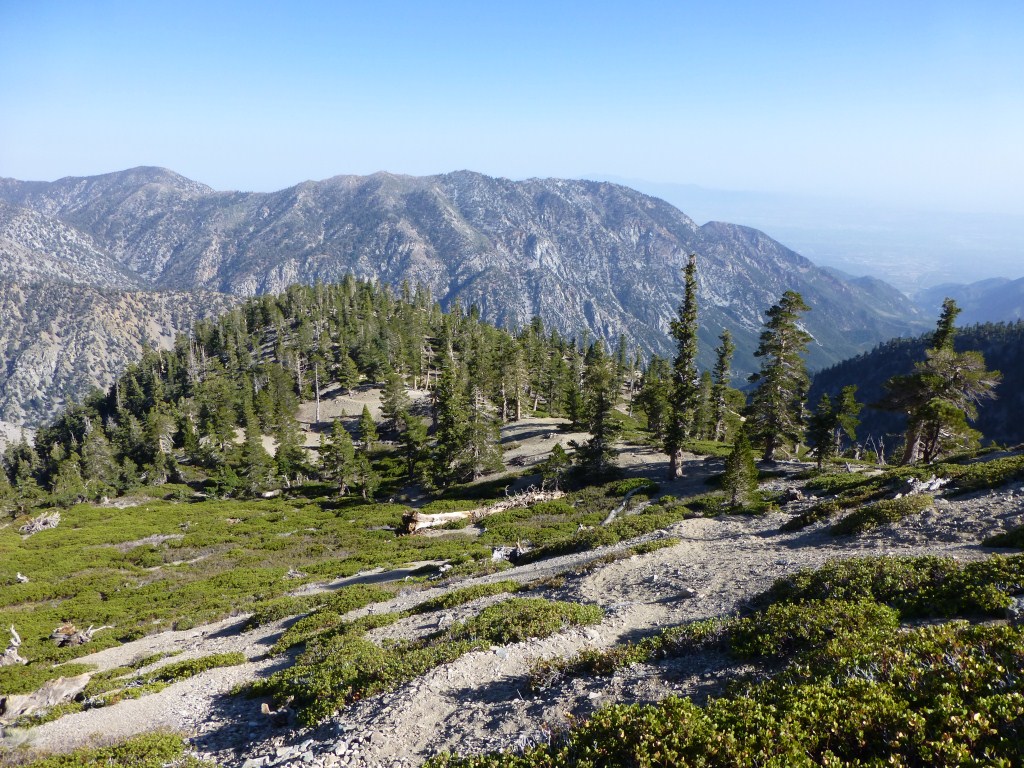
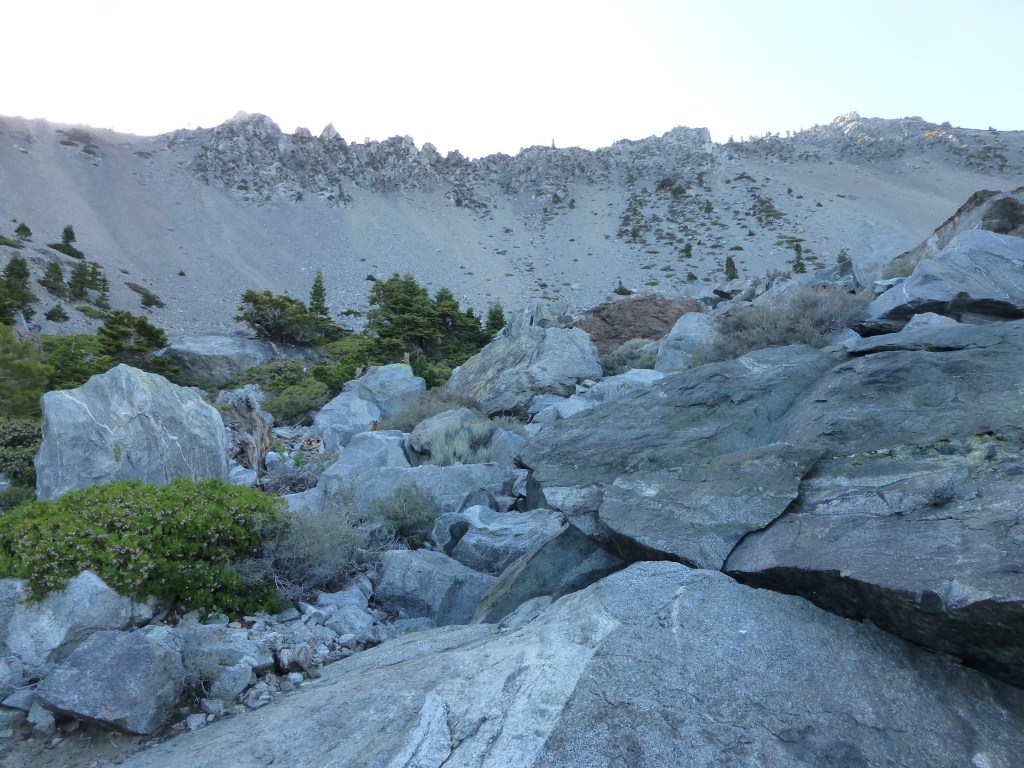
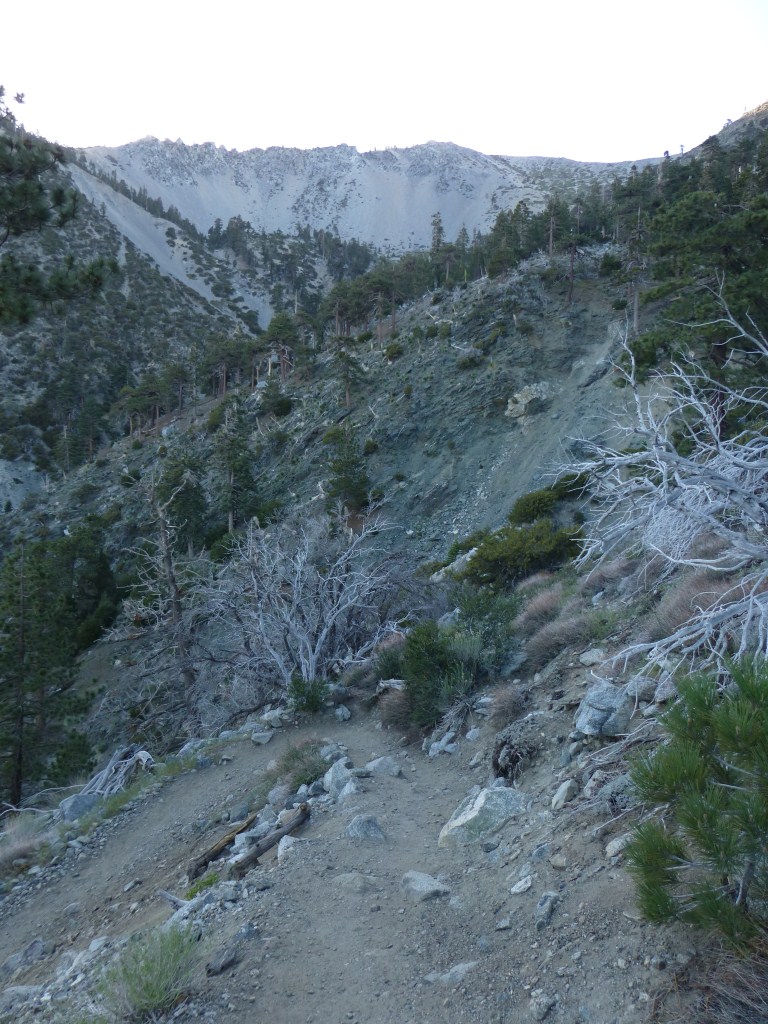
Last Saturday I hiked with my family from Dawson Saddle to Mt. Baden-Powell.  This is the easiest way to get to Mt. Baden-Powell.  Although the trail is about 3/4 of a mile longer than  the trail leading up from Vincent Gap, it has over 600′ less gain.  There are spectacular views and nice varieties of terrain along both the Dawson Saddle Trail and the Pacific Crest Trail leading to Mt. Baden-Powell.  I’ve hiked these trails numerous times and the photos below are from a variety of hikes at different time during the year.

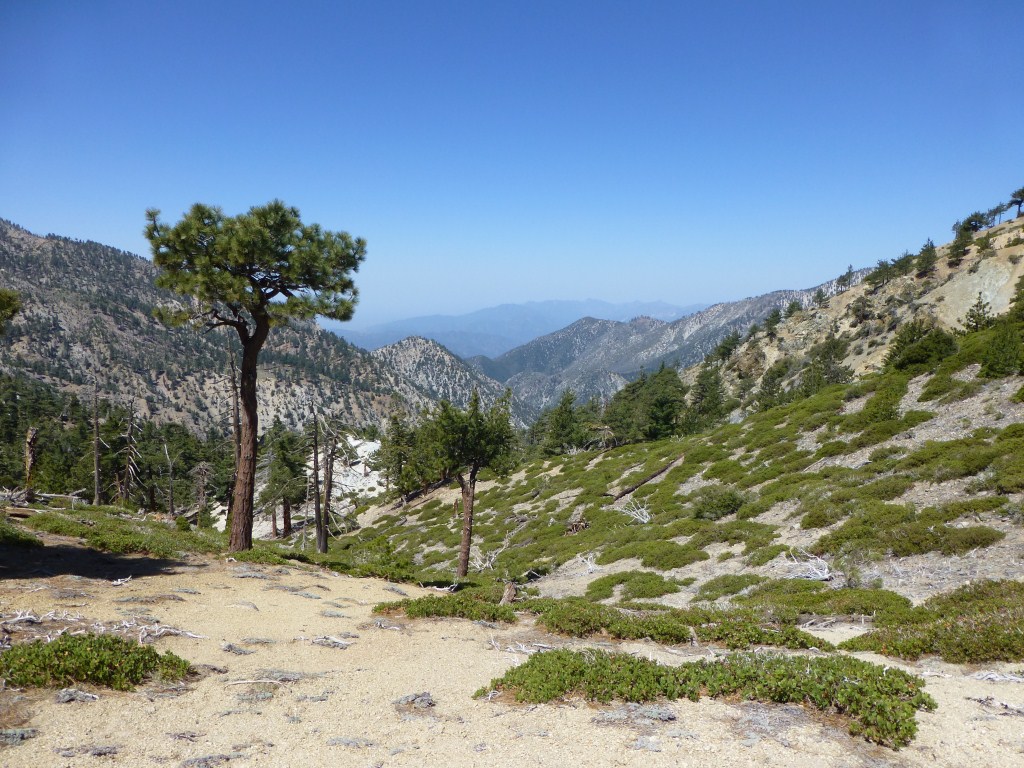
View toward desert from Dawson Saddle Trail

View toward Mt. Wilson from the Dawson Saddle Trail

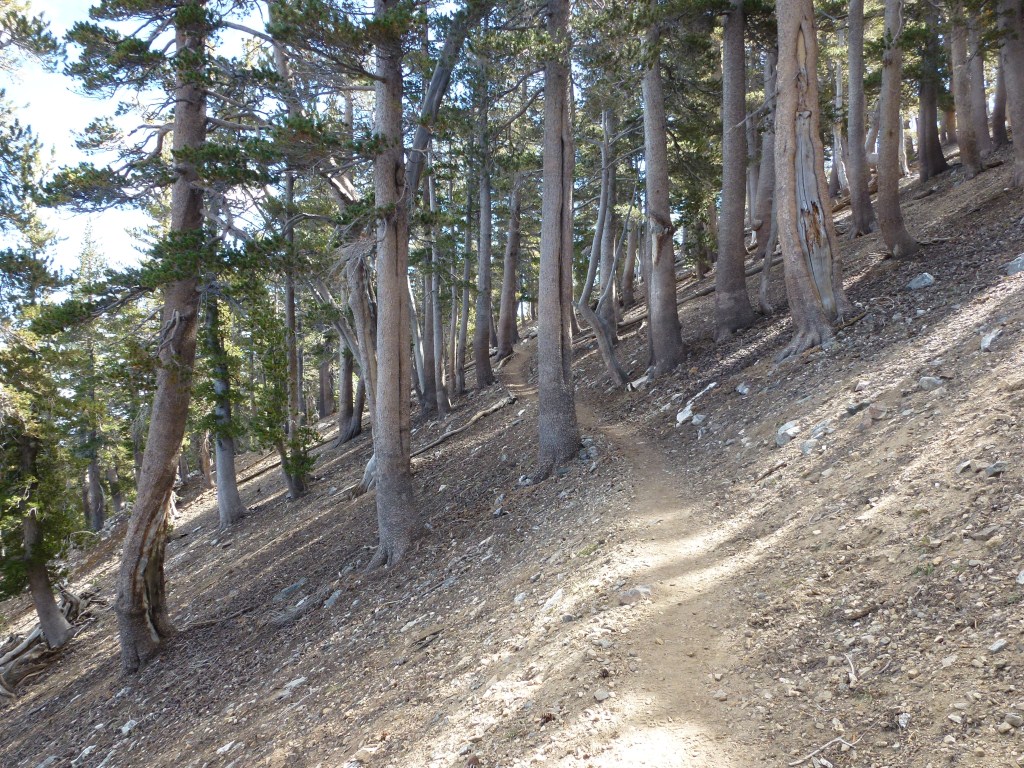
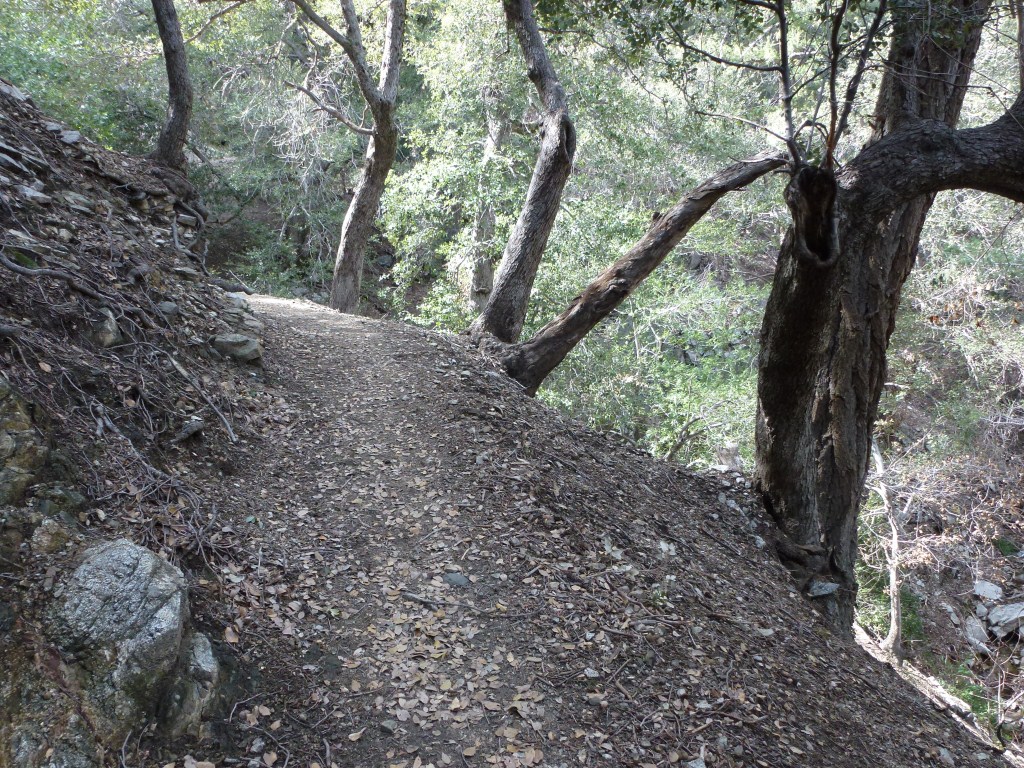
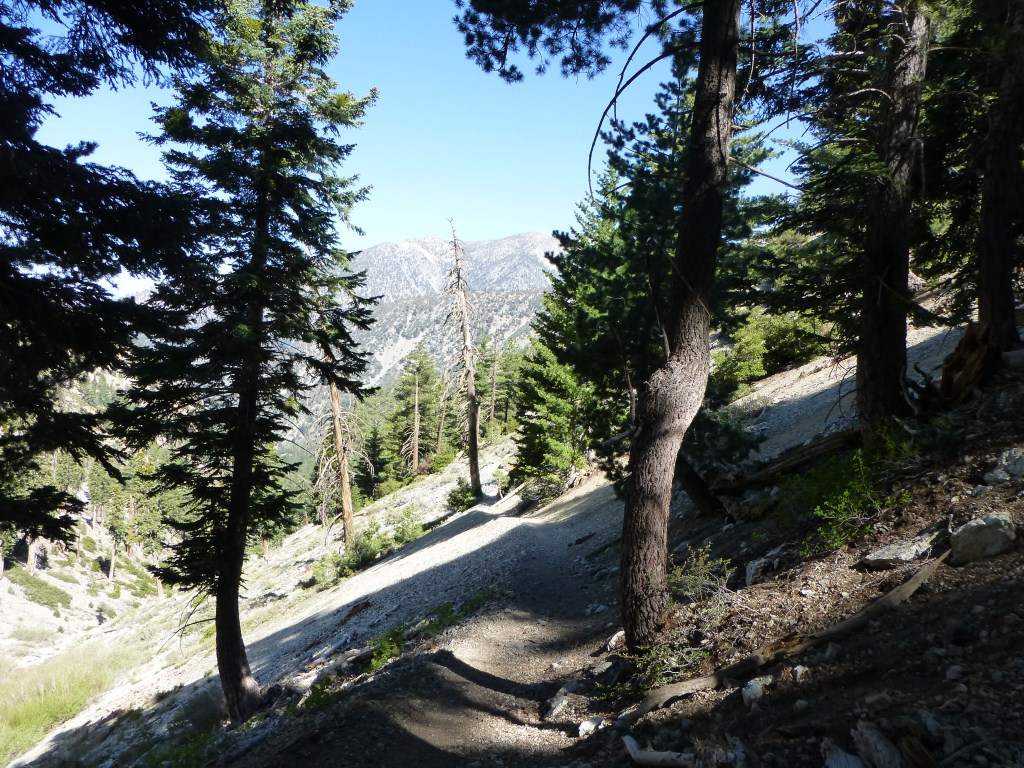
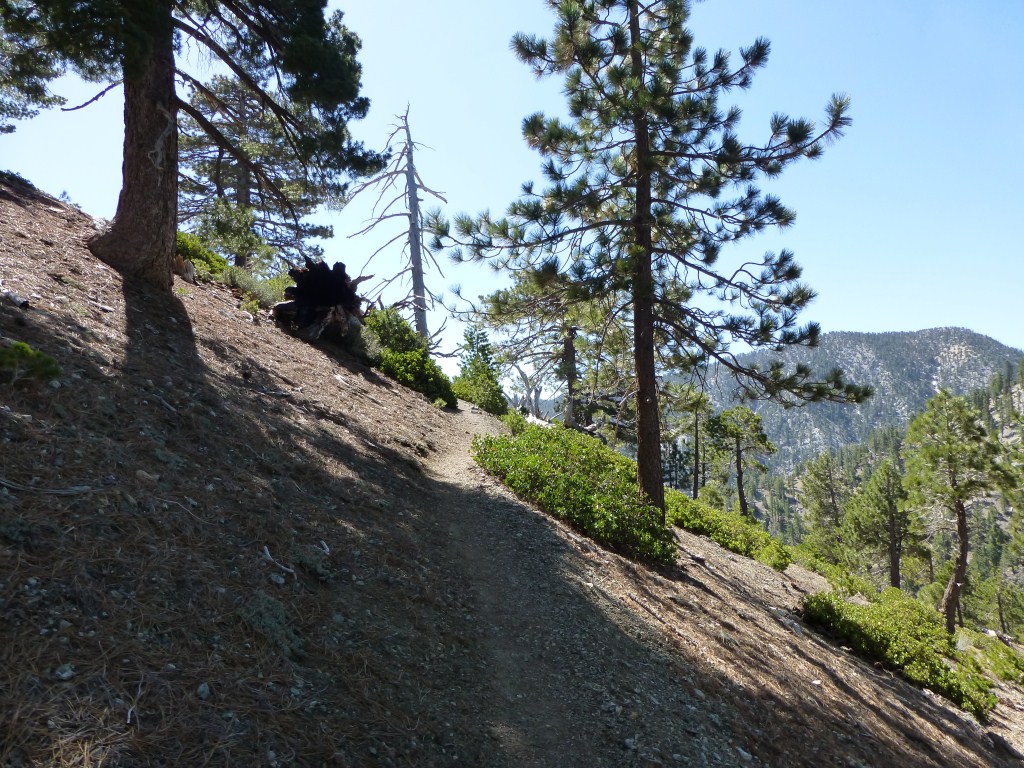
Dawson Saddle Trail

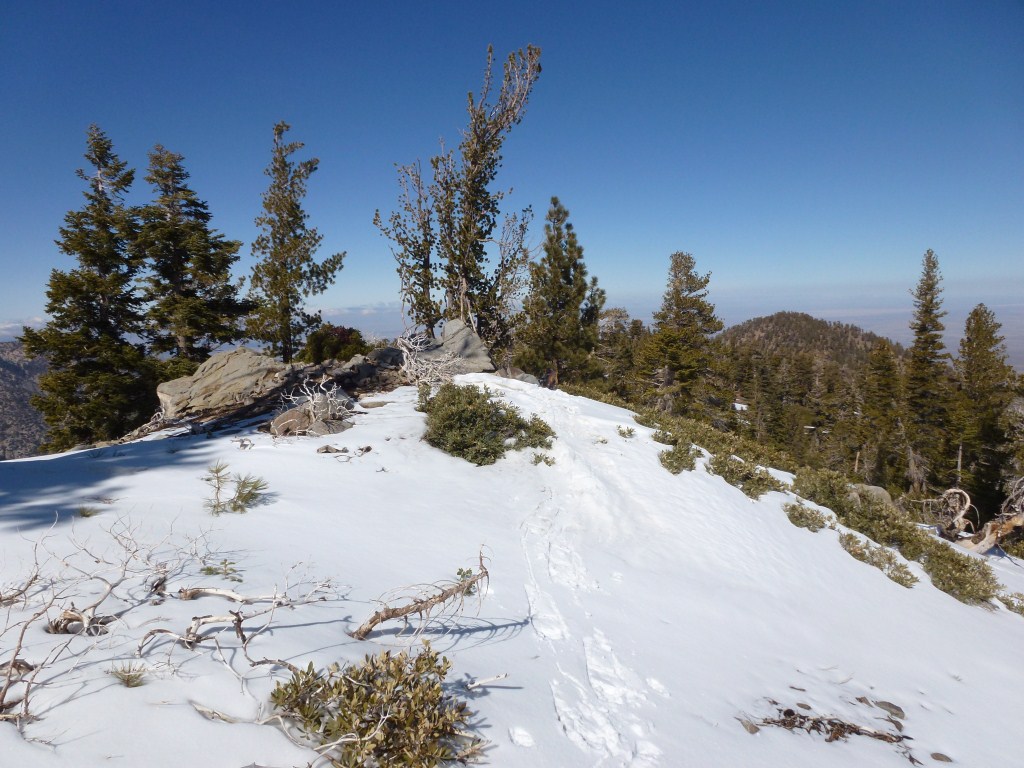
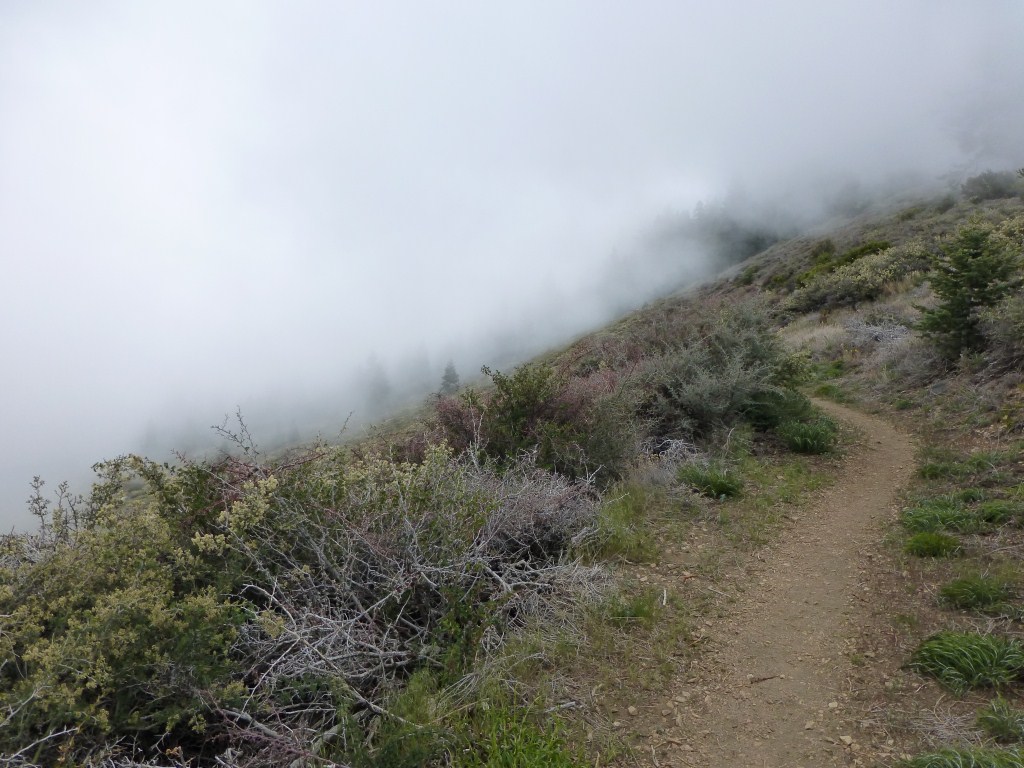
View from winter snowshoeing trek on the Dawson Saddle Trail

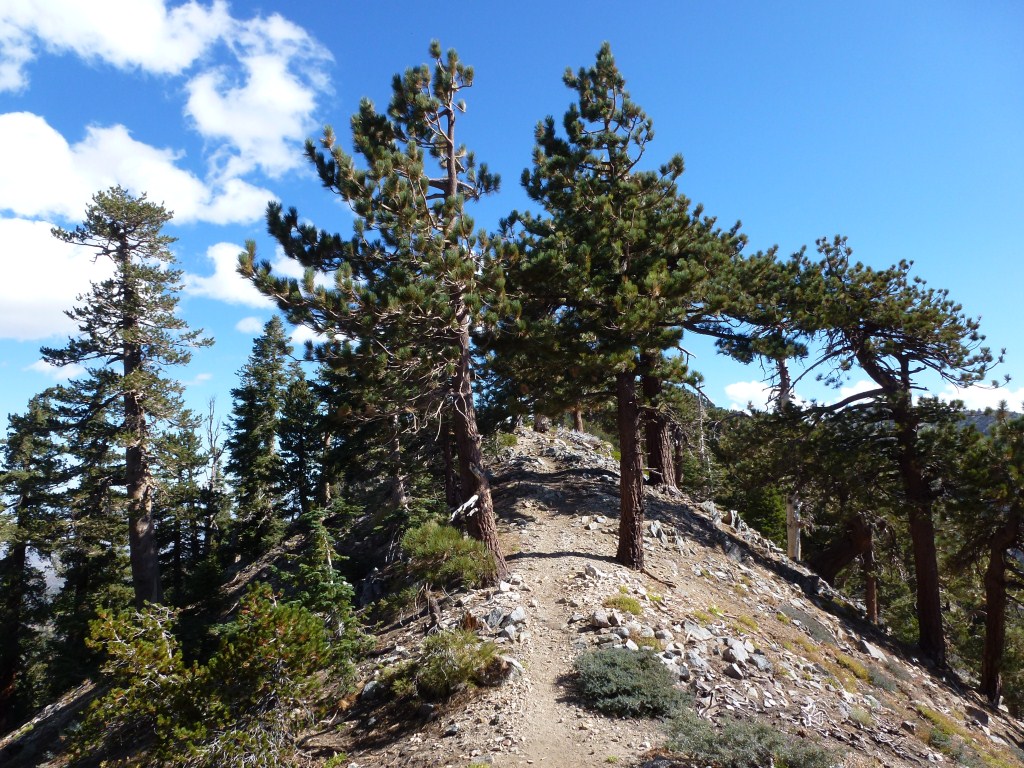
The 2.5 mile portion along the Pacific Crest Trail is among my favorite stretches of trail in the forest and definitely the easiest to reach among my favorites.  In addition to the stellar views out to the desert looking north or towards the ocean looking south from over 8700′ in elevation; the views of the trail itself and it’s immediate surroundings are equally magnificent.

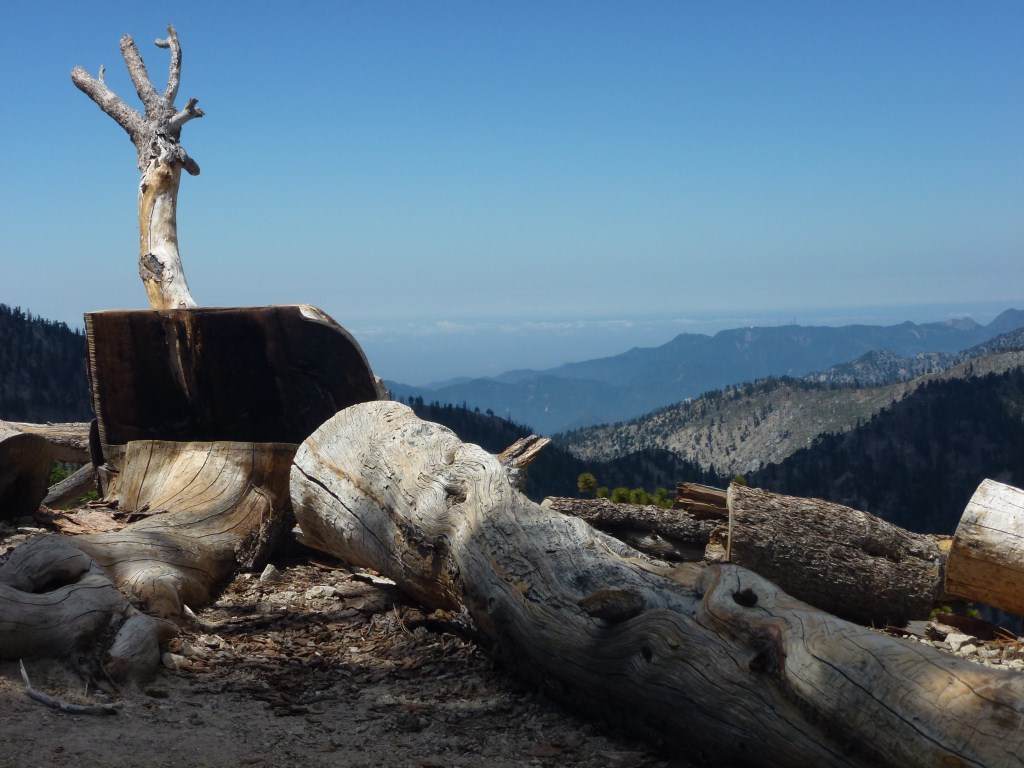
View toward the ocean along the Pacific Crest Trail

View out to the desert from the Pacific Crest Trail

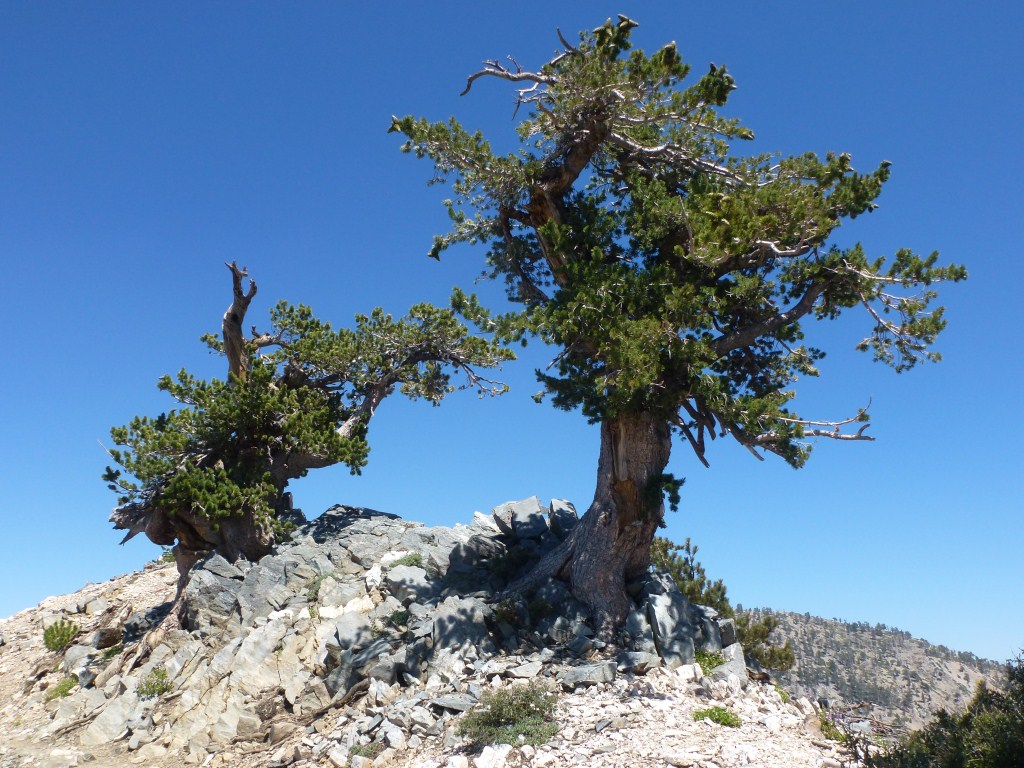
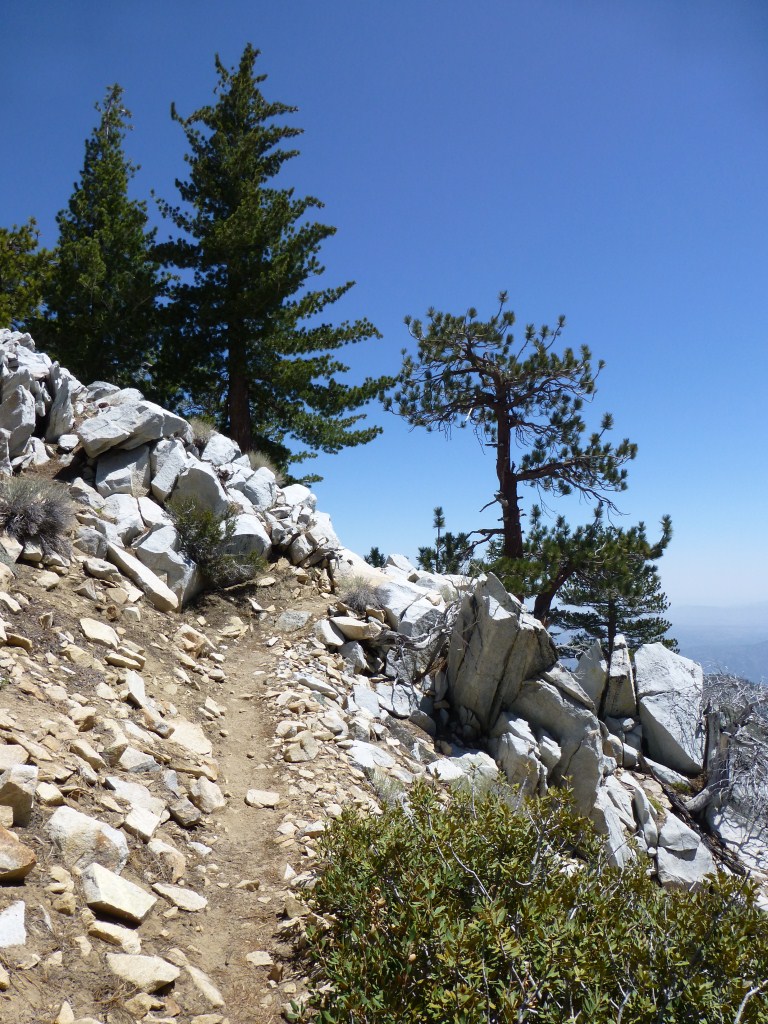
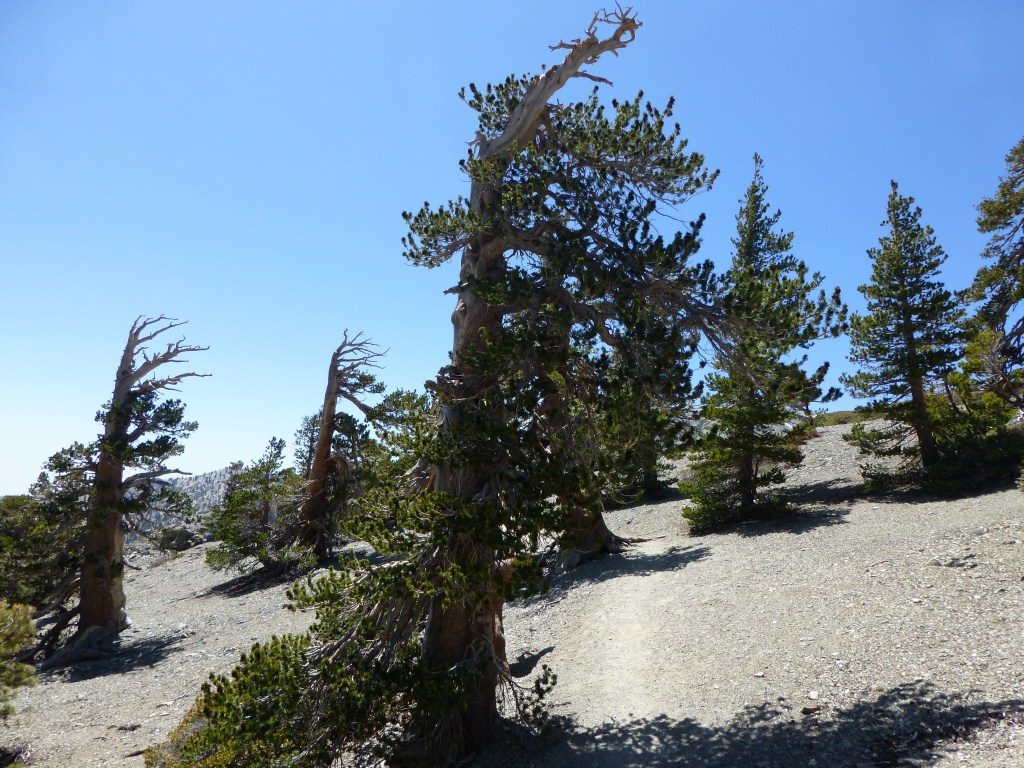
Trees coming out of the rock, far enough apart and small enough to intimately stand out as sculptures are among the many close up treasures along the Pacific Crest Trail.

Hiking along the ridge, there is always a distant view out.  However, there are also numerous places where the view in one direction is temporarily blocked by a protrusion standing out like a small building in the landscape.

Small protrusion standing out along the ridge of the Pacific Crest Trail.

At other times the trek is right on top of the ridge with unobstructed views right and left.

Hiking the ridge with the mountain falling equally on both sides of the trail.

There are also many times where there is a long view down the ridge line.

View down the ridge toward Mt. Burnham along the Pacific Crest Trail.

The 1500 year old “Wally Waldron Tree” marks the trail leading to the summit.

Wally Waldron Tree

At 9399′ in elevation, the views from Mt. Baden-Powell are exceptional.  My favorite is the view toward Mt. Baldy.

View toward Mt. Baldy from Mt. Baden-Powell


National Trails Day at the Haramokngna American Indian Cultural Center

The Haramakngna American Indian Cultural Center is having a hike-a-thon Saturday on National Trails Day to raise money for the Center.  If you can make it, they will be hiking the Gabrieleno Trail from Red Box to the Valley Forge Campground.  If not, consider making a donation to their cause.  Wherever you are tomorrow, Happy National Trails Day!

Gabrieleno Trail between Red Box and Valley Forge Campground

A Gorgeous Icy Cold Snap on Saturday’s Hike to Mt. Islip

Last Saturday, the view of large patches of interesting cloud patterns in an otherwise blue sky along the 210 freeway heading toward Angeles Crest Highway already indicated the possibility that our hike to Mt. Islip would be weather enhanced.  By the time we (family and friends) passed Cloudburst Summit we were driving in and out of the clouds we saw rolling in from below.  From the trailhead at Islip Saddle the temperature gauge on the car dashboard read 36 degrees F.  At that point I knew we were in for a treat.

It didn’t take long hiking up the Pacific Crest Trail heading to Windy Gap to find ourselves walking into the cloudy mist.

About to enter the cloudy mist along the Pacific Crest Trail

At first the mist wasn’t as moist or dense as I thought it would be as I headed into it.  Prior to reaching Little Jimmy Campground, I met a PCT thru-hiker (trail name Viper) who mentioned his water froze overnight.  While I felt a little bad for Viper enduring such an unexpected cold snap this time of year, I found myself hopeful that something interesting would be lurking up above.

Light cloudy mist along the Pacific Crest Trail before reaching Little Jimmy.

Typically I really enjoy the trek along the Islip Ridge Trail with excellent views into the Crystal Lake Basin.  However, the weather made this stretch of our hike even more magnificent. By the time we had reached above 7600′ there was more moisture in the air, it felt colder, and ice had formed in the trees (but not on the ground).

Ice in the pine needles

The increased cloud density made depth perception more prominent than usual and the dead trees took on a more delineated character with ice clinging to their branches.

Ice clinging to the branches of dead trees standing out in the grey mist.

At times there was so much ice in the trees it looked like it snowed.

Icy Trees

But the ice that fell to the ground proved that it didn’t actually snow.

Ice on the ground that fell beneath the trees.

Near the summit the sun broke through the clouds.

The sun breaking through the clouds with little patches of blue sky and icy trees.

Above 8100′ we passed through the clouds yielding a dramatic view of ice covered trees against the blue sky–especially colorful after trekking through the grey mist for some time.

The view looking up to the sky as we passed above the clouds that continued to flow around the mountain below the summit.

View of the clouds coming in from the south and making their way around the summit of Mt. Islip

View from Mt. Islip looking toward the Mojave Desert as the clouds flowed around Mt. Islip and broke up into smaller formations as they made their way north.

View walking down through the clouds on the Islip Ridge Trail

Instead of returning to Windy Gap, we took the Mt. Islip Trail down to Little Jimmy and found ourselves in an area free from the clouds as they flowed over Windy Gap and Islip Saddle breaking up as they continued moving north.

View along the Mt. Islip Trail connecting the Islip Ridge Trail and Little Jimmy.

As we made it back down the Pacific Crest Trail we found ourselves in the sun most of the way with great views of the Mojave Desert.  Looking down the trail however, we saw clouds making their way over Islip Saddle.

View heading down the Pacific Crest Trail looking toward Islip Saddle

At Islip Saddle we found ourselves walking through the cloudy mist one more time before making it to our cars.  Along the drive home we passed in and out of the clouds driving down Angeles Crest Highway until we passed Cloudburst Summit once again returning below the clouds until we engage in another trip like this.

View from the Pacific Crest Trail as we are about to enter the clouds one last time before making it to our cars.

41,000 acres re-opened today

About 41,000 acres of Angeles Forest previously closed due to the Station Fire was re-opened by the Forest Service today.  The re-opening covers a large area of Big Tujunga Canyon south of Big Tujunga Dam.  Notable re-openings include the Stone Canyon Trail, Trail Canyon Trail, and the Delta Flat Recreation Areas.

When hiking in these areas beware of the Poodle Dog Bush, which releases a toxin that causes most people to suffer an itchy rash reaction similar in some ways to poison oak.

Poodle Dog Bush–which blooms purple flowers at certain times during the year.

Icehouse Canyon to Mt. Baldy

I hadn’t been to Mt. Baldy (aka Mt. San Antonio) or to any of the trails accessible from Icehouse Canyon since October–except for a short trek part way up the Icehouse Canyon Trail with my daughter.  Really missing both areas, I decided to make last weeks Mt. Whitney training hike a trek from Icehouse Canyon to Mt. Baldy.

I always find starting a hike from Icehouse Saddle to be very enjoyable as a significant amount of time is spent along the stream.  For some reason, streams get me immediately focused on the nature I’m walking through which sets the tone for the longer journey.

Stream along the Icehouse Canyon Trail

Among the great things I experience now that I’ve been hiking in Angeles Forest weekly for about a year and a half is to know the territory I’m seeing as I look off into the distance because I’ve been there.  It’s profoundly different for me now.  I am now able to recall what it looks like to stand in a place I’m looking at far off into the distance, what it takes to get there, and what it looks like to look toward where I’m standing from where I’m looking at.  Holding all this in my mind as I gaze out heightens my experience as relationships and interconnections grow.
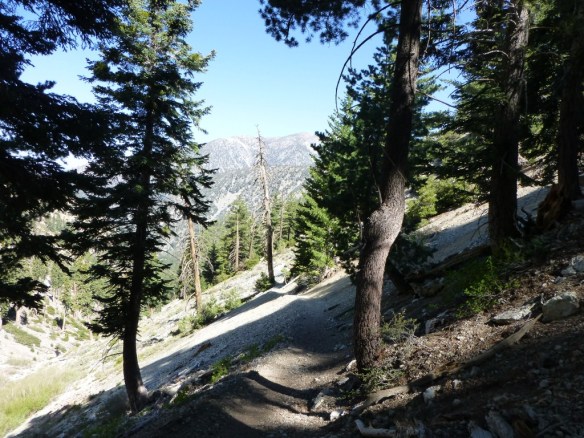
View toward Mt. Baldy from the Icehouse Canyon Trail about 3 miles up and trekking away from Mt. Baldy.

The forest’s intimacy and grandeur simultaneously captivate me as I look out to places I’ve been but will not be able to make it to today.
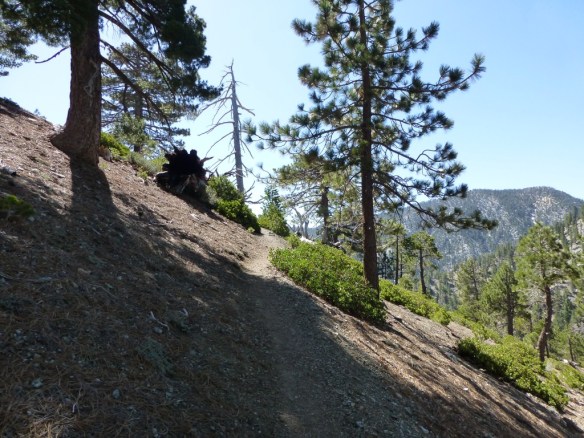
Hiking up Timber Mountain and looking out to Ontario Peak where I’ve been but won’t be going today.

The views are expansive, height and distance become more tangible when looking down long canyons instead of simply out off into the distance.
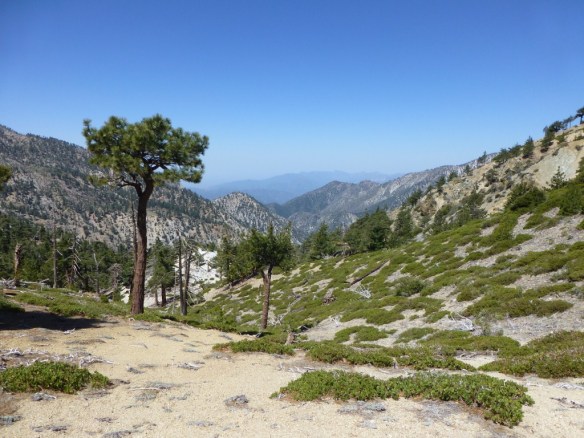
View down canyon from saddle between Timber Mountain and Telegraph Peak

I slow down and look around a lot at saddle areas.  The views out are breathtakingly expansive.  At the same time there is a close up view up the next mountain displaying its overall form which will no longer be discernible as I climb it.

View of Telegraph Peak from the saddle between Telegraph Peak and Timber Mountain.

Climbing the mountain instead of viewing it from far enough away to see its overall form is similar to the difference between being inside and outside of a building.  Smaller spaces emerge along the trail that generate their own sense of place and destination.  As the trail leads from one space to the next new features come into view.  I particularly like it when the trail curves in the distance and it looks like there may be an interesting spot just around the corner with a new view or a new set of features.

Three Tee’s Trail hiking up Telegraph Peak

After hiking for a while doing switchbacks up the side of the mountain and looking out at expansive views from over 8,000 feet in elevation, the trail gets close to the ridge.  It’s low enough still that you can’t see a view over the ridge.  The view of the ridge line becomes dominant and I start looking up instead of out.

Three Tee’s Trail near the junction with the Telegraph Peak Trail

After hiking for about an hour with no view of Mt. Baldy, the mountain comes into view near the junction with the Telegraph Peak Trail. Thunder Mountain is somewhat lost in the foreground with Mt. Baldy rising much higher in the distance.

View toward Mt. Baldy from the junction with the Telegraph Peak Trail

Eventually as I make it down toward the saddle between Telegraph Peak and Thunder Mountain, the change of view allows Thunder Mountain to gain prominence as its peak now stands out in front of the blue sky background.
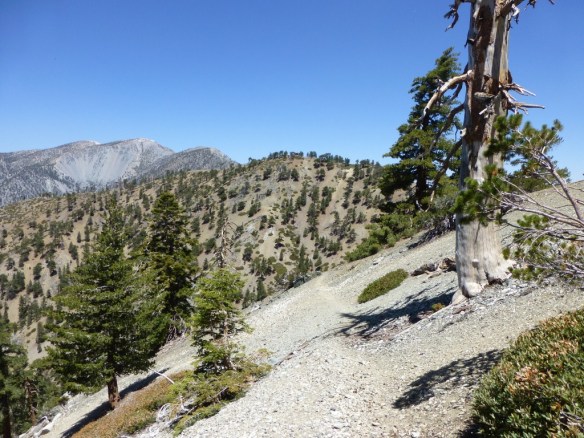
Three Tee’s Trail leading down to saddle between Telegraph Peak and Thunder Mountain with the peak of Thunder Mountain now easily seen against the blue sky.

View down the canyons from the saddle between Telegraph Peak and Thunder Mountain are both expansive and diverse as one side looks northwest and the other southeast.

Northwest view from saddle between Telegraph Peak and Thunder Mountain

View Northwest from saddle between Telegraph Peak and Thunder Mountain

View Southeast from saddle between Telegraph Peak and Thunder Mountain

The road down from Thunder Mountain to Baldy notch isn’t very exciting, but there are still great views of Mt. Baldy
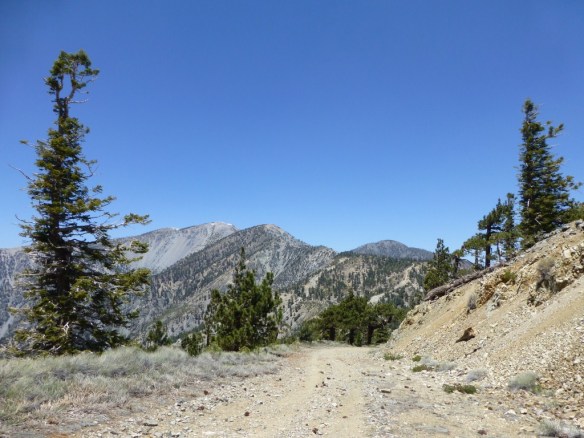
Road down from Thunder Mountain to Baldy Notch

My original plan was to hike to Mt. Baldy and return the same way.  By the time I made it to the top of the ski lift area I was behind schedule to make it back from Mt. Baldy before dark.  So I sat on the concrete pad, had a snack and contemplated my options.  I could just turn around and go back easily making it to my car before dark.  I could go to Mt. Baldy and return the way I came but hike much of the Icehouse Canyon Trail in the dark using my headlamp.  I could go to Mt. Baldy, come down the Baldy Bowl Trail and walk the paved road from Manker Flats to Icehouse Canyon to get to my car in the dark.

Top of the ski lift area.

I decided I’d rather hike to Mt. Baldy and walk the road from Manker Flats to Icehouse Canyon in the dark.  I was rewarded with a great trek up the Devil’s Backbone Trail where I enjoyed the multitude of different types of spaces to walk through.

View up the Devil’s Backbone Trail looking at Mt. Harwood.

Devil’s Backbone Trail along a narrow portion with huge drops on each side and spectacular views.

A wider portion of the Devil’s Backbone Trail on the side of Mt. Harwood looking back toward Telegraph Peak where I was earlier.

Walking through a flat area on Mt. Harwood with Mt. Baldy now visible through a wonderful area of trees.

Gorgeous trees and excellent views are plentiful along this short stretch of the trail.
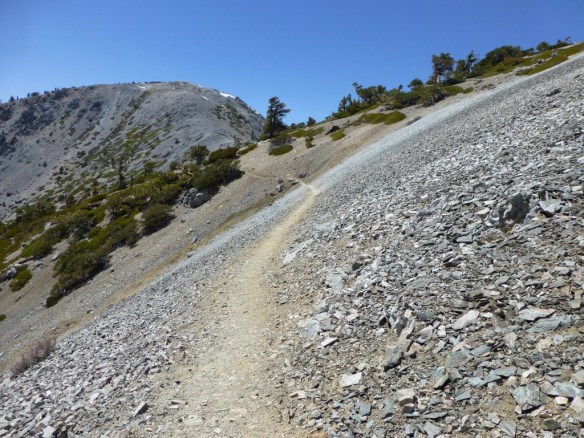
View trekking along the side of Mt. Harwood with Mt. Baldy in view.
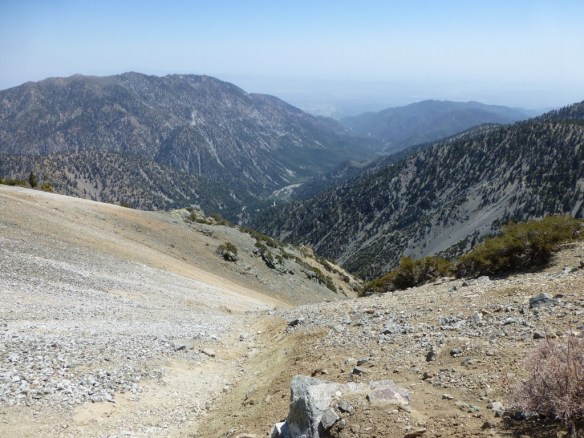
View out from the Devil’s Backbone Trail along Mt. Harwood
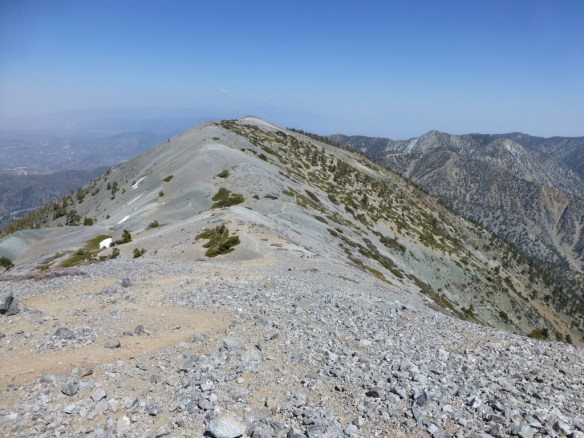
Heading up Mt. Baldy looking back down on Mt. Harwood

The trail gets pretty steep in places.

The last portion going up the trail before the curve flattens out at the summit.

I had lunch at the summit.  While not looking forward to the walk in the dark on the road from Manker Flats to Icehouse Canyon, I felt it was definitely worth the sacrifice.

Summit Marker

View toward West Baldy (which is shorter despite the optical illusion), and the path down the Mt. Baldy Trail to the Visitors Center.

View down the North Backbone Trail viewing Dawson Peak and Pine Mountain.

At the summit, I met another hiker (Kevin) who also is training to hike Mt. Whitney.  I mentioned my route and my need to walk the road once reaching Manker Flats.  Luckily, Kevin drove me to my car.  So, the remainder of my trek was a wonderful trek down the Baldy Bowl Trail.

View heading down the Baldy Bowl Trail from the summit.

The Baldy Bowl Trail looking toward Mt. Harwood

View down the Baldy Bowl Trail

View looking up from the base of the bowl along the Baldy Bowl Trail
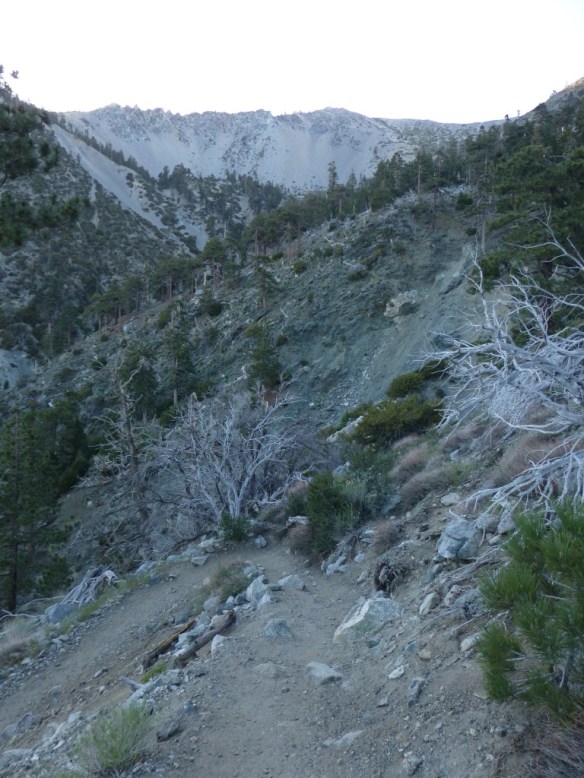
View back toward Mt. Baldy from the Baldy Bowl Trail

San Antonio Falls from the road leading down to Manker Flats