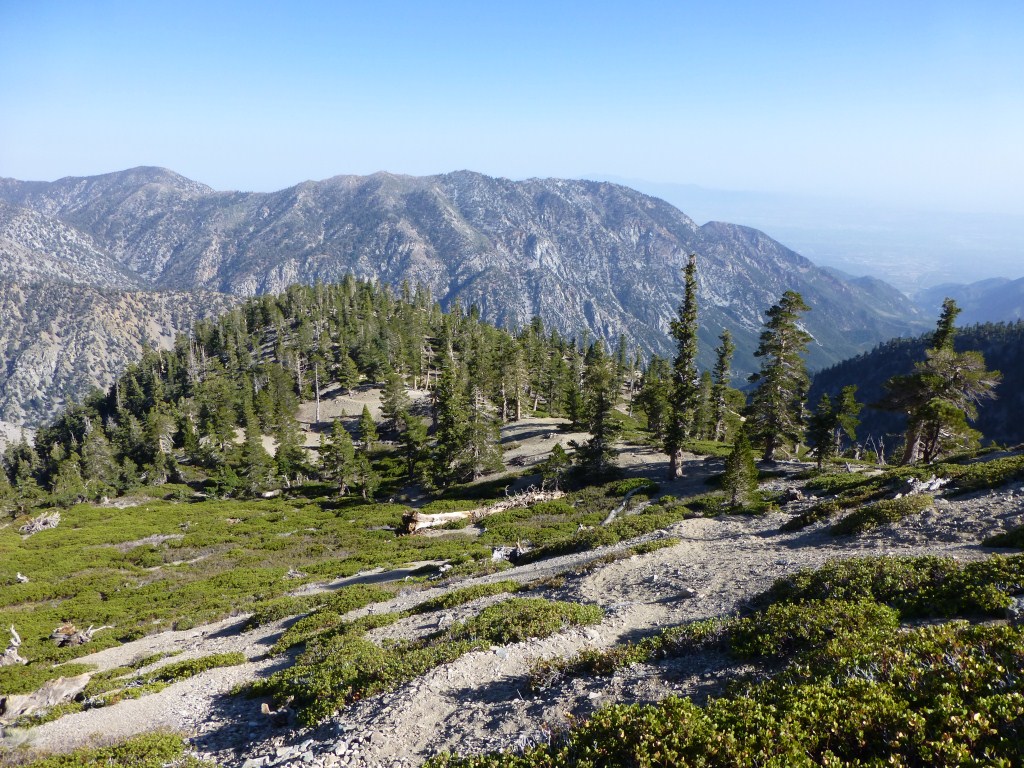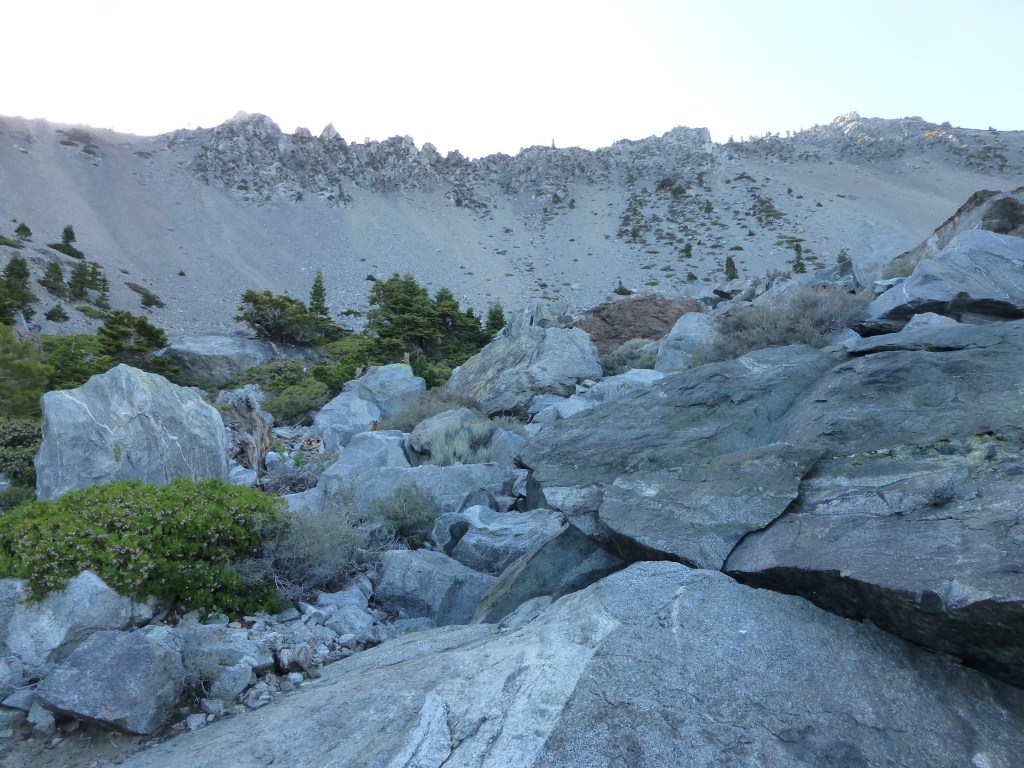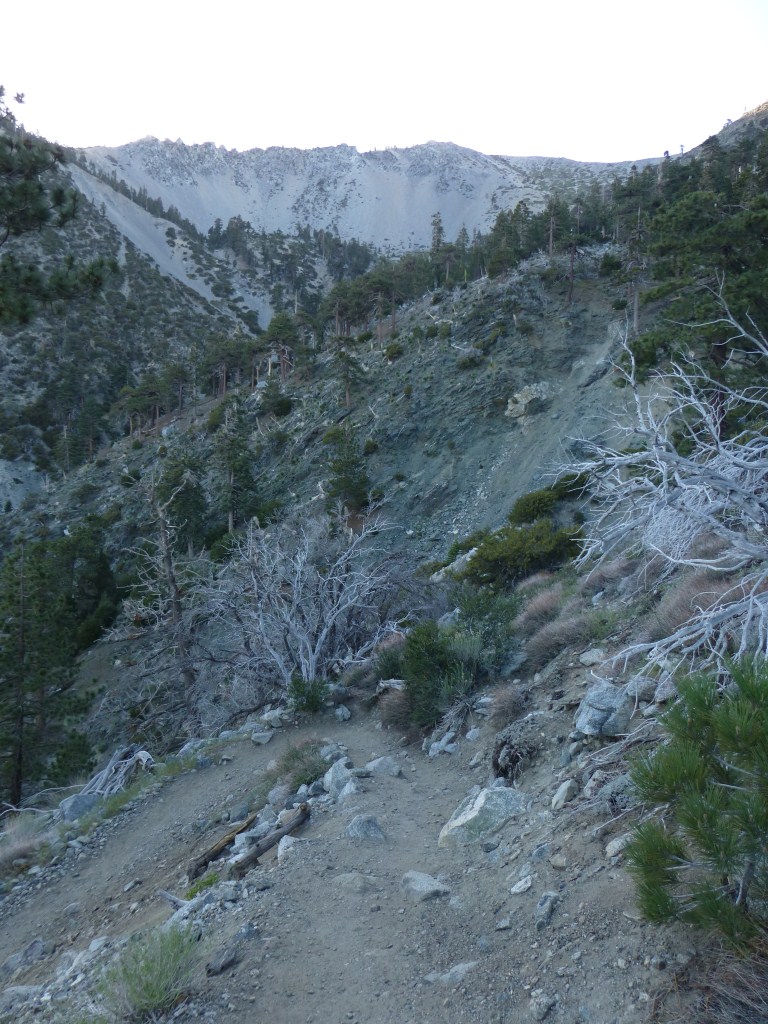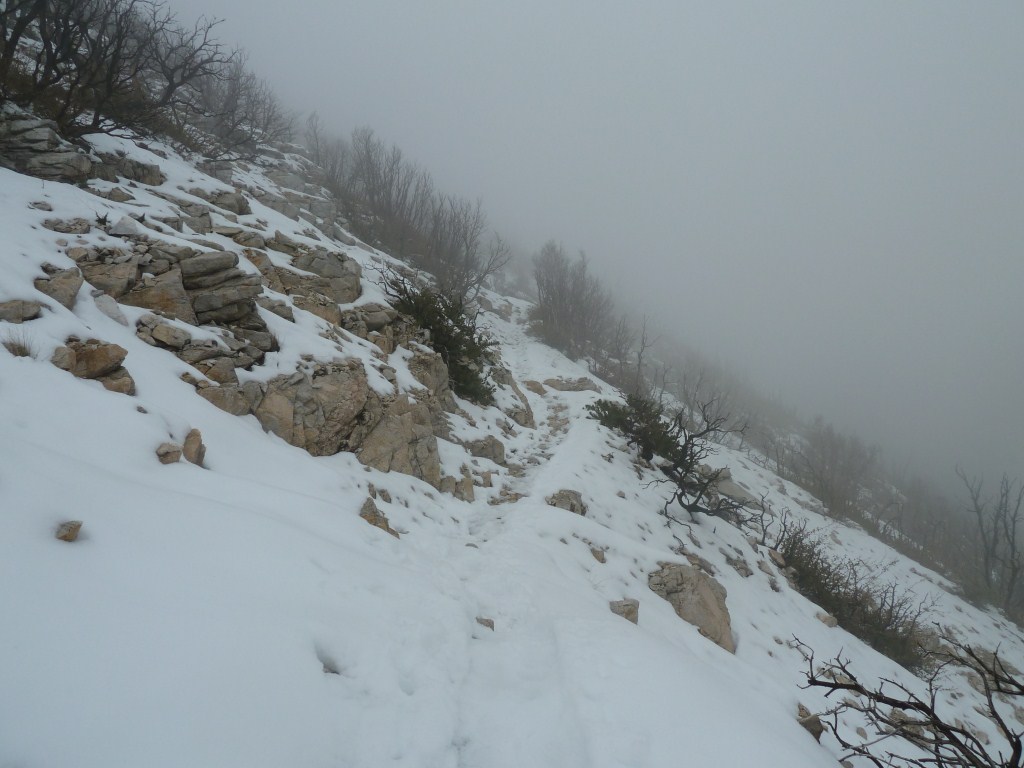
A Gorgeous Icy Cold Snap on Saturday’s Hike to Mt. Islip

Last Saturday, the view of large patches of interesting cloud patterns in an otherwise blue sky along the 210 freeway heading toward Angeles Crest Highway already indicated the possibility that our hike to Mt. Islip would be weather enhanced.  By the time we (family and friends) passed Cloudburst Summit we were driving in and out of the clouds we saw rolling in from below.  From the trailhead at Islip Saddle the temperature gauge on the car dashboard read 36 degrees F.  At that point I knew we were in for a treat.

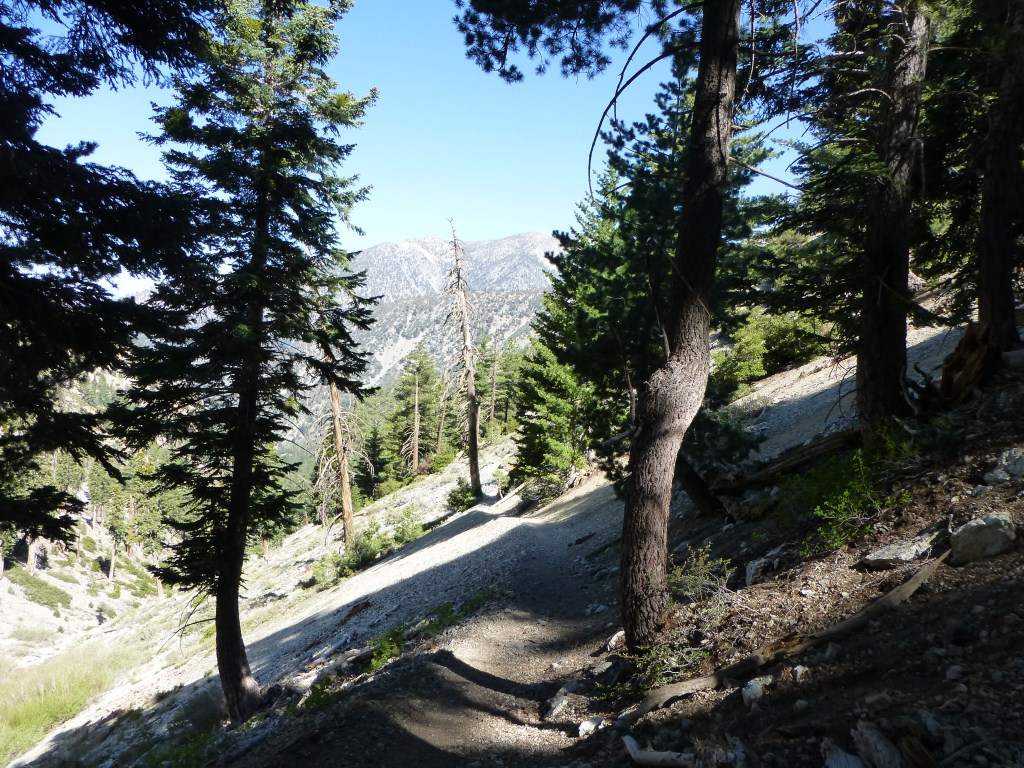
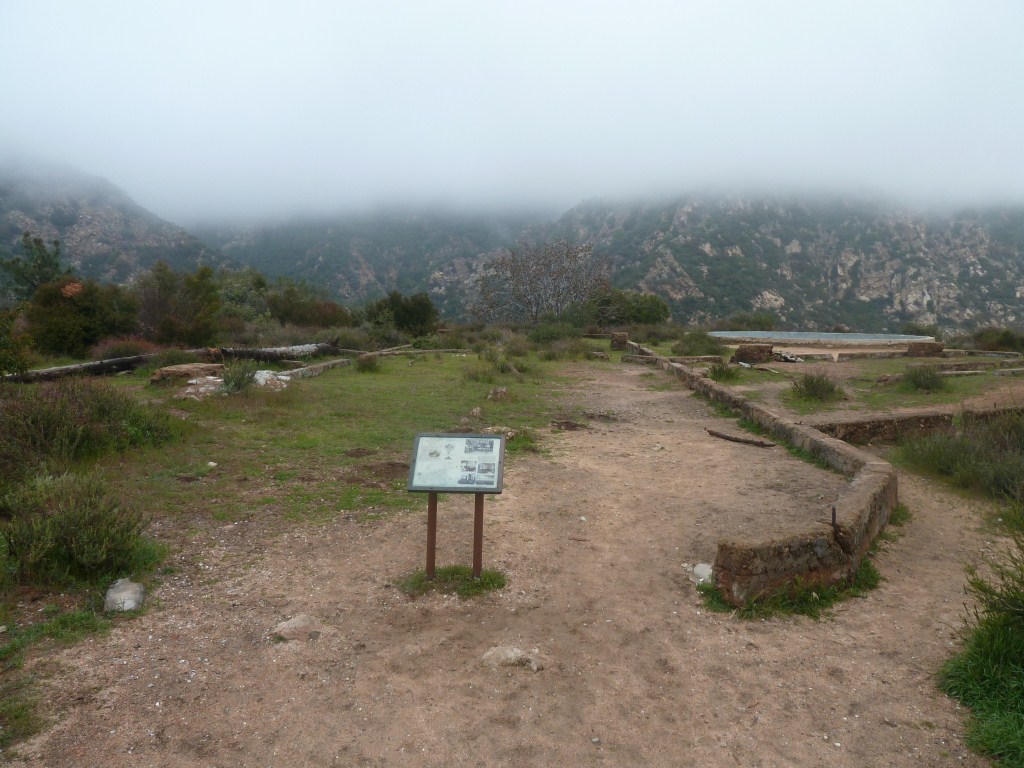
It didn’t take long hiking up the Pacific Crest Trail heading to Windy Gap to find ourselves walking into the cloudy mist.
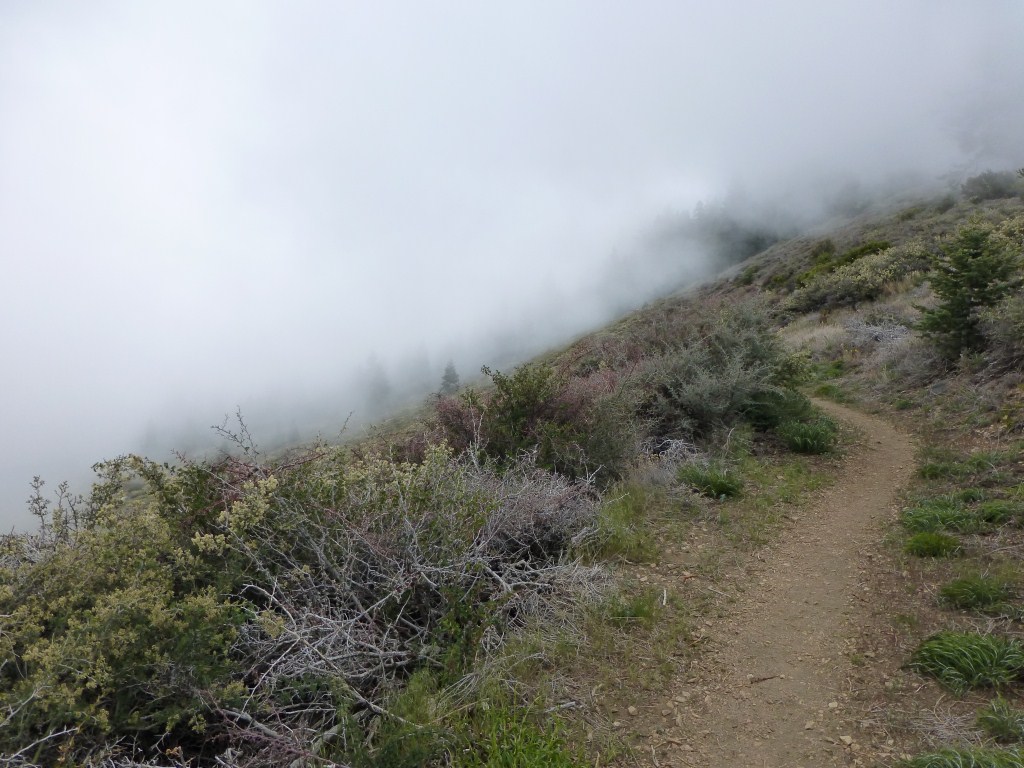
About to enter the cloudy mist along the Pacific Crest Trail

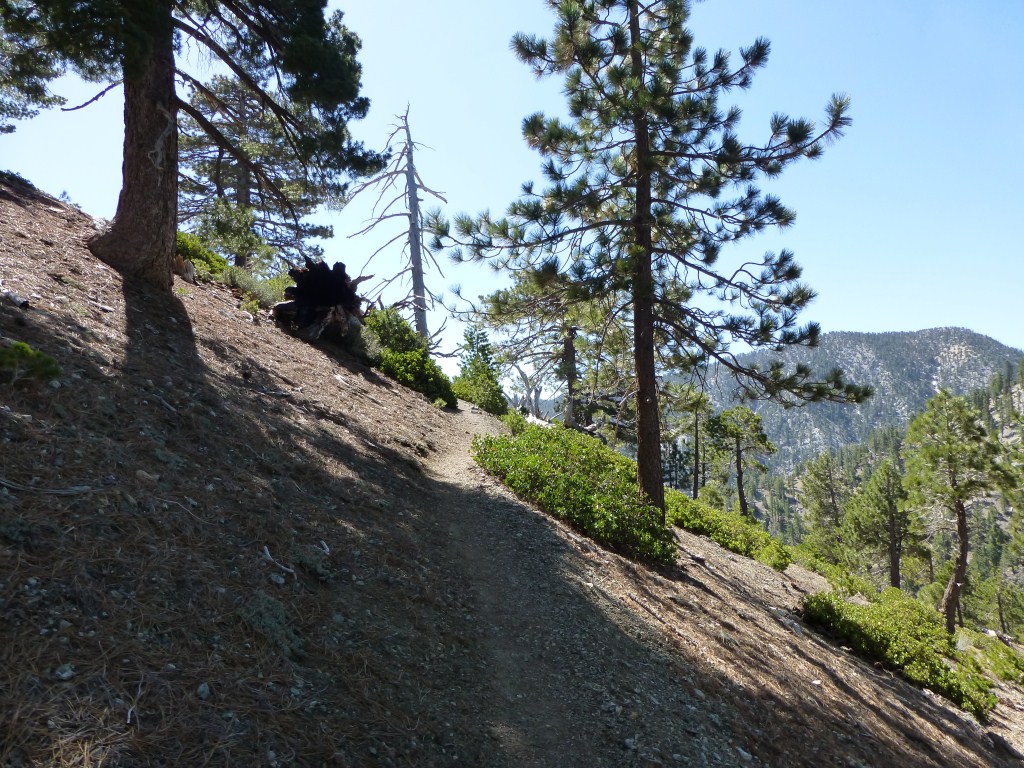
At first the mist wasn’t as moist or dense as I thought it would be as I headed into it.  Prior to reaching Little Jimmy Campground, I met a PCT thru-hiker (trail name Viper) who mentioned his water froze overnight.  While I felt a little bad for Viper enduring such an unexpected cold snap this time of year, I found myself hopeful that something interesting would be lurking up above.

Light cloudy mist along the Pacific Crest Trail before reaching Little Jimmy.

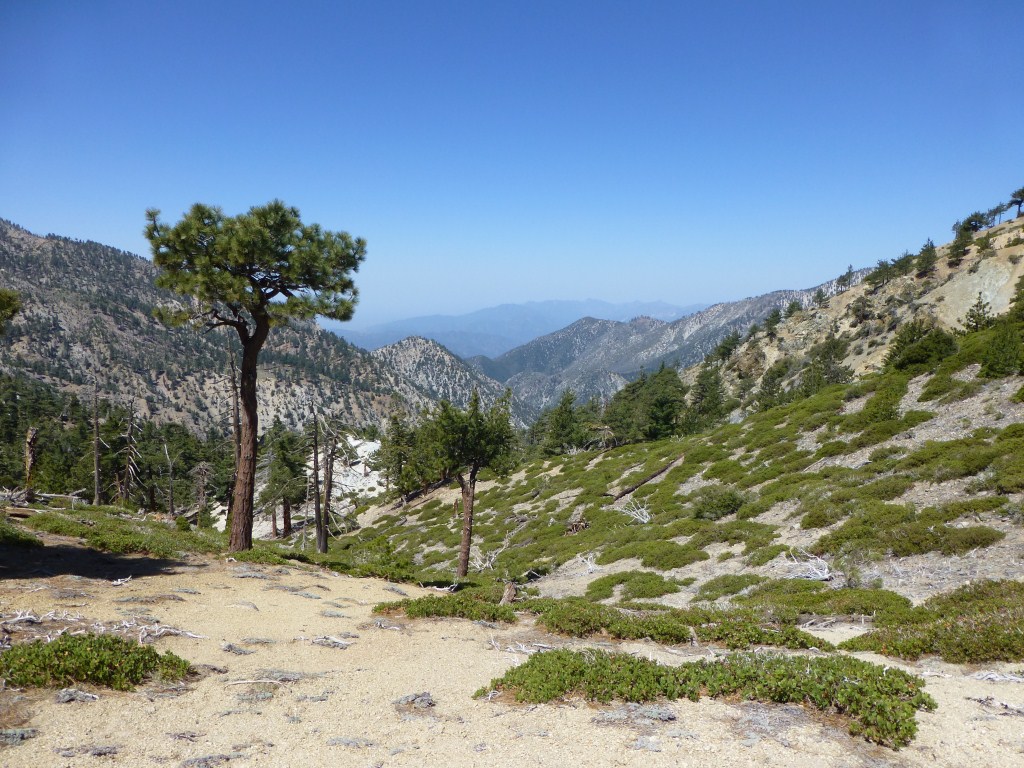
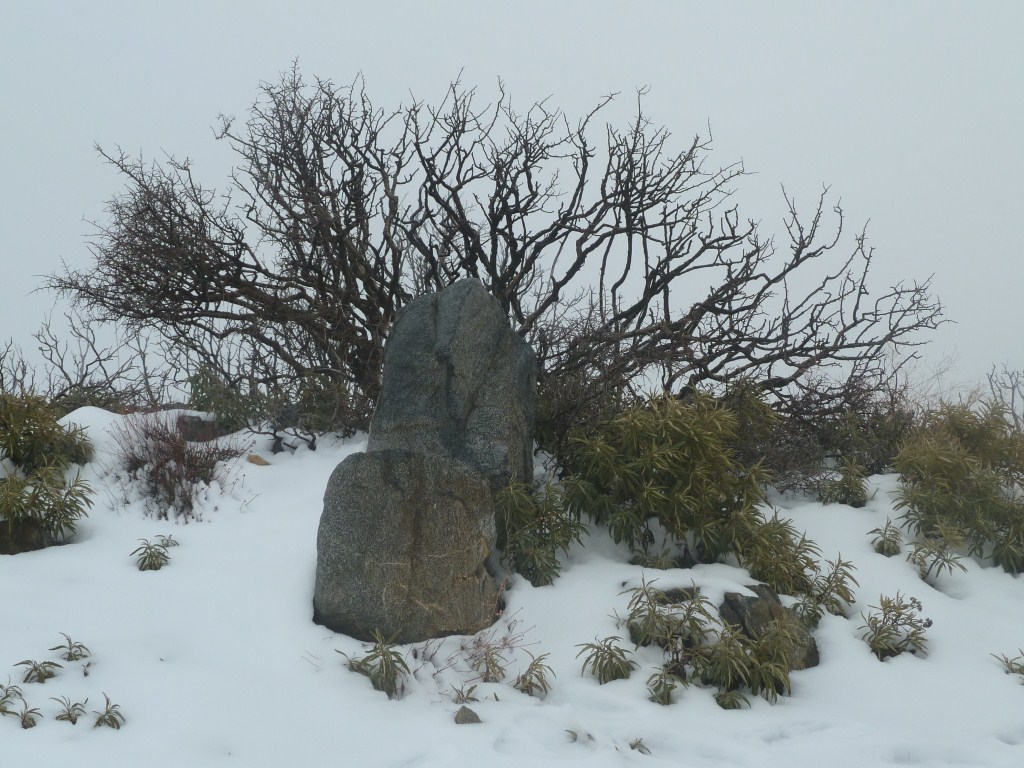
Typically I really enjoy the trek along the Islip Ridge Trail with excellent views into the Crystal Lake Basin.  However, the weather made this stretch of our hike even more magnificent. By the time we had reached above 7600′ there was more moisture in the air, it felt colder, and ice had formed in the trees (but not on the ground).

Ice in the pine needles

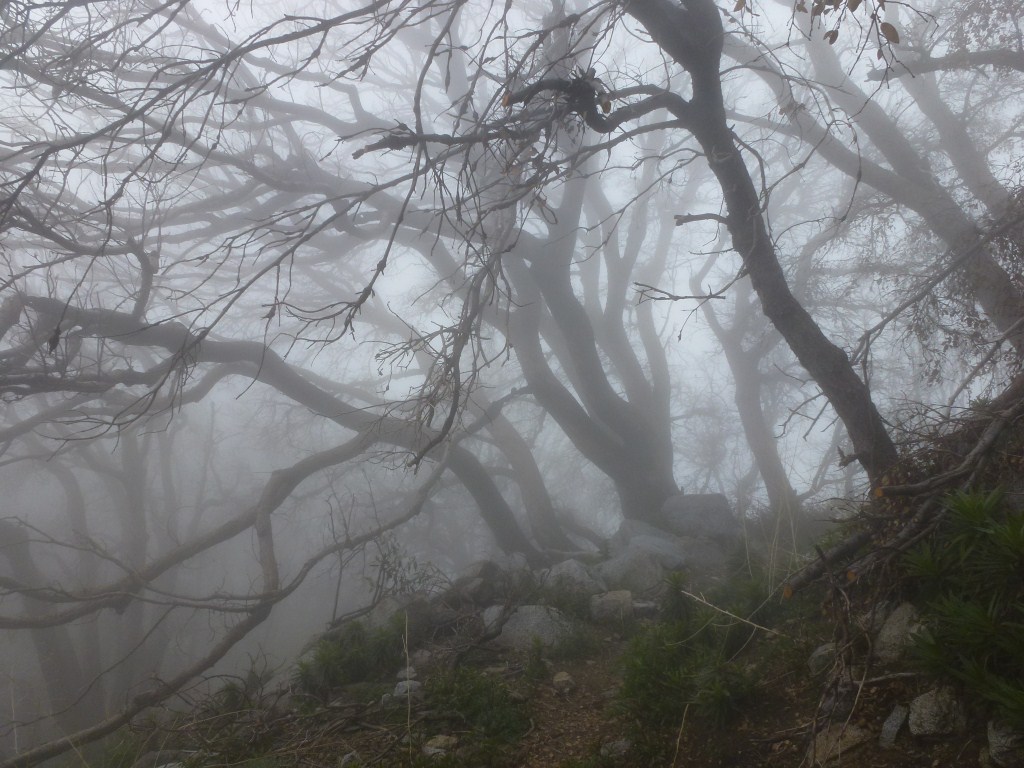
The increased cloud density made depth perception more prominent than usual and the dead trees took on a more delineated character with ice clinging to their branches.

Ice clinging to the branches of dead trees standing out in the grey mist.

At times there was so much ice in the trees it looked like it snowed.

Icy Trees

But the ice that fell to the ground proved that it didn’t actually snow.

Ice on the ground that fell beneath the trees.

Near the summit the sun broke through the clouds.

The sun breaking through the clouds with little patches of blue sky and icy trees.

Above 8100′ we passed through the clouds yielding a dramatic view of ice covered trees against the blue sky–especially colorful after trekking through the grey mist for some time.

The view looking up to the sky as we passed above the clouds that continued to flow around the mountain below the summit.

View of the clouds coming in from the south and making their way around the summit of Mt. Islip

View from Mt. Islip looking toward the Mojave Desert as the clouds flowed around Mt. Islip and broke up into smaller formations as they made their way north.

View walking down through the clouds on the Islip Ridge Trail

Instead of returning to Windy Gap, we took the Mt. Islip Trail down to Little Jimmy and found ourselves in an area free from the clouds as they flowed over Windy Gap and Islip Saddle breaking up as they continued moving north.

View along the Mt. Islip Trail connecting the Islip Ridge Trail and Little Jimmy.

As we made it back down the Pacific Crest Trail we found ourselves in the sun most of the way with great views of the Mojave Desert.  Looking down the trail however, we saw clouds making their way over Islip Saddle.

View heading down the Pacific Crest Trail looking toward Islip Saddle

At Islip Saddle we found ourselves walking through the cloudy mist one more time before making it to our cars.  Along the drive home we passed in and out of the clouds driving down Angeles Crest Highway until we passed Cloudburst Summit once again returning below the clouds until we engage in another trip like this.

View from the Pacific Crest Trail as we are about to enter the clouds one last time before making it to our cars.

41,000 acres re-opened today

About 41,000 acres of Angeles Forest previously closed due to the Station Fire was re-opened by the Forest Service today.  The re-opening covers a large area of Big Tujunga Canyon south of Big Tujunga Dam.  Notable re-openings include the Stone Canyon Trail, Trail Canyon Trail, and the Delta Flat Recreation Areas.
When hiking in these areas beware of the Poodle Dog Bush, which releases a toxin that causes most people to suffer an itchy rash reaction similar in some ways to poison oak.

Poodle Dog Bush–which blooms purple flowers at certain times during the year.

Icehouse Canyon to Mt. Baldy

I hadn’t been to Mt. Baldy (aka Mt. San Antonio) or to any of the trails accessible from Icehouse Canyon since October–except for a short trek part way up the Icehouse Canyon Trail with my daughter.  Really missing both areas, I decided to make last weeks Mt. Whitney training hike a trek from Icehouse Canyon to Mt. Baldy.

I always find starting a hike from Icehouse Saddle to be very enjoyable as a significant amount of time is spent along the stream.  For some reason, streams get me immediately focused on the nature I’m walking through which sets the tone for the longer journey.

Stream along the Icehouse Canyon Trail

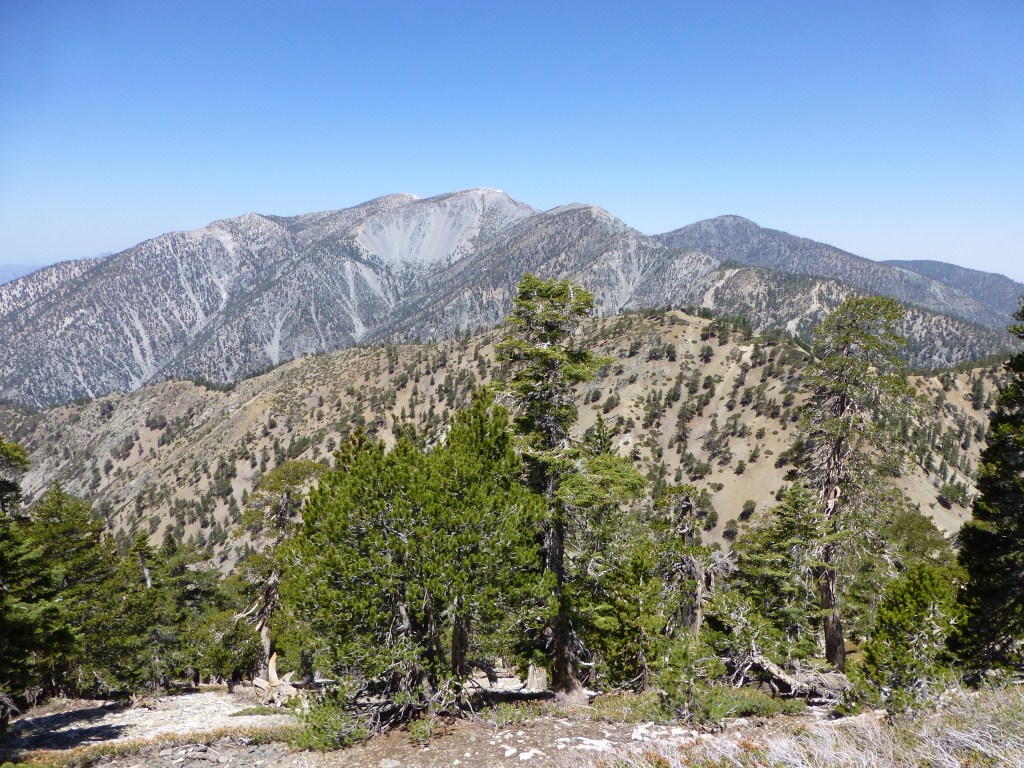
Among the great things I experience now that I’ve been hiking in Angeles Forest weekly for about a year and a half is to know the territory I’m seeing as I look off into the distance because I’ve been there.  It’s profoundly different for me now.  I am now able to recall what it looks like to stand in a place I’m looking at far off into the distance, what it takes to get there, and what it looks like to look toward where I’m standing from where I’m looking at.  Holding all this in my mind as I gaze out heightens my experience as relationships and interconnections grow.

View toward Mt. Baldy from the Icehouse Canyon Trail about 3 miles up and trekking away from Mt. Baldy.

The forest’s intimacy and grandeur simultaneously captivate me as I look out to places I’ve been but will not be able to make it to today.

Hiking up Timber Mountain and looking out to Ontario Peak where I’ve been but won’t be going today.

The views are expansive, height and distance become more tangible when looking down long canyons instead of simply out off into the distance.

View down canyon from saddle between Timber Mountain and Telegraph Peak

I slow down and look around a lot at saddle areas.  The views out are breathtakingly expansive.  At the same time there is a close up view up the next mountain displaying its overall form which will no longer be discernible as I climb it.

View of Telegraph Peak from the saddle between Telegraph Peak and Timber Mountain.

Climbing the mountain instead of viewing it from far enough away to see its overall form is similar to the difference between being inside and outside of a building.  Smaller spaces emerge along the trail that generate their own sense of place and destination.  As the trail leads from one space to the next new features come into view.  I particularly like it when the trail curves in the distance and it looks like there may be an interesting spot just around the corner with a new view or a new set of features.

Three Tee’s Trail hiking up Telegraph Peak

After hiking for a while doing switchbacks up the side of the mountain and looking out at expansive views from over 8,000 feet in elevation, the trail gets close to the ridge.  It’s low enough still that you can’t see a view over the ridge.  The view of the ridge line becomes dominant and I start looking up instead of out.

Three Tee’s Trail near the junction with the Telegraph Peak Trail

After hiking for about an hour with no view of Mt. Baldy, the mountain comes into view near the junction with the Telegraph Peak Trail. Thunder Mountain is somewhat lost in the foreground with Mt. Baldy rising much higher in the distance.

View toward Mt. Baldy from the junction with the Telegraph Peak Trail

Eventually as I make it down toward the saddle between Telegraph Peak and Thunder Mountain, the change of view allows Thunder Mountain to gain prominence as its peak now stands out in front of the blue sky background.

Three Tee’s Trail leading down to saddle between Telegraph Peak and Thunder Mountain with the peak of Thunder Mountain now easily seen against the blue sky.

View down the canyons from the saddle between Telegraph Peak and Thunder Mountain are both expansive and diverse as one side looks northwest and the other southeast.

Northwest view from saddle between Telegraph Peak and Thunder Mountain

View Northwest from saddle between Telegraph Peak and Thunder Mountain

View Southeast from saddle between Telegraph Peak and Thunder Mountain

The road down from Thunder Mountain to Baldy notch isn’t very exciting, but there are still great views of Mt. Baldy

Road down from Thunder Mountain to Baldy Notch

My original plan was to hike to Mt. Baldy and return the same way.  By the time I made it to the top of the ski lift area I was behind schedule to make it back from Mt. Baldy before dark.  So I sat on the concrete pad, had a snack and contemplated my options.  I could just turn around and go back easily making it to my car before dark.  I could go to Mt. Baldy and return the way I came but hike much of the Icehouse Canyon Trail in the dark using my headlamp.  I could go to Mt. Baldy, come down the Baldy Bowl Trail and walk the paved road from Manker Flats to Icehouse Canyon to get to my car in the dark.

Top of the ski lift area.

I decided I’d rather hike to Mt. Baldy and walk the road from Manker Flats to Icehouse Canyon in the dark.  I was rewarded with a great trek up the Devil’s Backbone Trail where I enjoyed the multitude of different types of spaces to walk through.

View up the Devil’s Backbone Trail looking at Mt. Harwood.

Devil’s Backbone Trail along a narrow portion with huge drops on each side and spectacular views.

A wider portion of the Devil’s Backbone Trail on the side of Mt. Harwood looking back toward Telegraph Peak where I was earlier.

Walking through a flat area on Mt. Harwood with Mt. Baldy now visible through a wonderful area of trees.

Gorgeous trees and excellent views are plentiful along this short stretch of the trail.

View trekking along the side of Mt. Harwood with Mt. Baldy in view.

View out from the Devil’s Backbone Trail along Mt. Harwood

Heading up Mt. Baldy looking back down on Mt. Harwood

The trail gets pretty steep in places.

The last portion going up the trail before the curve flattens out at the summit.

I had lunch at the summit.  While not looking forward to the walk in the dark on the road from Manker Flats to Icehouse Canyon, I felt it was definitely worth the sacrifice.

Summit Marker

View toward West Baldy (which is shorter despite the optical illusion), and the path down the Mt. Baldy Trail to the Visitors Center.

View down the North Backbone Trail viewing Dawson Peak and Pine Mountain.

At the summit, I met another hiker (Kevin) who also is training to hike Mt. Whitney.  I mentioned my route and my need to walk the road once reaching Manker Flats.  Luckily, Kevin drove me to my car.  So, the remainder of my trek was a wonderful trek down the Baldy Bowl Trail.

View heading down the Baldy Bowl Trail from the summit.

The Baldy Bowl Trail looking toward Mt. Harwood

View down the Baldy Bowl Trail

View looking up from the base of the bowl along the Baldy Bowl Trail

View back toward Mt. Baldy from the Baldy Bowl Trail

San Antonio Falls from the road leading down to Manker Flats

Hiking Into The Clouds

Hikes with significant elevation gain guarantee a diversity of landscape to trek through.  Obviously this is due to the micro-climates created largely by the difference in altitude that one moves through on the way to the high point of the journey.  While the amount and character of the diversity is clearly tied to numerous other factors, meaningful differences are assured.  Having taken several Environmental Science courses in college, none of that surprised me.  I find experiencing this diversity to be wonderful and the specific details naturally have unforeseen aspects to them. Of course, prior to beginning my weekly hikes in 2011, I wasn’t aware of the what was in Angeles Forest, or things like how high the mountains reach–which is why I started this blog. However, the overall idea wasn’t new for me.  The first time I planned a hike with over 2,000 feet of gain, I new I would see diversity. 

Unexpected for me was my personal discovery (countless others have known this long ago) that at certain times these differences being so close together become more magnified than seen on a typical day.  Weather , for example, will impact these areas differently creating interesting edge conditions and small areas of dramatic difference that can be experienced on a day hike.  I first came to this understanding unintentionally on a hike from the Cobb Estate to Mt. Lowe in February 2011.

Starting at the Cobb Estate, the ground was dry and it was a little cloudy.  The clouds were pretty high though and while hiking up the Lower Sam Merrill Trail it was easy to see Downtown Los Angeles and the ocean off in the distance.  The weather report showed zero percent chance of rain, and the clouds high above the mountain didn’t appear threatening or reachable.  At Echo Mountain (about 1400′ of gain up from the Cobb Estate), Inspiration Point–another 1300′ in elevation was visible.  This was pretty typical so far and I didn’t take any pictures.  At Inspiration Point, the view out was still great, but the view up Mt. Lowe was blocked by clouds.  Before making it to the summit, I found myself in snow, literally in the clouds, and feeling an ultra light mist.

At the Summit, I thought about how the mist felt like walking in fog along the ocean.  However, walking up into the clouds and snow from the city below made the overall experience different.  Less than 500 feet lower down the mountain, the city below was still in sunlight, the trail had no snow and one could see as far off as the ocean.  While it did take hiking over 3,000 feet of gain to reach the clouds, the idea that they were reachable from below was exhilarating.  Never before had such an obstructed view been so appealing to me.

Being in the clouds and not being able to see out naturally caused me to focus more on what was immediately around me.  I saw many interesting things I hadn’t paid much attention to in the past because I was so blown away by the view outward.  For example, I found the composition of some rocks and vegetation to be very beautiful standing out against the grey background.

That experience taught me to pay more attention to what I’m trekking through on future hikes and to stop more often and take some pictures of interesting details along the way.  On a later hike, I searched out the same composition and photographed it with the view of Mt. Wilson in the background.

On the way down the mountain along the East Mt. Lowe Trail, the clouds were significantly lower.  The mist started to feel a little stronger and I started to wonder if it was going to rain and if the sun was still shinning down on the city below.

At about 1000 feet lower than the clouds were on my ascent, I broke through them along the Middle Sam Merrill Trail.  It took about 5 minutes to move through the edge condition between being in the clouds and not.  After walking through the cloudy grey for hours, I now had a view of both the grey fuzzy edge of those clouds and out to the sunlit mountainside across the canyon.

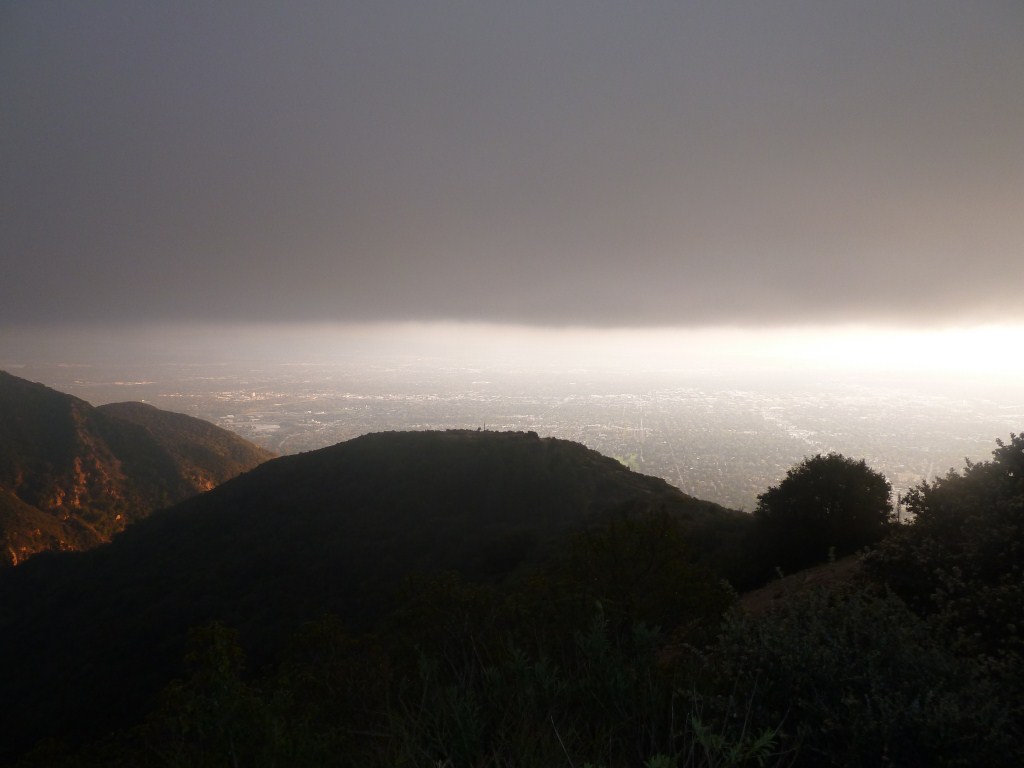
As I made my way downward, the shadowy view of Echo Mountain emerged with the sunlit view of the city beyond.  As I stood and took in that view, I’d look back up the mountain to see the view of the mountain top blocked by the clouds.  Then I’d look out and see that the cloud cover went out into the distance about as far as Downtown Los Angeles.  The light was making it to the lower part of these mountains due to the low angle of the sun.. The cloud cover then felt like nature’s grand cantilevered roof jutting out from the mountain top.

On another hike in early March 2011 up the Mt. Lowe Railway Trail, I found patches of snow on the trail and Mt. Lowe in view below the clouds.

By the time I made it to the north side of Mt. Lowe along the Upper Sam Merrill Trail, I was ankle deep in snow and close to the clouds.  Markham Saddle was still visible, but San Gabriel Peak and Mt. Markham were in the clouds.  At that point, I knew Mt. Lowe would be in the clouds too.

In late March 2011 on a hike on the Sam Merrill Trail  to Inspiration Point, the clouds were low and not much higher than Echo Mountain.

Uniquely, the most interesting view for me that day was of Inspiration Point through the cloud mist instead of out from it to the city below.

In April 2011, I again hiked up to Mt. Lowe via the Sam Merrill Trail.  Along the upper Sam Merrill Trail, I got interested in how the clouds helped emphasize depth and made some tree branches look further away than they do in sunlight.

This time after I made my way back down below the clouds I looked up to see the sun shine through the clouds.  The thin layer of clouds blocking a direct view of the sun and muting it’s light made the sun easier to see as a light bulb is when viewed through a lamp shade.  Not wanting to hurt my eyes by staring at it, I looked at it through my camera lens and took many pictures like the one below that look a little like an abstract painting.

I found the color of the sunset when viewed after so many hours in the grey of the clouds to be even more beautiful–especially as the darkness of the clouds were also in view.

Seeing the sun descending through the clouds and it’s light now able to shine directly onto the landscape I was hiking on caused me to spend more time contemplating my own experience being able to see out into the distance once I had descended through the clouds.  I stopped for a while to enjoy the moment.

I was almost down the mountain when the sun was setting behind the mountains beyond. Even when it was out of my sight for the day, the indirect light in the sky lit my way and allowed me to see further into the landscape than I was able to do while in the clouds during the afternoon.  I found the juxtaposition of experiences while hiking during a single day to be wonderful.

On a hike along the San Gabriel Peak Trail to San Gabriel Peak in December 2011, I found myself above the clouds with a view I’ve only seen from an airplane.  The opportunity to walk through them was there, I just didn’t have the time that day.  Now that I know it’s possible, walking through the clouds is high on my list of experiences to seek out.

I now see the mountains and the clouds differently.  When I’m in the city, I look up to see how high the clouds are up the mountain.  Could there be an interesting opportunity to interact with them–walk into them, above them, or through them?


Hike Report: My First Comprehensive Mt. Whitney Training Hike in Angeles Forest

I woke up this morning feeling pretty good about myself.  Yesterday, I finally completed a day hike surpassing both the distance and gain requirements to ascend Mt. Whitney via the Mt. Whitney Trail–this one just over 25 miles and 6,600′ of gain.

I started from the Cobb Estate.  The hike I planned to do was one I’d already done with a minor extension along a trail I’d also already done.  While going up to Inspiration Point via the Castle Canyon Trail from Echo Mountain, I kept thinking about how I really wanted something different.  Granted, this was a training hike and distance and gain were more important than exploration and taking pictures.  However, I just don’t respond well to repetitiveness.  If I wasn’t going to do something new, I wanted to figure out how I could at least retrace as few steps as possible.  From Inspiration Point I headed down to Idlehour Campground and by the time I reached the stream I’d decided I would try and do a loop by going up to Mt. Wilson.

Idlehour Trail near Idlehour Campground, March 2012

I met another hiker (Rolin) who is also training to hike Mt. Whitney at Idlehour Campground.  We hiked up to Mt. Wilson Toll Road together.  Hearing Rolin talk about numerous different places he’s hiked and camped in several states only served to reinforce my decision to hike a loop instead of retracing my steps.  So, at Mt. Wilson Toll Road I said good bye to Roland and headed up toward Mt. Wilson.

Mt. Wilson Toll Road with boulders blocking path, March 2012

As I hiked up Mt. Wilson Toll Road, I realized I really was operating with multiple plans.  My original plan was to hike down to Henninger Flats and return the way I came.  By going up, I had just ditched that plan.  Up meant several miles more than the planned hike–a distance I’d not done before.  So, I worked out several scenarios based around things like at what point I would pass the physical ability to return via Idlehour–Mt. Wilson was past the halfway point of a loop.  Time was also an issue as I wanted to make sure I at least made it to Inspiration Point before I had to use my headlamp.  The time issue turned out to be a good thing as it caused me to hike quickly and therefore generated a better training pace.  Once I decided to continue up past the junction with the Mt. Wilson Trail, there was no turning back.  I knew I had plenty of time to get to Inspiration Point before dark, and physically I was feeling great.  I wasn’t much looking forward to the segment of hiking down the paved Mt. Wilson Road for 2-1/2 miles.  However, that tuned out better than expected and there were some nice views along the way.

Mt. Wilson Road, March 2012

By the time I hit Eaton Saddle, I was hiking at a good pace and knew I no longer needed to worry about time.  From Eaton Saddle I passed through Mueller Tunnel–also passing a couple of young women doing a performance art piece–and made my way to Markham Saddle enjoying the view down Eaton Canyon and reflecting upon how far I’d traveled. From Markham Saddle I trekked past Mt. Markham and Mt. Lowe  taking the North and East Mt. Lowe trails down toward Inspiration Point.  I took the Middle Sam Merrill Trail down to Echo Mountain and enjoyed watching the sunset while making it to Echo Mountain before dark.

Middle Sam Merril Trail, March 2012

After leaving Echo Mountain, I didn’t need to break out the headlamp until about halfway back down to the Cobb Estate.  I like that the city lights also provide light on the trail–which turned out to be extra helpful as the white bulbs on my headlamp burned out and the red bulb wasn’t that bright.  Also, I saw more people coming up the trail at night than I saw the rest of the day combined.

View from Lower Sam Merrill Trail, March 2012