Nature Question #9: What Species Of Bird Is This?

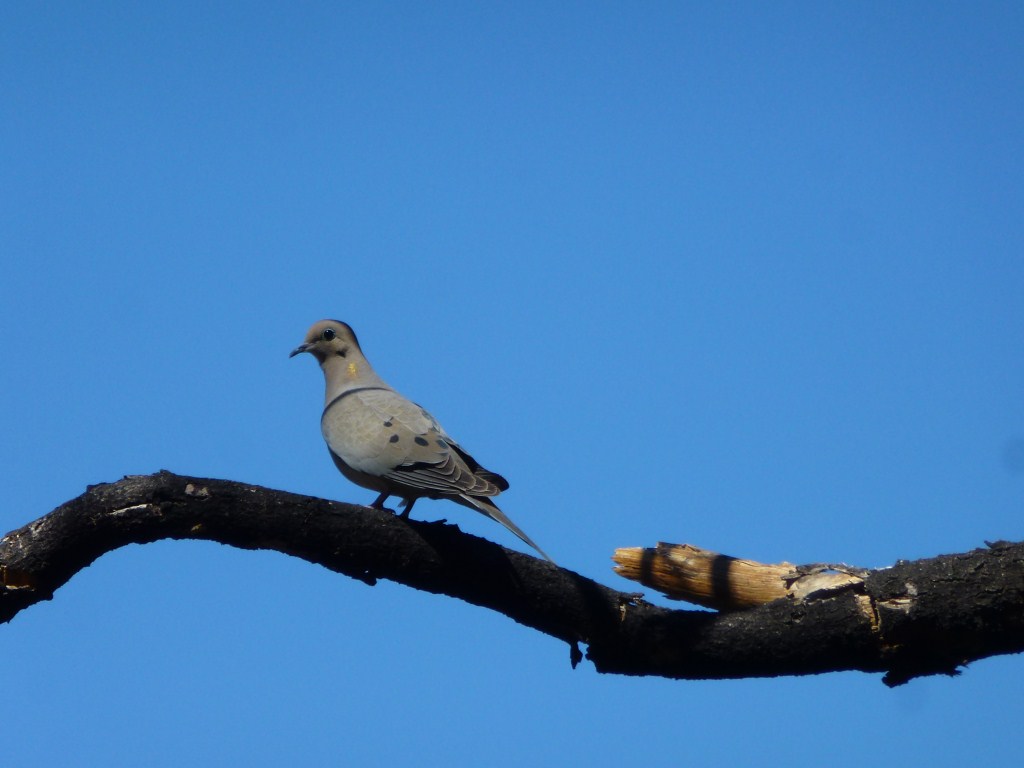
What species of bird is this?
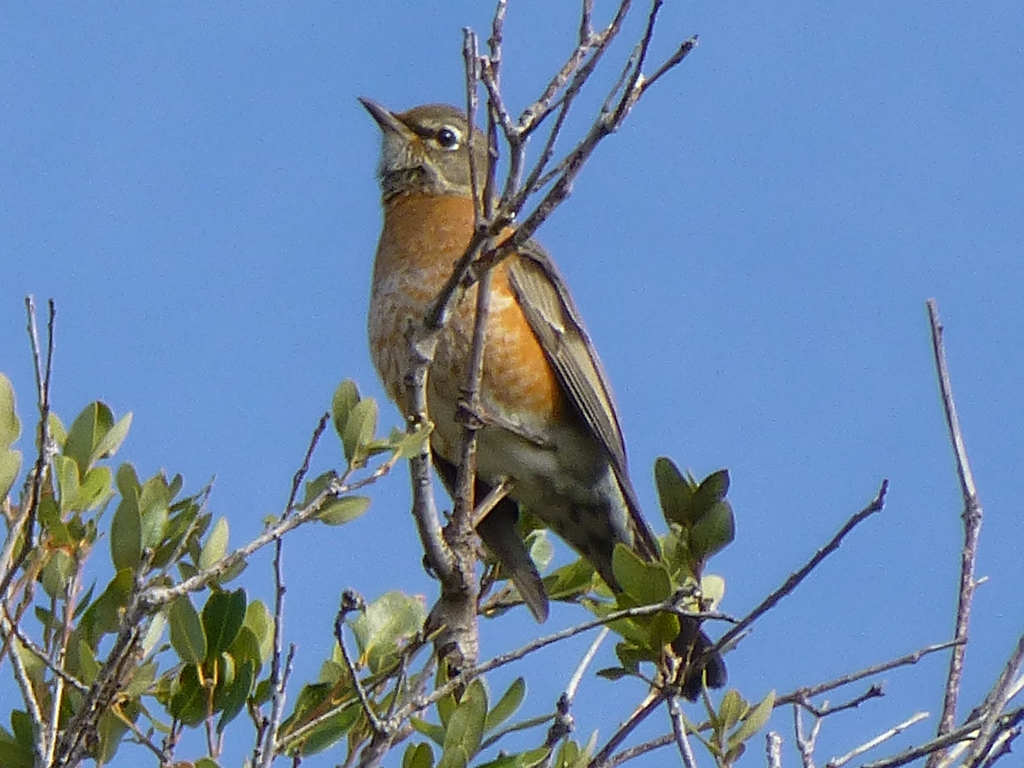
November 2012

November 2012

Photo taken along the trail between Eaton Saddle and Mueller Tunnel.

The answer to the last question turned out to be a Golpher Snake. It could be a San Diego Gopher Snake, a Pacific Gopher Snake, or a mix of the two. I looked at photos from several web sites and can’t really tell the difference.  Unless someone comes forward and can explain why it’s one of the above options, I’m going to settle for the larger classification of gopher snake. As more information is shared, it will appear on the Golpher Snake Forest Life Page where there are already links to more information.

I’d like to thank Sue from the blog Backyard Biology for narrowing it down to a gopher snake and making it manageable for me to research and also providing a link to a photo of a San Diego Gopher Snake.

This week nobody sent me any links to blog articles and I was unable to find any articles using the search feature in the WordPress Reader.

If you notice this post and have written (or decide to write) a post on gopher snakes, send me a link and I will add a link to its forest page and create a reference page like the one for 1Year. 365 Species to your blog.

My Nature Questions are about my asking for help from the blogosphere (and other internet users) to learn about species living in Angeles Forest and to share that learning with others.  I’m really hoping that this turns out to be a viable and meaningful way to share knowledge.

A Patch Teeming With Lady Bugs

One of my favorite things about hiking is the unexpected interactions with life in the forest. Yesterday, on my weekly family and friends hike, we came across a patch teeming with lady bugs along the Gabrieleno Trail. My friend Lorenzo and I took great delight in photographing and watching them well past the time when the rest of our group had lost interest. I’ve only seen this many one other time which was with my brother in August 2011 along the Vincent Gulch Trail by the San Gabriel River. Click on an image to enlarge and begin a slide show.

Snow Hiking in Los Angeles: San Gabriel Peak

This is the third post in my series about snow hikes in Los Angeles.  The first one emphasized an opportunity to hike in snow at the lower elevations of  Echo Mountain and Inspiration Point  without needing any special equipment. The trade-off is that the snow is not usually present (but will be there several times during the year) making it important to track the weather report and look for snow levels getting lower than about 3,500′.  The second post emphasized the guaranteed option of reaching snow at Mt. Baldy whose peak reaches 10,064 feet and will remain in snow until sometime in the late spring.  The trade-off being that special equipment is needed.

View near the summit of San Gabriel Peak.

View near the summit of San Gabriel Peak.

Hiking to San Gabriel Peak from the north side of the mountain is a great experience that is between the two previous options in terms of snow presence and required equipment.  Being on the north side and at a higher elevation than Inspiration Point, snow lasts longer.  So, it can remain for a couple weeks making timing less important.  It can be hiked without special gear.  However, there are very small portions that get a little icy.  So, if you have microspikes or crampons they can be helpful.  I used this trail to try out my snowshoes for the first time.  The snow was deep enough for my snowshoes to work but not deep enough for them to be required as illustrated by the snowshoe prints in the photo above.  Next time I go, I’ll just bring my microspikes.  If Mt. Wilson Road is closed there will be no car access to the San Gabriel Peak Trailhead.  Park at Red Box (which is what I had to do on one of my snow hikes) and hike the short distance up Mt. Wilson road to the trailhead.

The San Gabriel Peak Trail near the trailhead where the snow was not as deep and a little icy compared with further up the trail.

The San Gabriel Peak Trail near the trailhead where the snow was not as deep and a little icy compared with further up the trail.

View looking out toward Mt. Baldy from the San Gabriel Peak Trail.

View looking out toward Mt. Baldy from the San Gabriel Peak Trail.

Zoomed in view of Mt. Baldy from the San Gabriel Peak Trail.

Zoomed in view of Mt. Baldy from the San Gabriel Peak Trail.

View toward Mt. Disappointment from the San Gabriel Peak Trail.  Snow can get slippery in this area that is more exposed to sunlight.

View toward Mt. Disappointment from the San Gabriel Peak Trail. Snow can get slippery in this area that is more exposed to sunlight.

View toward  the south face Josephine Peak and Strawberry Peak.  Note the lack of snow although this part of the San Gabriel Peak Trail is significantly lower.

View toward the south face of Josephine Peak and Strawberry Peak. Note the lack of snow on the south face of those mountains although this part of the San Gabriel Peak Trail is significantly lower.

One of the many tree lined sections of the trail.

One of the many tree lined sections of the trail.

View of San Gabriel Peak.

View of San Gabriel Peak.

View south from San Gabriel Peak.

View south toward Mt. Lowe from San Gabriel Peak.

View north into the San Gabriel Mountain from the peak.

View north into the San Gabriel Mountain from the peak.

Weekly Nature Question #7: What Species of Plant is This?

My Weekly Nature Question is about my asking for help from the blogosphere (and other internet users) to learn about species living in Angeles Forest and to share that learning with others.  I’m really hoping that this turns out to be a viable and meaningful way to share knowledge.

The answer to last week’s bird question turned out to be a Mourning Dove.  As more information is shared, it will appear on the Mourning Dove Forest Life Page where there are already links to more information.

I’d like to extend thanks to:

Linda of the blog A Nature Mom for first identifying the Mourning Dove and Seth of the blog Kloipy Speaks for confirming Linda’s identification.  Thanks also to bloggers from the blogs Juniper Road, Living and Lovin, and 1000 Miles for commenting and providing more information.

This week nobody sent me any links to blog articles.  However, using the search feature in the WordPress Reader, I noticed a post by the blog 1 Year. 365 Species.  The post Mourning Dove (Zenaida macroura) is a nice short description of the Mourning Dove with a couple of photos.  This post is one in a project by the author to document 365 species in a year–much more ambitious than my goal of 52 this year!

If you notice this post and have written (or decide to write) a post on the Mourning Dove, send me a link and I will add a link to the Mourning Dove Forest Life Page and create a reference page like the one for 1Year. 365 Species to your blog.

This Week’s Question:  What species of plant is this?  I’ve seen this plant with white flowers numerous times on the north side of Mt. Wilson and have enjoyed the splash of color it provides along the trail in the spring time–especially when travelling through burn areas.

April 2012

April 2012

Above photo taken from the Gabrieleno Trail (between Red Box and Valley Forge).

April 2012

April 2012

Above photo taken from the Gabrieleno Trail (between Red Box and Valley Forge).

April 2012

April 2012

Above photo taken from the Gabrieleno Trail (between Red Box and Valley Forge).

Weekly Nature Question #6: What Species Of Bird Is This?

My Weekly Nature Question is about my asking for help from the blogosphere (and other internet users) to learn about species living in Angeles Forest and to share that learning with others.  I’m really hoping that this turns out to be a viable and meaningful way to share knowledge.

The answer to last week’s butterfly question turned out to be a Cabbage White Butterfly.  As more information is shared, it will appear on the Cabbage White Butterfly Forest Life Page where there are already links to more information.

I’d like to extend thanks to:

Blogger Auntie Beak for identifying the butterfly and providing a link to further information on it.  Thanks also to Sue of the blog Backyard Biology for confirming Auntie Beak’s identification.

This week nobody sent me any links to blog articles and I was unable to find any through the search feature in the WordPress reader.  If you notice this post and have written (or decide to write) a post on the Cabbage White Butterfly, send me a link and I will add a link to this forest life page and create a reference page like this one to your blog.

This Week’s Question:  What species of bird is this?

March 2012

March 2012

Photo taken from the Upper Sunset Ridge Trail

March 2012

March 2012

Photo taken from the Upper Sunset Ridge Trail

March 2012

March 2012

Photo taken from the Upper Sunset Ridge Trail