Why I love hiking

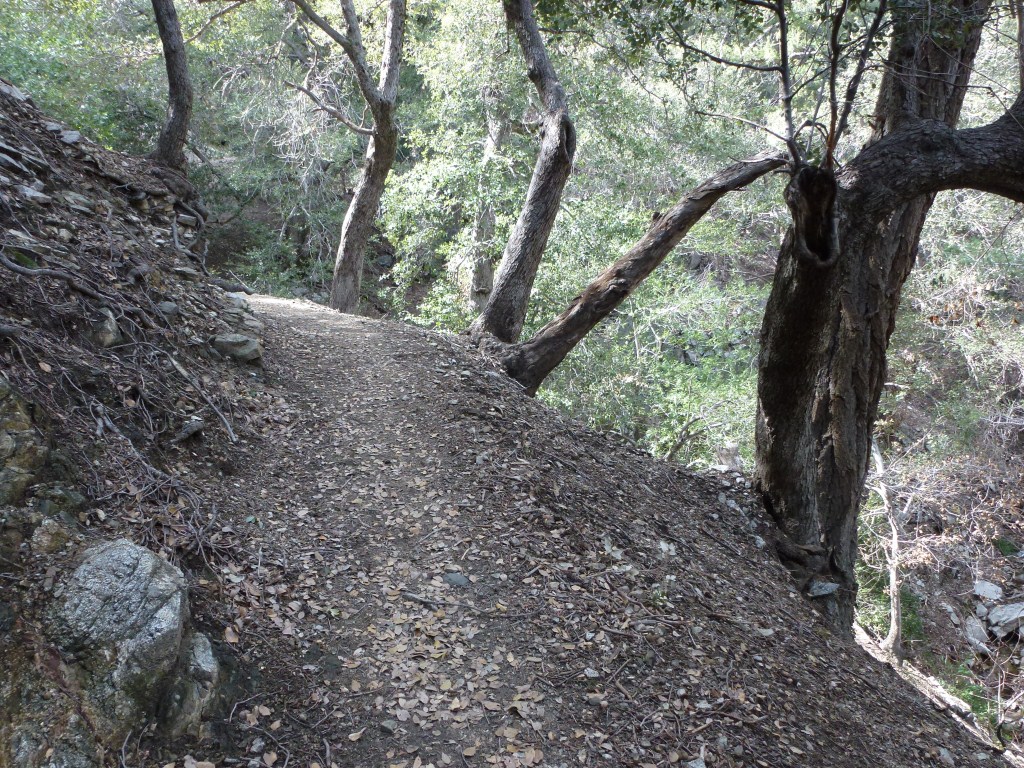
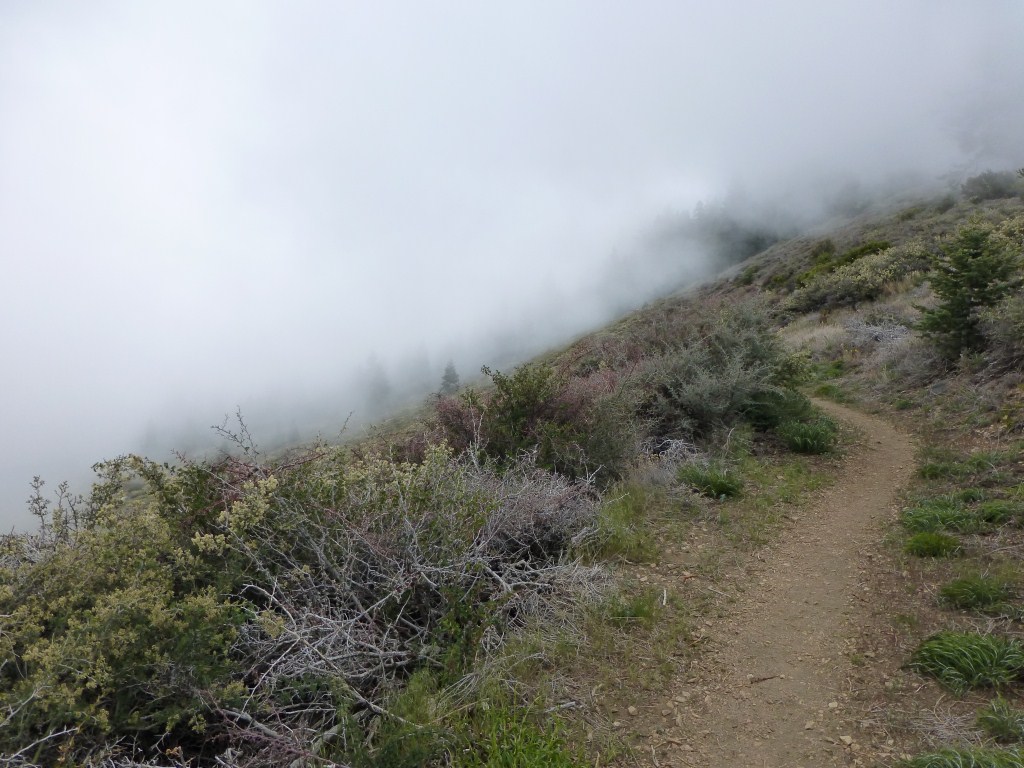
I’m going through a few hundred photos I’ve taken of the Baldy Bowl trail over several different hikes for a future post.  Looking through them I started thinking about why I love hiking so much.  Essentially, I love hiking because it is a multi-dimensional undertaking.  Unlike working out in a gym where exercise is essentially the whole story, the exercise component to make it from one point to the next in hiking is just the beginning.  Weather plays an important role and can change significantly—even on a day hike.  Topography is seldom uniform for long and often provides mini-challenges in order to traverse.  Trail conditions may vary with the trail becoming more or less easy to follow.  Along the trail, changing views constantly provide differing perspectives from one point to the next. Personal exploration and discovery can become inherent aspects of hiking simply by going on different trails.  Creatures come and go making it important to at least learn about the ones that are dangerous to humans.  Most any long trek will pass through different vegetation that similarly requires some minimal knowledge of in order to avoid things like itchy rashes.  Fortunately however, most creatures and vegetation are harmless to humans and can simply be enjoyed.  With so many aspects to hiking, there are a seemingly endless number of opportunities to learn about the natural world that is available to hike through as well as the skills and gear required to do so.

Timing and the relationships between the different aspects of hiking offer another level of enjoyment.  Often, something catches my eye and I invest some time taking it in.  For example, last year while hiking down the Baldy Bowl Trail, I spotted a tree I liked and decided to photograph it.  It stood relatively alone in the landscape and offered an opportunity to photograph it in it’s entirely unobstructed as an object with a distant view beyond.

Trying to photograph it, I couldn’t get the exact view that caused me to notice it as the sun was getting in the way (polarized sun glasses making the glare significantly less than what the camera would deal with).  So, I got interested in the relationship between the sun and the tree.  I walked to a spot where the tree provided shade allowing me to take a photo with the tree “eclipsing” the view of the sun generating a dark silhouette against the bright blue sky.  Luckily small patches of clouds also happened to be in the sky adding some content to the view.  This is clearly a photo of the moment.  While the tree will most likely still be there for the rest of my life, it’s doubtful I’ll ever show up again at the right time to have this scene appear the same way.  Hiking always has delicious moments like this where nature is aligned in special ways waiting to be noticed.

After focusing on “eclipsing” the sun and capturing the tree in silhouette, I decided to pay attention to the color and height of the tree and how it looked when more colorfully set against the sky.
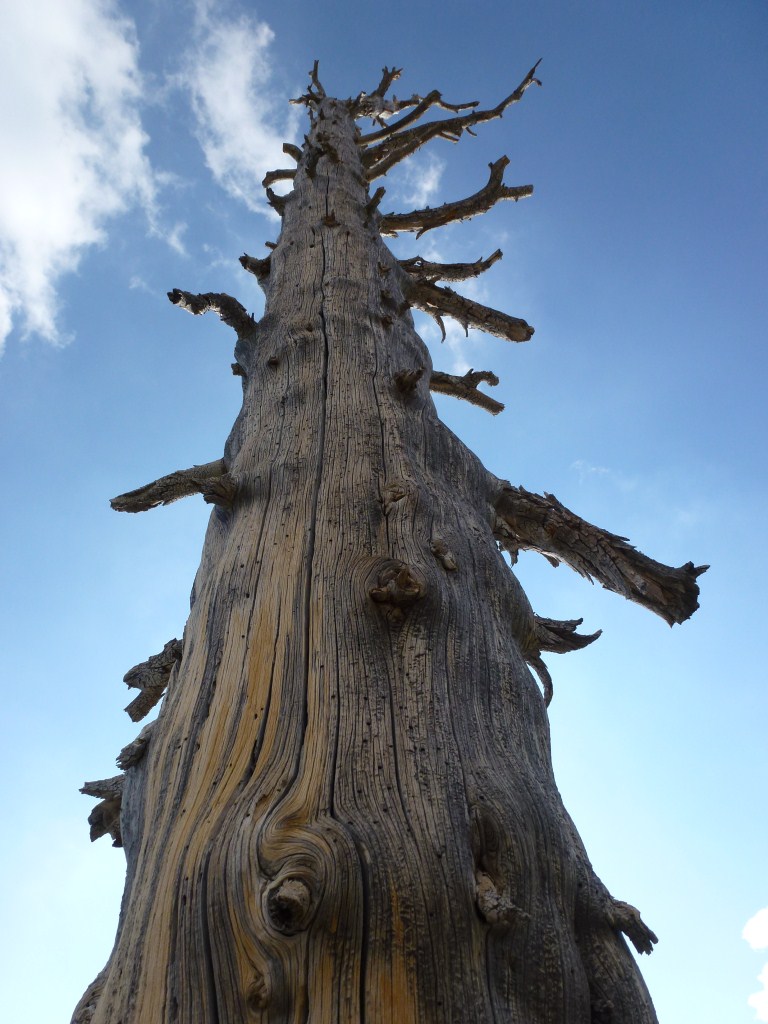
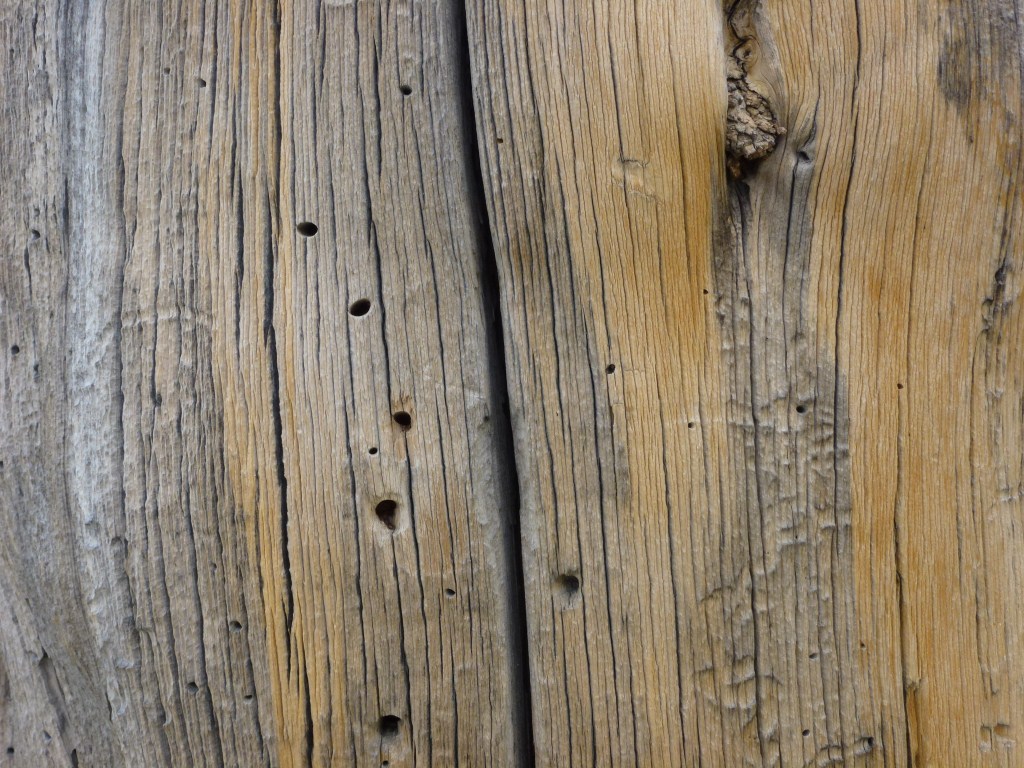
Later, I admired the weathering of the tree as well as its colors, texture, and imperfections (including what appear to be woodpecker holes).
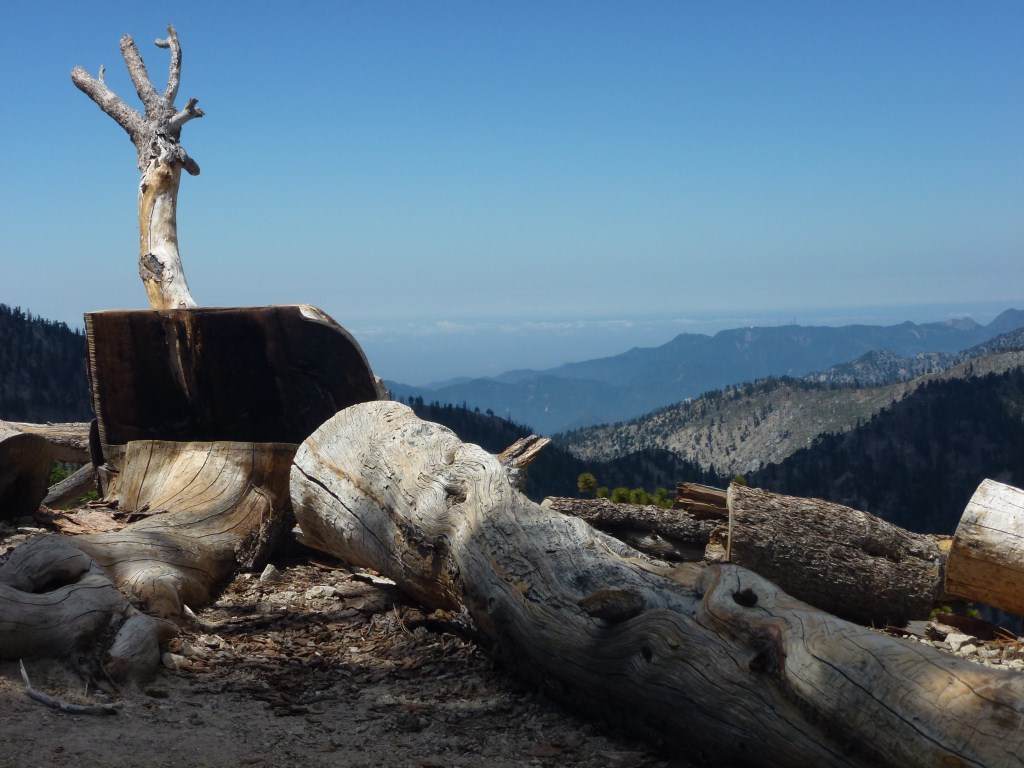
Finally, I found myself leaning against the tree looking at the shadow it cast in the landscape.

While I certainly got some great exercise hiking to Mt. Baldy that day (losing some blubber in the process), it was the numerous delicious moments and overall spectacular beauty of nature that I remember.  It is being able to interact with nature viewing it at different scales from the smallest details to the grandest views that I truly cherish.  I find the multifaceted aspects of hiking to be wonderfully indulgent.  Nature beckons me to return to it in exciting ways that the “nose to the grindstone” gym experience never could.

Dawson Saddle to Mt. Baden-Powell

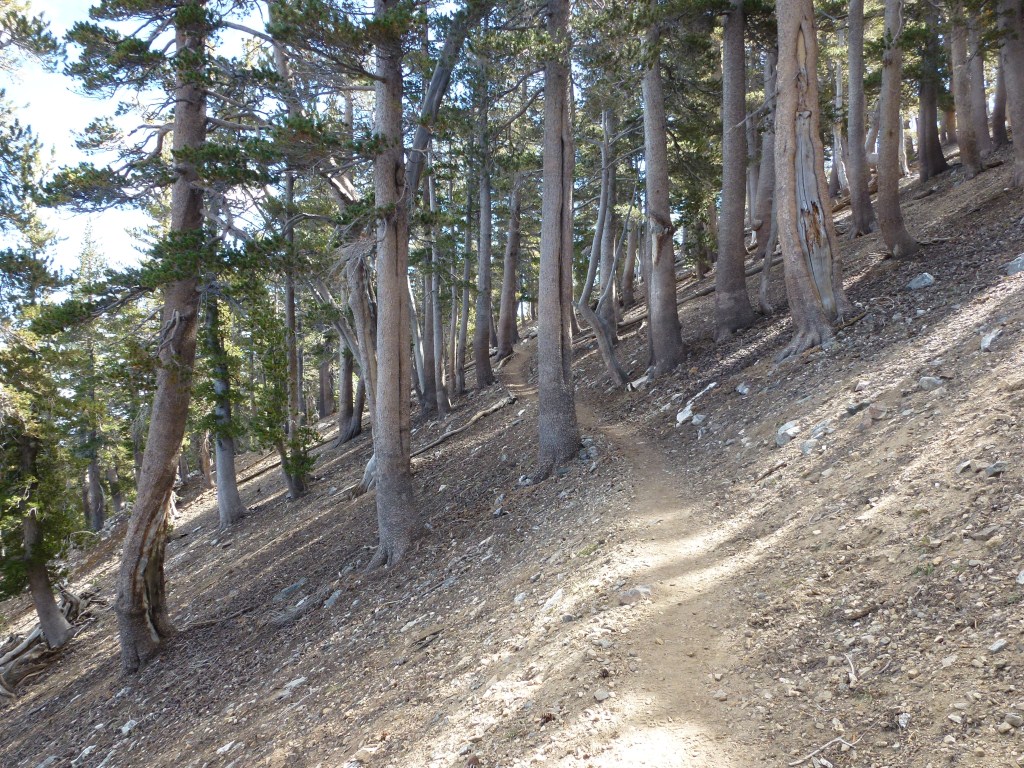
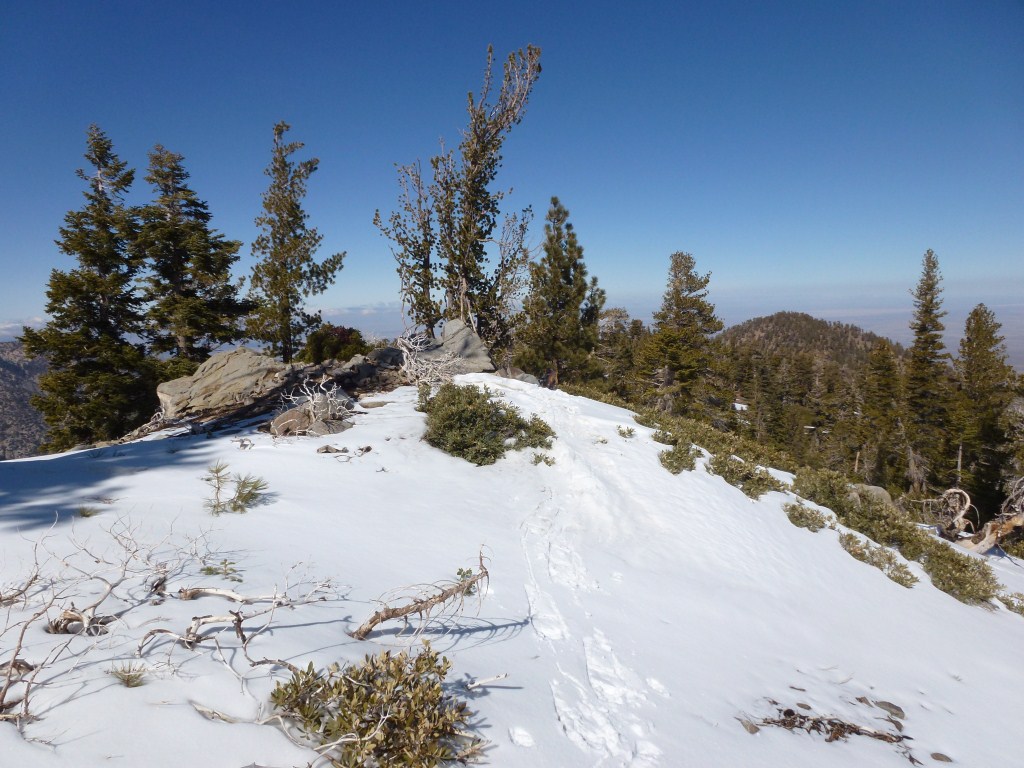
Last Saturday I hiked with my family from Dawson Saddle to Mt. Baden-Powell.  This is the easiest way to get to Mt. Baden-Powell.  Although the trail is about 3/4 of a mile longer than  the trail leading up from Vincent Gap, it has over 600′ less gain.  There are spectacular views and nice varieties of terrain along both the Dawson Saddle Trail and the Pacific Crest Trail leading to Mt. Baden-Powell.  I’ve hiked these trails numerous times and the photos below are from a variety of hikes at different time during the year.

View toward desert from Dawson Saddle Trail

View toward Mt. Wilson from the Dawson Saddle Trail

Dawson Saddle Trail

View from winter snowshoeing trek on the Dawson Saddle Trail

The 2.5 mile portion along the Pacific Crest Trail is among my favorite stretches of trail in the forest and definitely the easiest to reach among my favorites.  In addition to the stellar views out to the desert looking north or towards the ocean looking south from over 8700′ in elevation; the views of the trail itself and it’s immediate surroundings are equally magnificent.

View toward the ocean along the Pacific Crest Trail

View out to the desert from the Pacific Crest Trail

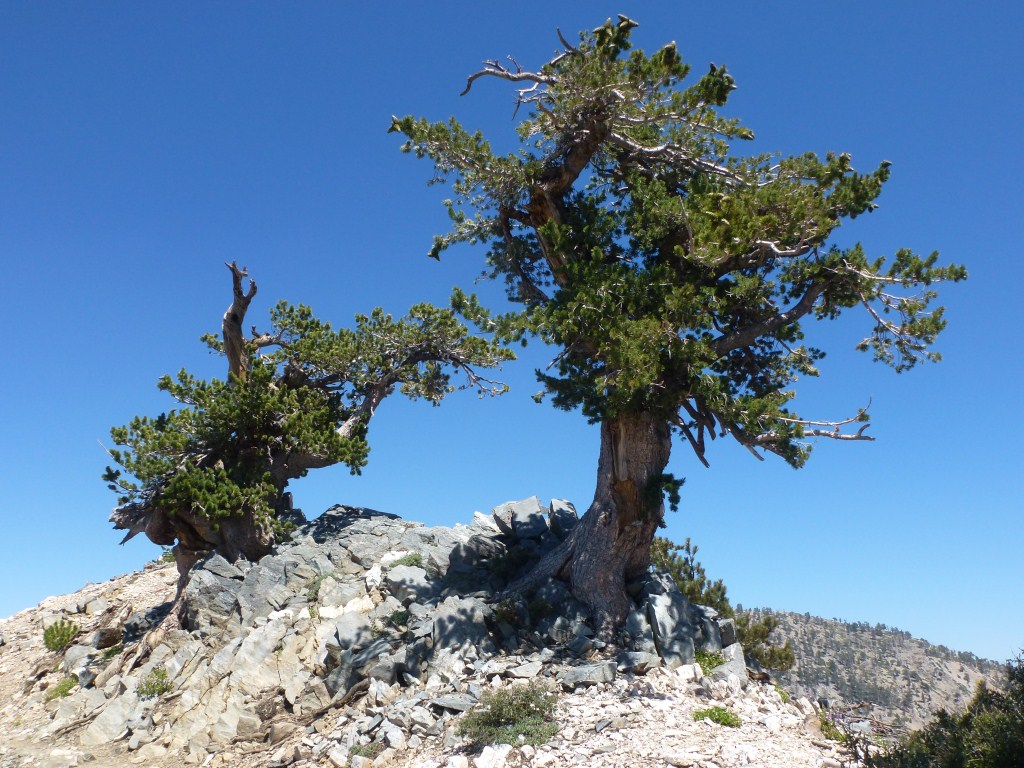
Trees coming out of the rock, far enough apart and small enough to intimately stand out as sculptures are among the many close up treasures along the Pacific Crest Trail.

Hiking along the ridge, there is always a distant view out.  However, there are also numerous places where the view in one direction is temporarily blocked by a protrusion standing out like a small building in the landscape.

Small protrusion standing out along the ridge of the Pacific Crest Trail.

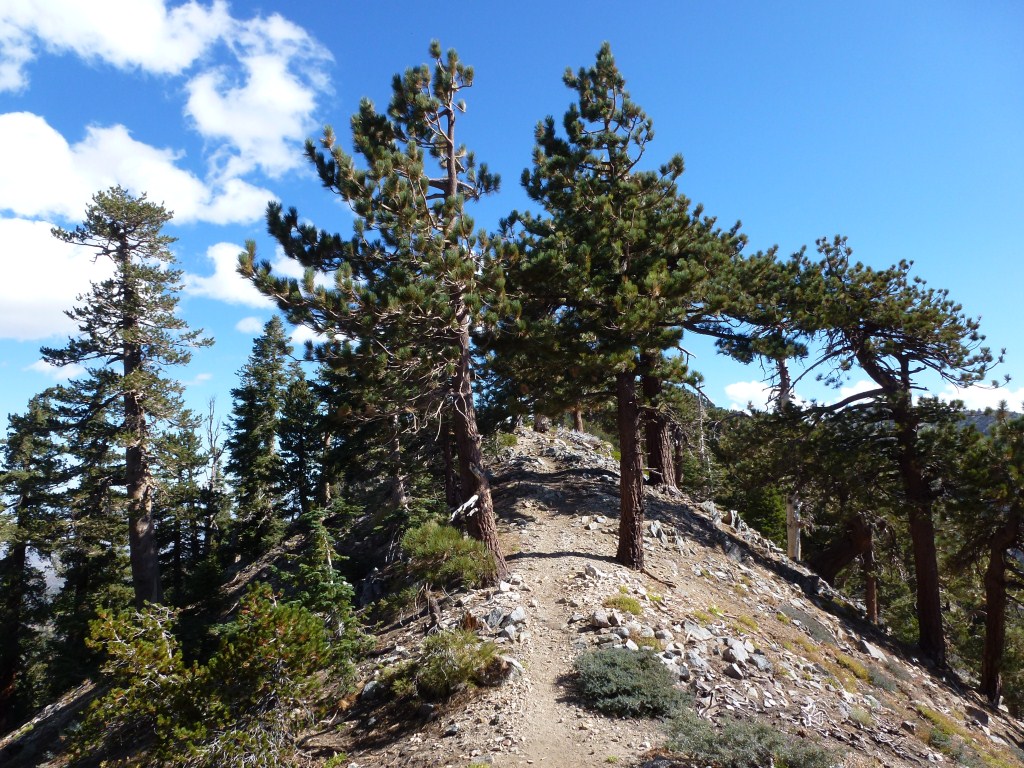
At other times the trek is right on top of the ridge with unobstructed views right and left.

Hiking the ridge with the mountain falling equally on both sides of the trail.

There are also many times where there is a long view down the ridge line.

View down the ridge toward Mt. Burnham along the Pacific Crest Trail.

The 1500 year old “Wally Waldron Tree” marks the trail leading to the summit.

Wally Waldron Tree

At 9399′ in elevation, the views from Mt. Baden-Powell are exceptional.  My favorite is the view toward Mt. Baldy.

View toward Mt. Baldy from Mt. Baden-Powell


National Trails Day at the Haramokngna American Indian Cultural Center

The Haramakngna American Indian Cultural Center is having a hike-a-thon Saturday on National Trails Day to raise money for the Center.  If you can make it, they will be hiking the Gabrieleno Trail from Red Box to the Valley Forge Campground.  If not, consider making a donation to their cause.  Wherever you are tomorrow, Happy National Trails Day!

Gabrieleno Trail between Red Box and Valley Forge Campground

A Gorgeous Icy Cold Snap on Saturday’s Hike to Mt. Islip

Last Saturday, the view of large patches of interesting cloud patterns in an otherwise blue sky along the 210 freeway heading toward Angeles Crest Highway already indicated the possibility that our hike to Mt. Islip would be weather enhanced.  By the time we (family and friends) passed Cloudburst Summit we were driving in and out of the clouds we saw rolling in from below.  From the trailhead at Islip Saddle the temperature gauge on the car dashboard read 36 degrees F.  At that point I knew we were in for a treat.

It didn’t take long hiking up the Pacific Crest Trail heading to Windy Gap to find ourselves walking into the cloudy mist.

About to enter the cloudy mist along the Pacific Crest Trail

At first the mist wasn’t as moist or dense as I thought it would be as I headed into it.  Prior to reaching Little Jimmy Campground, I met a PCT thru-hiker (trail name Viper) who mentioned his water froze overnight.  While I felt a little bad for Viper enduring such an unexpected cold snap this time of year, I found myself hopeful that something interesting would be lurking up above.

Light cloudy mist along the Pacific Crest Trail before reaching Little Jimmy.

Typically I really enjoy the trek along the Islip Ridge Trail with excellent views into the Crystal Lake Basin.  However, the weather made this stretch of our hike even more magnificent. By the time we had reached above 7600′ there was more moisture in the air, it felt colder, and ice had formed in the trees (but not on the ground).

Ice in the pine needles

The increased cloud density made depth perception more prominent than usual and the dead trees took on a more delineated character with ice clinging to their branches.

Ice clinging to the branches of dead trees standing out in the grey mist.

At times there was so much ice in the trees it looked like it snowed.

Icy Trees

But the ice that fell to the ground proved that it didn’t actually snow.

Ice on the ground that fell beneath the trees.

Near the summit the sun broke through the clouds.

The sun breaking through the clouds with little patches of blue sky and icy trees.

Above 8100′ we passed through the clouds yielding a dramatic view of ice covered trees against the blue sky–especially colorful after trekking through the grey mist for some time.

The view looking up to the sky as we passed above the clouds that continued to flow around the mountain below the summit.

View of the clouds coming in from the south and making their way around the summit of Mt. Islip

View from Mt. Islip looking toward the Mojave Desert as the clouds flowed around Mt. Islip and broke up into smaller formations as they made their way north.

View walking down through the clouds on the Islip Ridge Trail

Instead of returning to Windy Gap, we took the Mt. Islip Trail down to Little Jimmy and found ourselves in an area free from the clouds as they flowed over Windy Gap and Islip Saddle breaking up as they continued moving north.

View along the Mt. Islip Trail connecting the Islip Ridge Trail and Little Jimmy.

As we made it back down the Pacific Crest Trail we found ourselves in the sun most of the way with great views of the Mojave Desert.  Looking down the trail however, we saw clouds making their way over Islip Saddle.

View heading down the Pacific Crest Trail looking toward Islip Saddle

At Islip Saddle we found ourselves walking through the cloudy mist one more time before making it to our cars.  Along the drive home we passed in and out of the clouds driving down Angeles Crest Highway until we passed Cloudburst Summit once again returning below the clouds until we engage in another trip like this.

View from the Pacific Crest Trail as we are about to enter the clouds one last time before making it to our cars.

41,000 acres re-opened today

About 41,000 acres of Angeles Forest previously closed due to the Station Fire was re-opened by the Forest Service today.  The re-opening covers a large area of Big Tujunga Canyon south of Big Tujunga Dam.  Notable re-openings include the Stone Canyon Trail, Trail Canyon Trail, and the Delta Flat Recreation Areas.

When hiking in these areas beware of the Poodle Dog Bush, which releases a toxin that causes most people to suffer an itchy rash reaction similar in some ways to poison oak.

Poodle Dog Bush–which blooms purple flowers at certain times during the year.