Mountain Mornings

I started and ended May with great backpacking trips. In between was mostly about dealing with more injuries. Thankfully, this time it wasn’t my IT bands or knees. It was my feet that were giving me lots of problems which I attribute mostly to my shoes. It seams every time I find shoes that work for me the manufacturer stops making them. This time, finding a replacement pair was extra difficult and I’m still not excited about what I’ve ended up with.

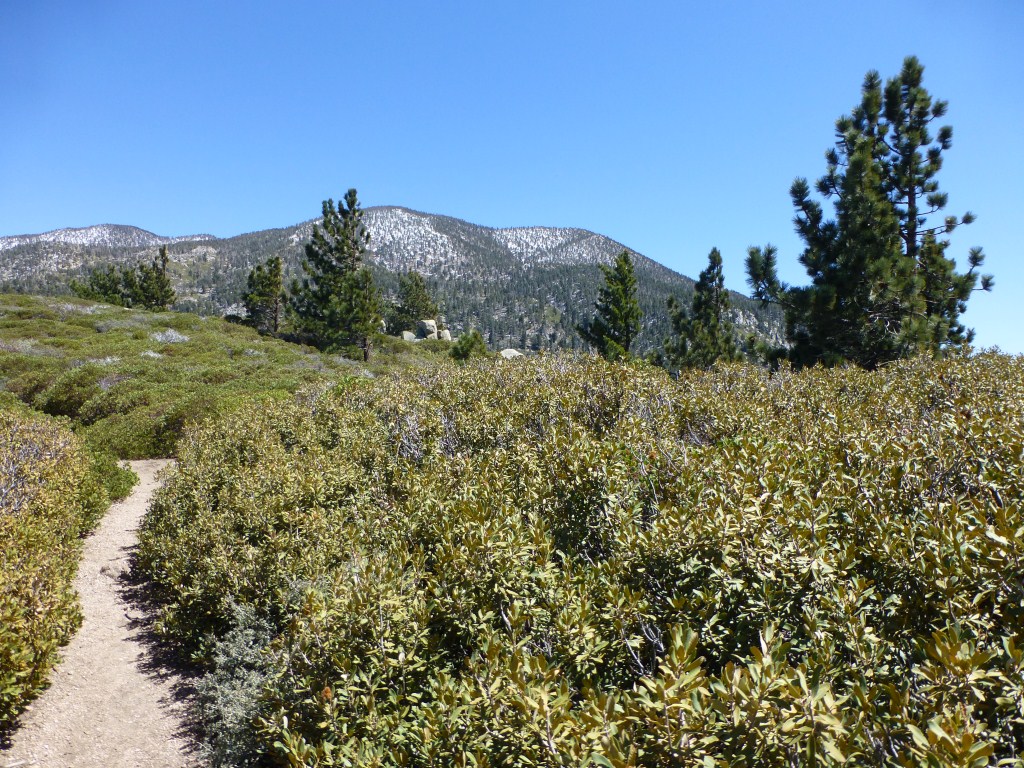
View from the Pacific Crest Trail close to the trailhead as Islip Saddle toward Mt. Williamson.

View from the Pacific Crest Trail close to the Islip Saddle trailhead looking toward Mt. Williamson.

Normally I’d use a backpacking trip as an opportunity to push myself. However, this time I wanted to take it easy on my feet and take things slow. I really can’t afford another setback if I’m going to be ready to hike the High Sierra Trail at the end of July. So, the two day experience was far less strenuous than one of my typical  day training hikes. I was joined by my friend Lorenzo who prefers to go a little slower and savor the experience anyway.

There's easy access to water at Little Jimmy Springs and the water is still flowing nicely.

There’s easy access to water at Little Jimmy Springs and the water is still flowing nicely.

Spending the night at Little Jimmy Trail Camp was perfect because there are so many options to hike from there that I could easily alter plan as needed. Water is also close by at Little Jimmy Springs which serves to significantly reduce pack weight. Arriving at Little Jimmy in a mood to go slow, I was easily inspired to spend about 45 minutes following a deer around in lieu of hiking further up the trail as originally planned.
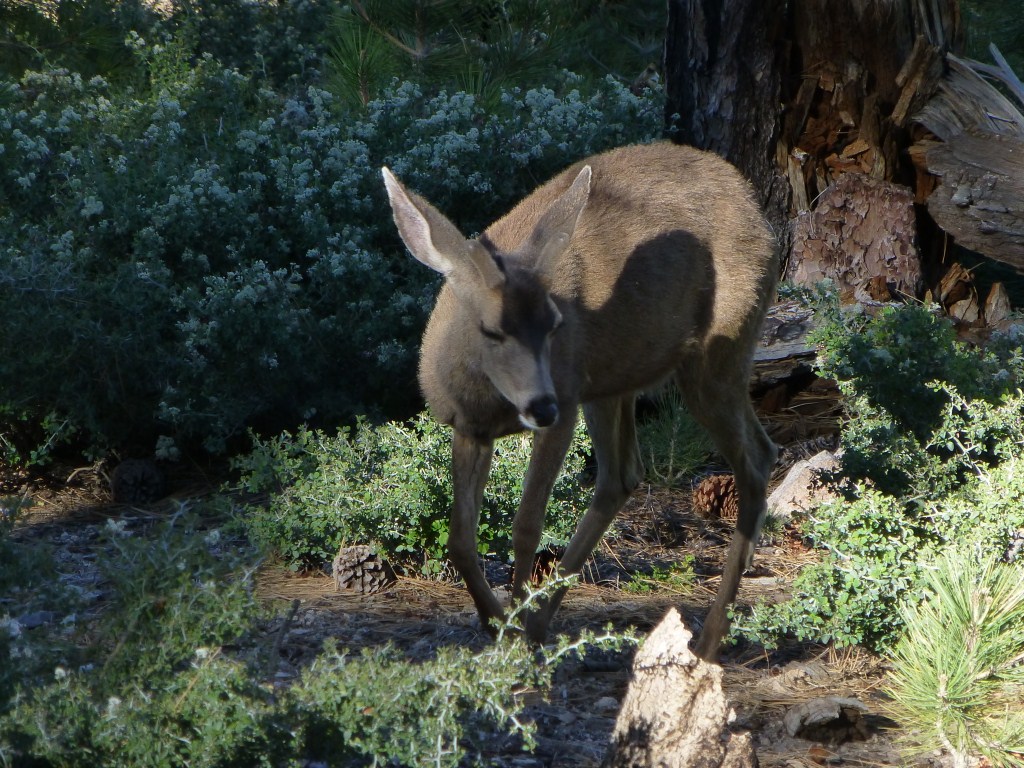
Deer at Little Jimmy Trail Camp.

Deer at Little Jimmy Trail Camp.

Lorenzo meet me a few hours later and we hiked up to Mt. Islip to enjoy watching the day turn into night. Windy and getting chilly on the peak, we ended up making dinner back down at Little Jimmy.
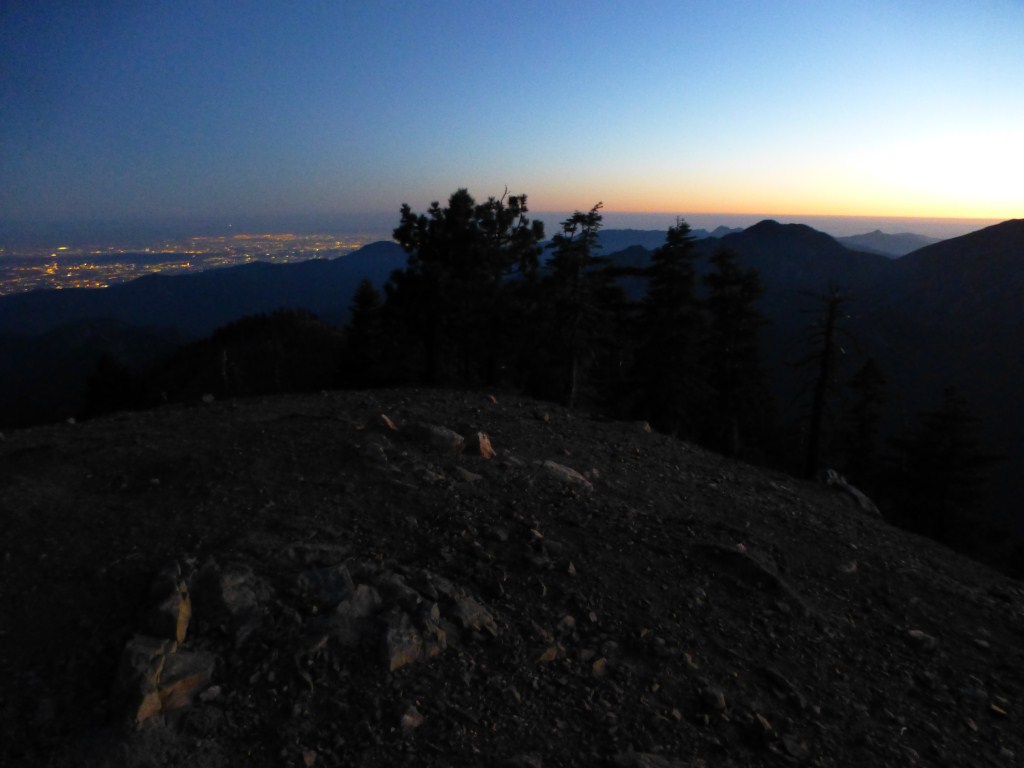
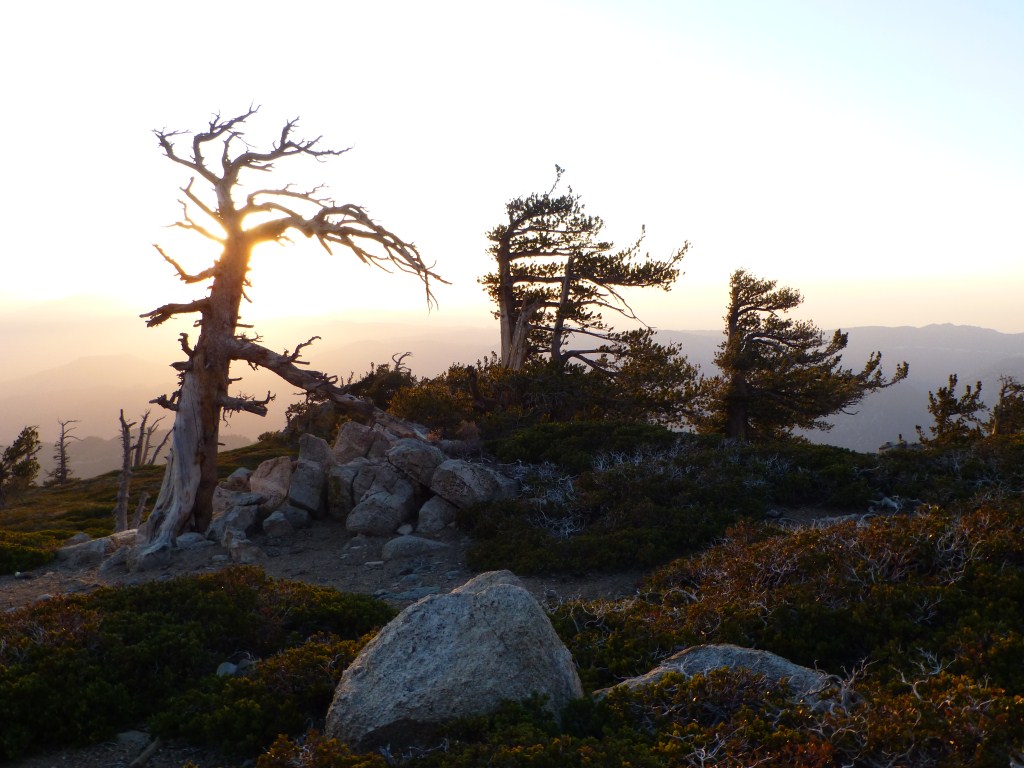
Dusk on Mt. Islip.

Dusk on Mt. Islip.

Early mornings are probably my favorite time on the mountain. Perhaps this is because I’m not a morning person and arriving at a trailhead from home early enough to experience an early morning beginning would leave me too tired to really enjoy it. On the other hand, waking up in a tent already a good distance up the mountain is something I find refreshing. Perhaps it’s the comparative rareness of my experiences that inspires me. Unlike home where I’m not always ready to get out of my comfortable bed, waking up in my tent in the forest is an exercise in anticipation. Depending on a bunch of factors, I find sleeping on a pad on the sloping forest floor to range between endurable and adequate in terms of comfort. I’ll wake up a few times overnight and I often look at it as paying my dues to earn the morning light. However, I somehow always wake up rested and ready for another day of hiking.

Early morning at Little Jimmy Trail Camp

Early morning at Little Jimmy Trail Camp

As we made it up the Pacific Crest Trail between Windy Gap and Throop Peak Saturday morning, I became fixated on some similarities and differences between early morning and late afternoon light which reminded me of the figure ground studies I did back when I was in architectural school. Architectural figure-ground studies involve drawing two versions of the same thing. In one version, the solid objects (e.g. walls) are drawn in color (usually black ink) leaving the spaces white. The other version is the reverse. The idea is to study how the difference between the two drawings of the same thing affects how it is perceived and to assist in seeing the importance of both solid and void.

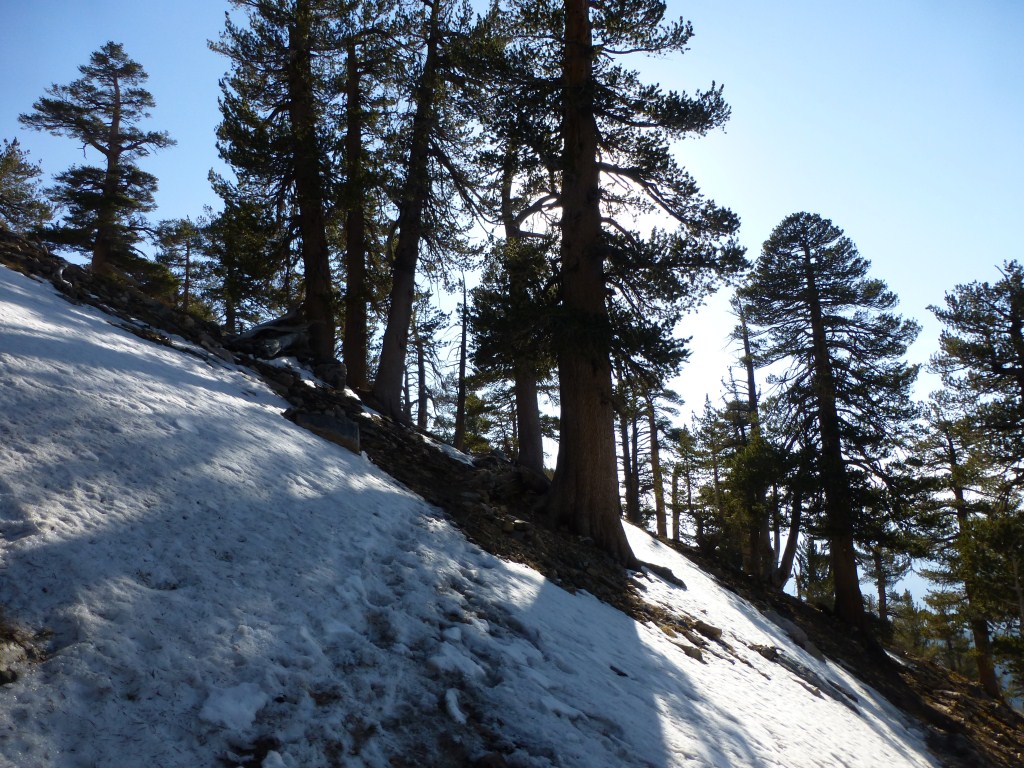
Shade and sun, a form of figure-ground relationship.

Shade and sun, a form of figure-ground relationship. The experiential difference for me is mostly impacted by temperature.

I’ve hiked this portion of trail numerous times in different conditions ranging from a fairly hot summer’s day with smog obstructed late afternoon views to hiking in snow on a on a chilly winter’s day with clear views to the ocean.

Pacific Crest Trail between Windy Gap and Mt. Hawkins in November 2011.

Pacific Crest Trail between Windy Gap and Mt. Hawkins in November 2011.

However, I’ve never been on this portion of trail anywhere near an early morning time. So, the figure-ground like perceptual shift of sun, wind, and shade between early morning and late afternoon jumped out at me. Although the angle of the sun is the same (though coming from different directions), the meaning of the temperature change between sun and shade and the impact of the wind is fundamentally different for me. This difference revolves around whether it’s more comfortable for me to be in the sun or the shade and if a little wind makes things better or worse.

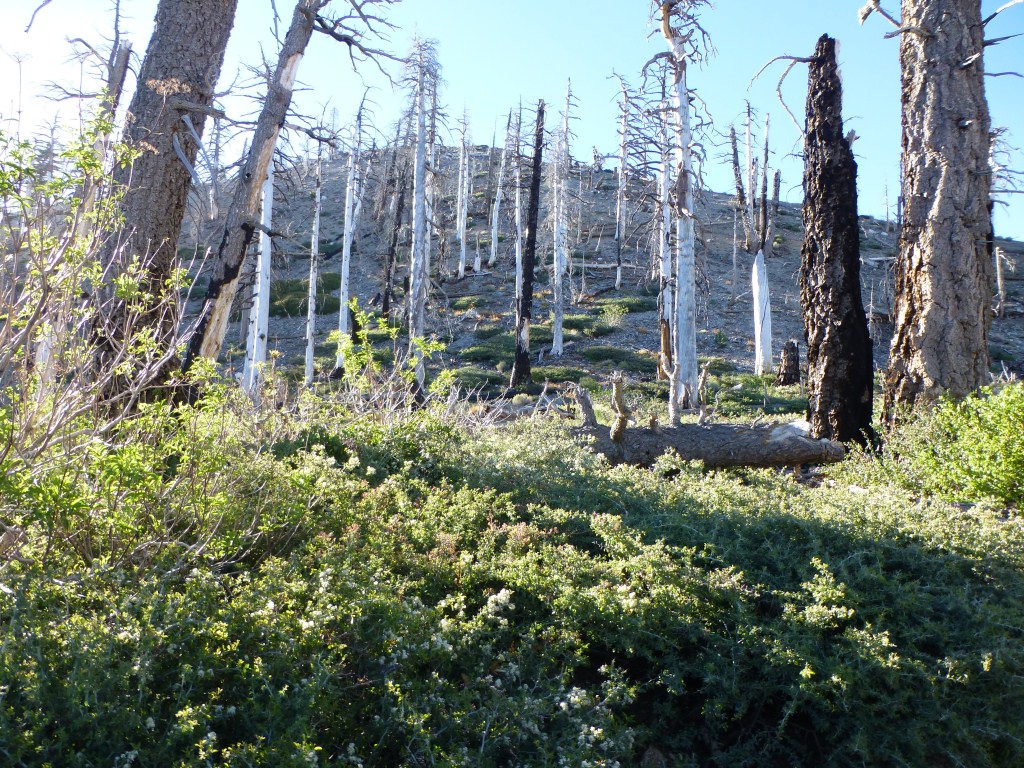
Snags from the 2002 Curve Fire leave the landscape open and exposed and require a low angle from morning or afternoon light to provide shade. I find ascending the mountain in these conditions more enjoyable in the cool morning air.

Snags from the 2002 Curve Fire leave the landscape open and exposed and require a low angle from morning or afternoon light to provide shade. I find ascending the mountain in these conditions more enjoyable in the cool morning air.

Unlike the heat generated by the afternoon sun that I prefer getting out of, the warmth of the morning sun is typically such a welcome change in temperature for me that I want to be in it. A breeze serves to heighten these preferences. As a result, in the morning I find myself more focused on stopping and taking in views while in the sun hopefully with no wind whereas in the afternoon I prefer hanging out in the shade hopefully with a breeze. This makes the lighting significantly different and changes what I focus on.
In the morning I enjoy warming up in the sun and looking at how the morning light highlights the landscape. Long shadows being reminders of recent darkness and cold.

In the morning I enjoy warming up in the sun and looking at how the morning light highlights the landscape. Long shadows being reminders of recent darkness and cold.

In both cases the long shadows make the ground more interesting for me and delineate areas to move through or stay in depending on the time of day. This range of experience which changes my perception of the terrain and requires a very early start to experience is a key reason I love backpacking.

Being in the warmth of the early morning sun on an exposed portion of the trail makes viewing the long shadow of the mountain  and the contrast between light and shadow more pleasurable to take in for me.

Being in the warmth of the early morning sun on an exposed portion of the trail makes viewing the long shadow of the mountain and the contrast between light and shadow more pleasurable to take in for me.

We made it to Throop Peak before returning to Little Jimmy to gather our things and head home. The thought of morning light has me looking forward to my next overnight trip.
My First Backpacking Trip Of The Year

Last Friday I spent the night in the forest for the first time this year and was joined by my friend Scott who also wrote about this trip on his blog. I finally felt comfortable testing my IT bands on back to back days while also carrying a significantly heavier pack. The results were so good I hiked a third consecutive day with my friends Etienne, Lorenzo, and Tim to Mt. Waterman in Angeles National Forest on Sunday. Feeling no pain during or after these hikes makes me confident that I will be ready to hike the High Sierra Trail at the end of July.

Snow on the trail just above Limber Pine Springs.

Snow on the trail just above Limber Pine Springs.

Scott and I started from Angelus Oaks and hiked a portion of the San Bernardino Peak Divide Trail (which crosses nine peaks above 10,500′ ending at Mt. San Gorgonio). I’ve never hiked the entire trail and have been unexpectedly challenged by it each time I’ve hiked a portion of it (August 2012 when I couldn’t complete my planned trip and June 2013 when my trip was made unnecessarily difficult due to misinformation). This year’s challenge involved icy patches of snow on the trail. Since it was so hot all week leading up to our hike, I didn’t think to bring my microspikes. I lose my footing easily on icy snow. Last year I slipped and fell about 30′ down the mountain along the Sky High Trail close to where Thuan Ngoc Pham slipped in the snow and died earlier this year. Slipping (but thankfully not falling) just above Limber Pine Springs and the possibility of needing to return in the dark easily convinced me to play it safe and head back to our campsite at Limber Pine Bench. Scott being more sure footed in snowy conditions than I and a faster hiker (who wasn’t risking a night time return without me along to slow him down) was able to easily make it to West San Bernardino Peak and back before dark. His description and the photo he posted on his blog confirms to me I wouldn’t have enjoyed it had I chosen to continue.

Limber Pine Bench

Limber Pine Bench

Fortunately, turning back wasn’t that disappointing for me having been to West San Bernardino Peak twice before combined with the fact that Limber Pine Bench is one of my favorite camping spots. While waiting for Scott to return I enjoyed taking pictures there.

View toward Mt. Baldy from Limber Pine Bench.

View toward Mt. Baldy from Limber Pine Bench.

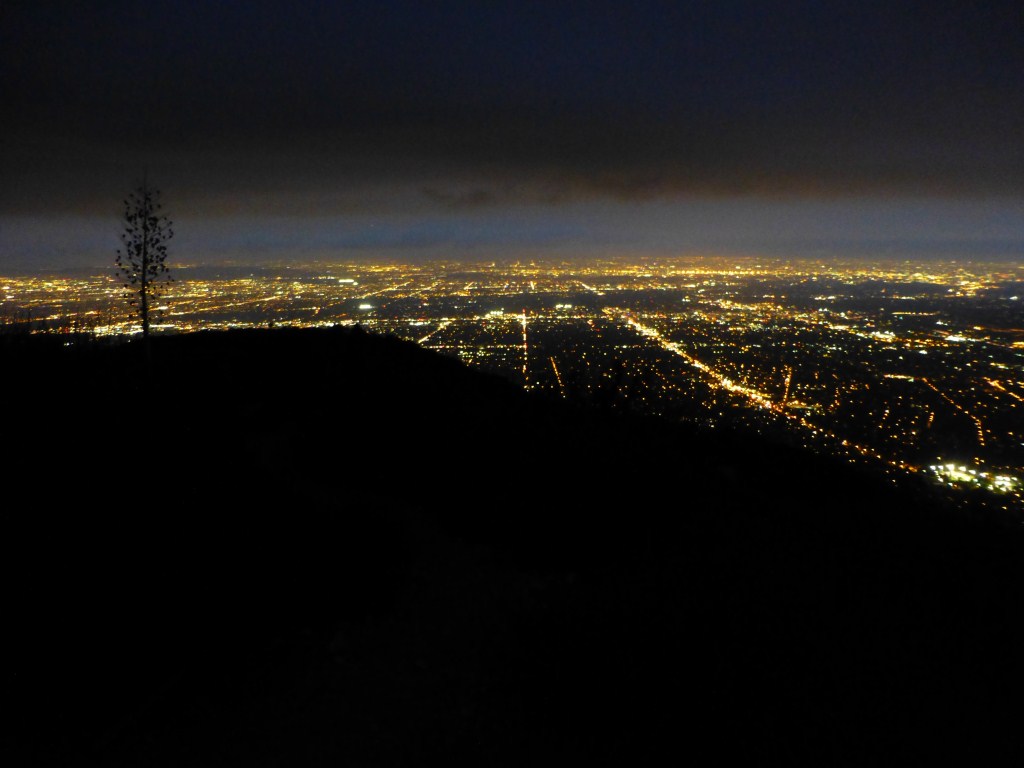
Scott returned in time for us to enjoy a nice sunset while eating dinner. My favorite part of sunsets are when the sun disappears from view but still lights up the sky. Dusk is also extra enjoyable for me when there’s an opportunity to watch the lights come on in the city below.

Night setting in at Limber Pine Bench (elevation 9,360').

Night setting in at Limber Pine Bench (elevation 9,360′).

Although I’ve had my challenges on this trail, it’s one of my all time favorites. I particularly enjoy the diversity of experience as the vegetation and topography changes significantly every couple miles.

San Bernardino Peak Divide Trail between Manzanita Springs and Limber Pine Bench.

San Bernardino Peak Divide Trail between Manzanita Springs and Limber Pine Bench.

The plateau area west of Manzanita Springs is one of my favorite places to hike because of the expansiveness of views, interesting rock formations, and the gentile slope that serves as a break from the rest of the trail which is considerably more strenuous. Getting out of the heat was an added plus. Eventually, I think I’ll hike the nine peaks. Maybe next year.

View from the plateau area of the San Bernardino Peak Divide Trail west of Manzanita Springs.

View from the plateau area of the San Bernardino Peak Divide Trail west of Manzanita Springs.

Finally, Some Momentum

I’m feeling good about my last two weeks of hiking. For the first time since last August I’m not injured and haven’t had any setbacks over a two week span. My current  weekly schedule is to do a training hike (for the High Sierra Trail in late July) where I push myself, rest two days and then do an easy hike, rest one day and then play tennis, rest one day and repeat. This is now working well and I’m settling into having a routine. Of course I’ll need to break that up periodically with some backpacking, but it feels solid right now and I’m pain free!

Mt. Wilson Trail (14 miles, 4,750' gain)

Mt. Wilson Trail (14 miles, 4,750′ gain)

It’s been frustrating how long it’s taken me to get going again. Recovery has been painstakingly slow. I really felt like I was back in 2011 just getting started. What last July would have been an easy warm up portion of a hike recently required a ridiculous amount of stops just to catch my breath. Five miles felt like fifteen. It was great to be back in the forest but also discouraging to see how out of shape I now was.

View toward the Channel Islands from the Jesusita Trail in Los Padres National Forest (7.4 miles, 1,350' gain).

View toward the Channel Islands from the Jesusita Trail in Los Padres National Forest (7.4 miles, 1,350′ gain).

So, getting my last training hike up to 16.2 miles with 4,849′ of gain felt terrific. Finishing with that oddly refreshing tiredness that comes with appropriately pushing oneself, and with no knee pain or blisters was invigorating for me. I even felt great the next day.

Idlehour Trail (16.2 miles, 4,849' gain).

Idlehour Trail (16.2 miles, 4,849′ gain).

Balancing training hikes with more leisurely strolls through the forest is working well, especially when family and/or friends join me on these easier ones. It’s extra special when my daughter joins me (like last Sunday on the Pacific Crest Trail), this being her last year before going away to college in August.

Pacific Crest Trail between Cloudburst Summit and Cooper Canyon Campground (5.2 miles, 1,400' gain).

Pacific Crest Trail between Cloudburst Summit and Cooper Canyon Campground (5.2 miles, 1,400′ gain).

A Calm Between Two Storms

I went hiking last Thursday between the two storms that finally brought some rain to drought stricken California. My hike started with the clouds from Wednesday’s storm slowly breaking up and giving way to mostly blue skies as I made my way from the Cobb Estate Trailhead to Mt. Lowe.

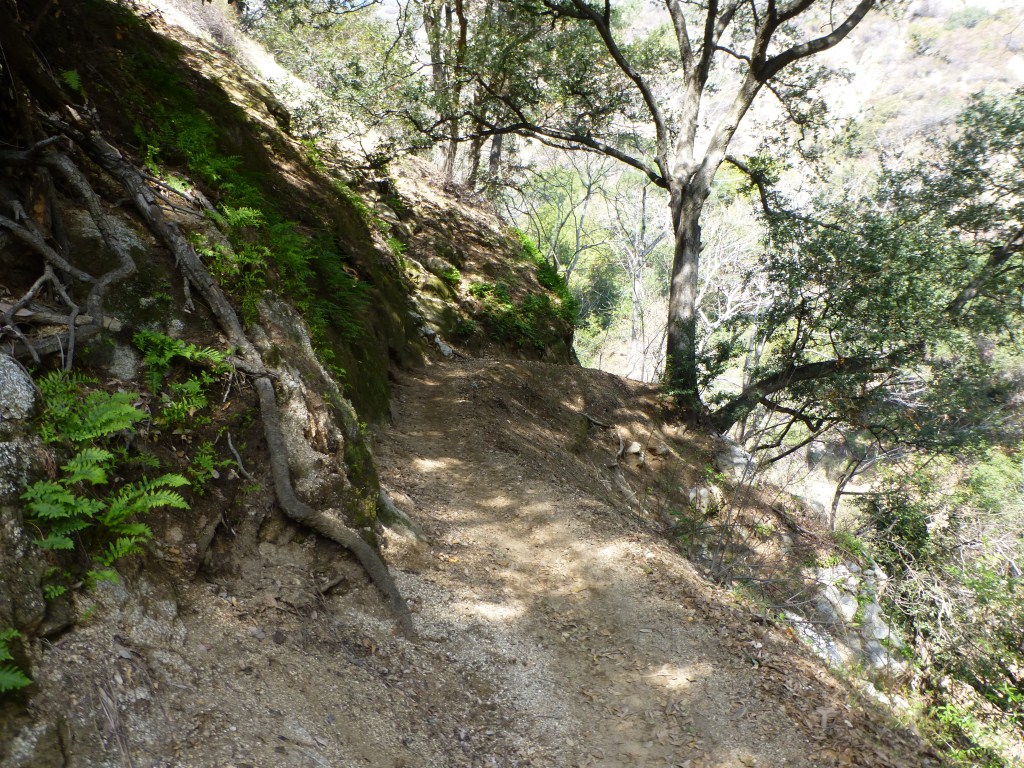
Lower Sam Merrill Trail

Lower Sam Merrill Trail


With a freshness to the air that comes after a rain and the corresponding intensified smells that damp ground and wet vegetation produce, the landscape felt more alive to me than usual. The interplay of sunlight breaking through and then being hidden by clouds added a compelling dynamism and energy that clear skies don’t produce for me.

View coming down the Upper Sam Merrill Trail from Mt. Lowe.

View coming down the Upper Sam Merrill Trail from Mt. Lowe.

By the time I made it down to Mt. Lowe Campground and found the water tank Chris told me about, the sun was out and the skies were mostly clear. I enjoyed a short rest sitting at one of the picnic benches feeling confident I was going to see a fantastic sunset on my way down the Middle Sam Merrill Trail.

Water Tank above and behind the remains of the concrete retaining wall of the Old Alpine Tavern.

Water Tank above and behind the remains of the concrete retaining wall of the Old Alpine Tavern.

It’s just over a mile from Mt. Lowe Campground to Sunset Point along the Middle Sam Merrill Trail. The terrain is easy hiking but views are blocked by the north face of an unnamed mountain (that I sometimes refer to as Inspiration Peak for quick reference). While I covered that short amount of ground, the weather changed dramatically. I arrived at Sunset Point to discover it was engulfed in the foggy moisture of clouds making their way over the mountain. The coming storm was making its presence felt. Further down the trail, light from below began breaking through foretelling my pending descent below the clouds.

Light breaking through the clouds from below along the Middle Sam Merrill Trail.

Light breaking through the clouds from below along the Middle Sam Merrill Trail.

When I got below the clouds, the view was clear and expansive. With clouds forming above the mountain but not off in the distance, the nuanced subtle changes in light made the night portion of my hike extra special.

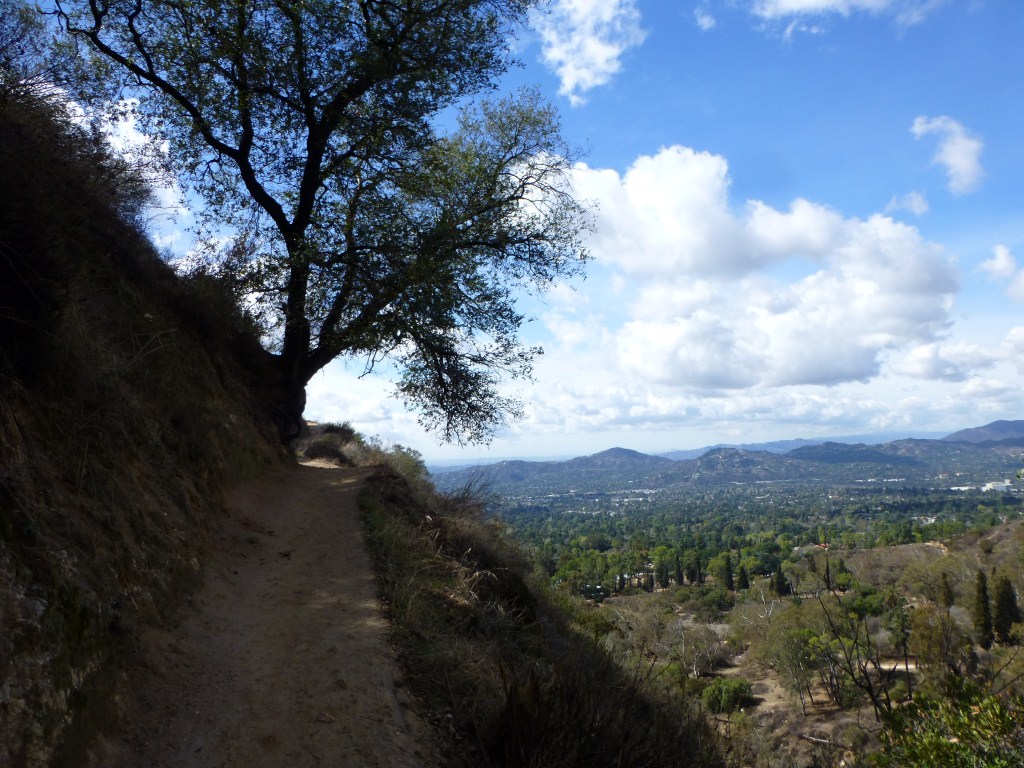
View from the Middle Sam Merrill Trail close to Echo Mountain.

View from the Middle Sam Merrill Trail close to Echo Mountain.

Not being able to predict what I’m going to experience is part of what makes hiking so enjoyable for me. Every hike seams to produce it’s own story. Starting my day with clouds breaking up from Wednesday’s storm and ending it with the arrival of clouds for the storm that started late Thursday night intensified the feeling that I was just able to squeeze this one in–a calm between two storms.

Feeling Better on Vetter Mountain

I’ve been sick with the flu for the past couple weeks. Last Sunday I finally felt good enough to exercise and was joined on a short hike of the Silver Moccasin Trail to Vetter Mountain with my friends Etienne, Camila, and Chloe. Although I was still coughing up mucus (aka lung cookies), it felt fantastic to be in the forest again. Barring any other setbacks, I think I’ll be able to work in two hikes a week for the foreseeable future.

View from Vetter Mountain

View from Vetter Mountain

Whenever I look out and can’t see any peaks from my house because the clouds are too low, there’s a great chance that I can go above the clouds by getting myself up to 4,000 or 5,000 feet. It’s an experience I can’t seem to get enough of and looking down on the clouds made my hike even better. There’s something about deciding to be in different weather by simply going into the mountains that appeals to me–especially on days when I can see the difference. Although I was already tired by the time I made it to Vetter Mountain, I felt so much better physically and mentally than I have in weeks that it was very uplifting to be there (especially with such great friends). Vetter Mountain is a fire lookout (that burned in the Station Fire) and a high point with an expansive 360 degree view towards taller mountains that surround it off in the distance (an unusual view in the San Gabriel Mountains).

View toward the Mt. Wilson Crest including Occidental Peak, Mt. Markham, San Gabriel Peak, Mt. Disappointment, and Mt. Deception from the Silver Moccasin Trail.

View toward the Mt. Wilson Crest including Occidental Peak, Mt. Markham, San Gabriel Peak, Mt. Disappointment, and Mt. Deception from the Silver Moccasin Trail.

From the summit and along the Silver Moccasin Trail, there are views of so many of the peaks I plan to hike (from Mt. Wilson to Mt. Baldy) this year that I began planning out my training to get ready to hike the High Sierra Trail in July. In addition to distance and gain, a key consideration is season. For example, the stretch of the Silver Moccasin trail I was hiking was extensively burned by the Station Fire and has no shade making it a hike for cool days only. I found myself hoping that we would get some snow. This has been another very dry winter so far in Southern California. With that in mind, it was nice to see some water flowing in Tujunga Creek.

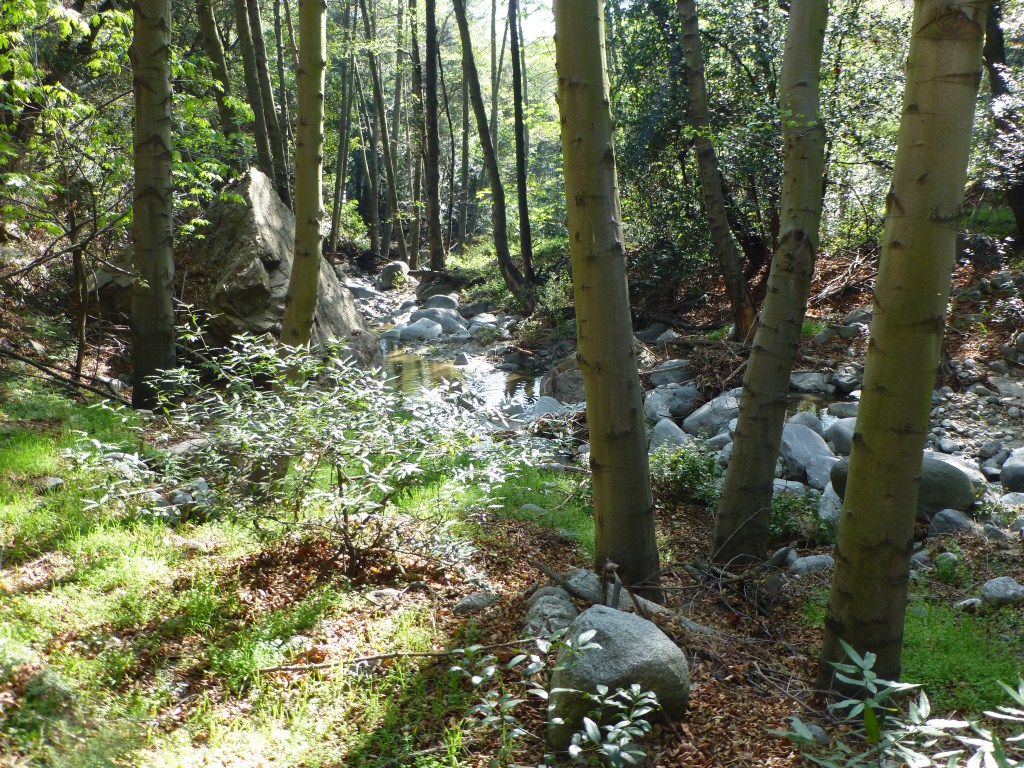
Tujunga Creek crossing along the Silver Moccasin Trail.

Tujunga Creek crossing along the Silver Moccasin Trail.