Introducing A Visual Approach For Finding Hikes

I strongly believe that if I saw enough photos of trails in Angeles Forest, I would have hiked them at least two decades before I did.  It’s impossible to know how that would have impacted my life.  However, I am certain I would have been significantly healthier and as a result much happier.

Without extensive prior experience, I found it virtually impossible to imagine what is there or even what might be there.  Descriptions in guide books were of no tangible help.  How could I search for something I didn’t even know existed?  The mountains looked similar to me from the city below.  Even when I started hiking in earnest, the mountains looked similar driving by some trails to get to others.  The subtleties and ecotones just aren’t visible from afar.  I’ve now completed over 100 hikes in the forest and still feel like I’m just scratching the surface.

So, in creating this resource, it’s always been important to me to develop a visual approach for finding hikes.  Although I’m still very early on in the process of adding hikes here, I feel I now have enough to introduce a first step (of hopefully many) toward visual searching.  I’ve now added several photo collections in the Galleries section of this site. The collections are in general categories to break up the photo stream and the photos are simply organized by the order I place them into the collections.  Under each photo is a link or two.  For example:

View toward San Gabriel Peak from the Lower San Gabriel Peak Trail

When you click on the link a new window will open with additional thumbnail photos in the immediate area.  So, at a glance you can determine if you want to look further.  Click on a thumbnail photo and a viewer will open allowing you to see full size images.

If the link takes you to a peak page (e.g. San Gabriel Peak from the example above), you will also see a list of links to hikes that will reach the peak complete with distance and gain data.  If the link takes you to a trail segment photo page (e.g. Lower San Gabriel Peak Trail from the example above), then you will also see a link to the trail segment page.  From there you will find links to hikes.  The intermediary step for trail pages is so that people who want to just see photos of forks in the trails etc and not “spoiler photos” of the territory also have a way to find hikes here.

Clicking on a hike link (e.g. San Gabriel Peak Trail, 3.6 miles, 1411′ gain and losswill take you to the hike page with a complete description telling you how to complete the hike.  In addition there is a link to the trailhead page (e.g. San Gabriel Peak Trailhead) that has a vicinity map, a link to google maps allowing you to zoom out if you’re unfamiliar with the vicinity, a description and/or photos of parking opportunities and a list of other hikes from the trailhead.

So, you can look through photos until one interests you enough to think about hiking in that area and simply click your way (without additional searching) to progressively more detailed and specific information ultimately leading to a map telling you how to get to the trailhead.  I’ve found Angeles Forest to be a vast and surprisingly diverse place.  It’s also closer to the city than most people realize.  Especially now that the days are getting longer, if you can make it to one hike in Angeles Forest in a day, you can most likely make it to any of them–except those closed due to the Station Fire or snow on the highway etc.
About This Blog

Aside

Kyle Kuns, un-named trail below Mt. Lowe, February 2012. Photo by Troy Saliba

Several people have asked me to add an “about” section to this blog.  So, in addition to it’s obvious place in the “about” section, I’ve decided to make it a post.  Since January of 2011, I’ve hiked over 900 miles in Angeles Forest and taken thousands of photos.  Prior to that, I hadn’t hiked much in the forest.  I’d only been on a couple trails averaging less than one hike per year in Angeles Forest since my first trek in the 1980’s.  I would hike more often in places closer to home like Griffith Park or the Verdugo Mountains.  What I discovered last year was a rich and varied place well beyond my expectations.  A place I would have frequented constantly starting decades ago if I only realized what was there.  For over twenty years I’ve had the guide books and maps to tell me about the hiking opportunities in the forest, but it turned out they didn’t inspire me to go.

In 2011, for a variety of reasons, I decided I wanted to hike Mt. Whitney.  I was nowhere near in shape to undertake such an endeavor.  I knew I would need a year just to get in good enough shape to then begin to seriously train for a summer 2012 ascent.  So, I started hiking all over Angeles Forest.  This Mt. Whitney goal inspired me to study my maps and read my guide books to find new places to go and keep things fresh and interesting.  Every hike brought with it some element of surprise in seeing something new and unexpected.  At the same time, every hike brought with it the feeling that I should have done it long ago.

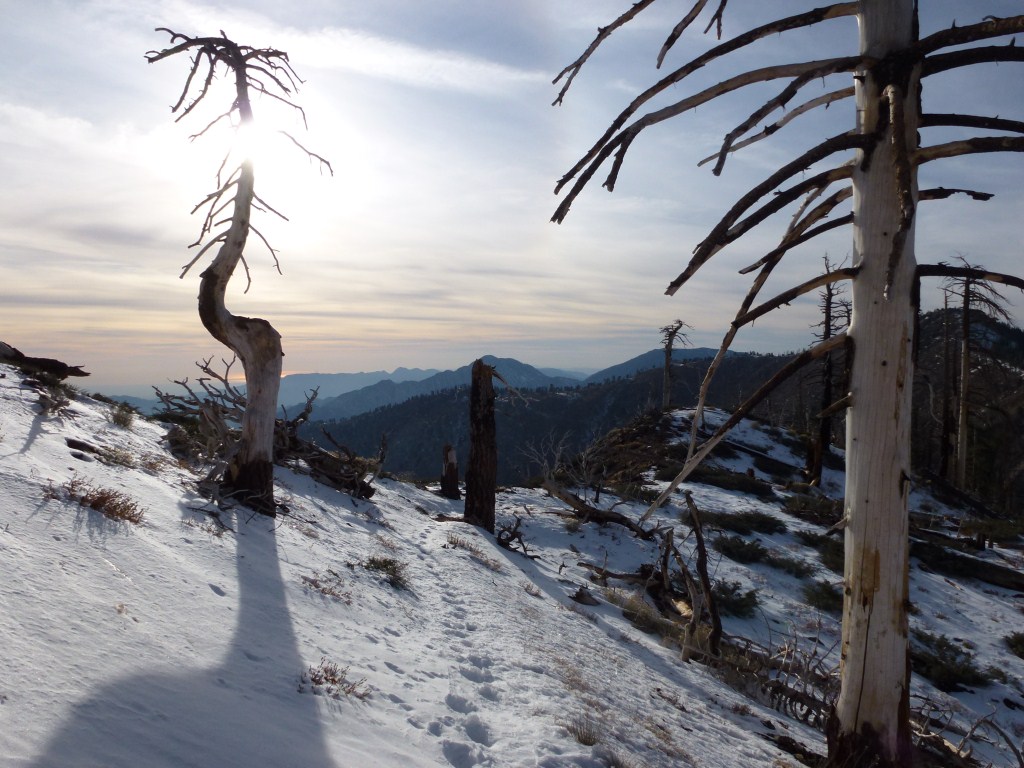
Pacific Crest Trail, east of Windy Gap, November 2011

Weekly, as I completed new hikes and my sense of the diversity and beauty of the forest grew, I began to internalize deeply the meaning of the cliché a picture is worth a thousand words.  Descriptions are helpful if one has enough experience and prior knowledge to imagine what is being described.  In the past however, I didn’t know enough to imagine for myself what I was missing. What took a Mt. Whitney goal and all the reasons surrounding it to inspire me into the forest could have easily been accomplished in the past if I just saw enough photos.  Seeing (instead of trying to imagine) places I could walk through and views I could see in person would have significantly impacted me to see the distance I needed to drive to get to them differently.  These places seem like they should be much further away from the Los Angeles megalopolis.  I know I would have hiked a lot more and I would have been healthier for it.  So, a key component to this blog is to share many of my photos with you.  As I develop this blog further, a more visual approach to sharing information will emerge leading toward an option to navigate the site almost entirely by clicking on pictures.

Close to Mt. Baldy on the Mt. Baldy Trail, September 2011

Trying out new trails most every week has also caused me to internalize the meaning of the cliché the map is not the territory.  Maps are great and I use them constantly.  However, they have important limits.  Space constraints on a sheet of paper, for example, prevent all trails (or trail like features) from being drawn on the map.  To do so would generate a cluttered and hard to read resource that would be difficult to use.  So, there are times on the trail when there’s a fork and it’s not clear how to proceed, or there’s a fork but it isn’t noticeable unless you are on special alert to look for it.  While maps do a great job of giving a general overview of a path through the forest; they can’t show the current level of maintenance, how wide the trail is, the skill level required to traverse it etc.  I believe this information is of fundamental significance to help you determine if a hike is appropriate in your current state of physical fitness and hiking experience, and to give you a way to determine for yourself an idea regarding how long it might take you to complete the trek.  Fortunately, since January 2011, I’ve photographed all the trailheads, trail intersections, and much of the terrain along each sub-segment of the hikes I’ve been on.  Another major component of this site is to share that information and make it possible for you to better know the territory before you embark on a trek.

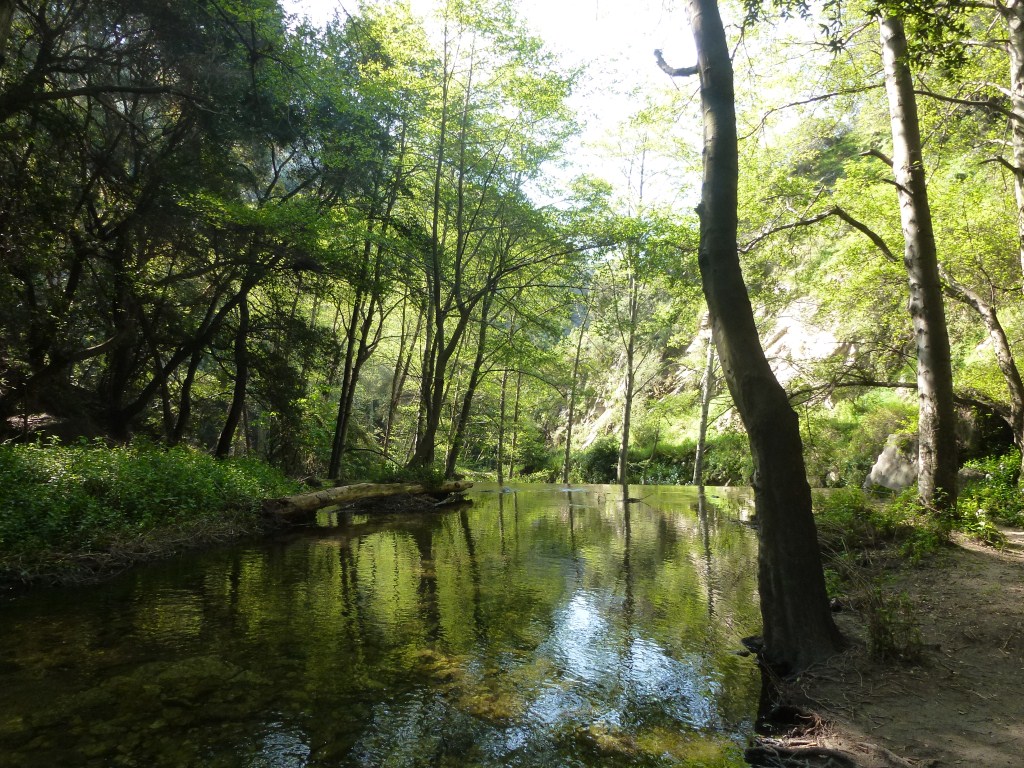
Gabrieleno Trail near Chantry Flat, April 2011

Presently, this blog is very much in its embryonic stage of development.  It’s been online a very short time which exactly matches my experience blogging.  I already have the photos and other data to add another 70+ hikes and will be adding at least one per week for the foreseeable future.  Additionally, new features will be continually added.  I hope you will find this resource useful and check back often.  Perhaps someday we will meet on the trails!

Kyle

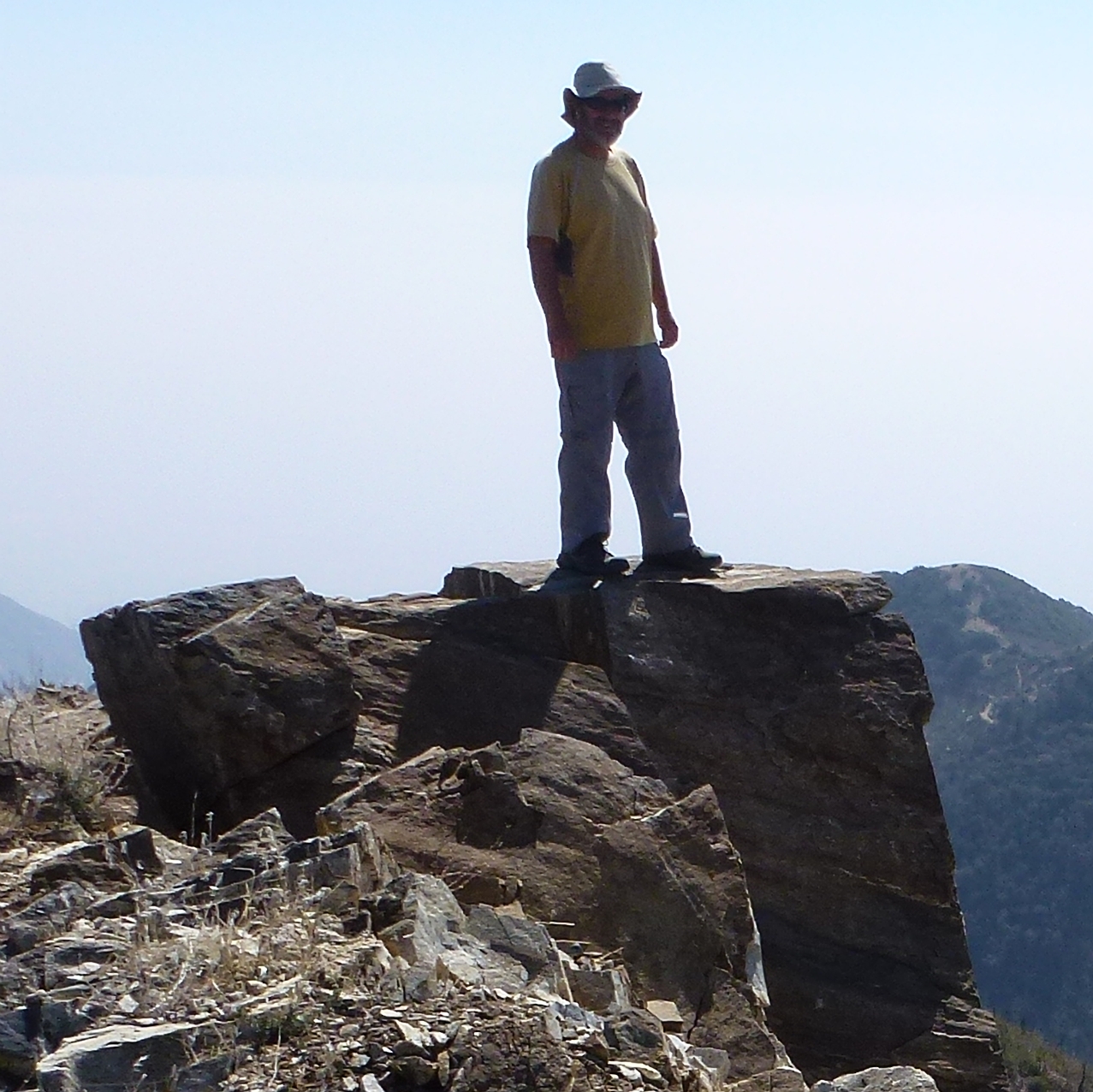
Kyle Kuns, Silver Moccasin Trail, August 2011, photo by Eric Kuns

Frogs I photographed while my brother was taking my picture, August 2011